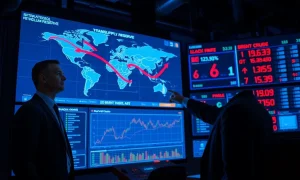
TOKYO, JAPAN — May 15, 2026: The Group of Seven (G7) advanced economies have taken a decisive step to address mounting global energy pressures. Following a high-stakes ministerial meeting, the coalition’s energy leaders issued a unified statement endorsing the principle of utilizing national strategic oil reserves. This move signals a coordinated readiness to intervene in volatile markets, aiming to bolster energy security and stabilize prices for consumers worldwide. The G7 oil reserves declaration arrives amid persistent supply chain fragility and geopolitical tensions that continue to threaten the post-pandemic economic recovery.
G7 Energy Ministers Forge Consensus on Strategic Petroleum Reserves
The joint communiqué, released after closed-door sessions in Tokyo, represents a significant hardening of the group’s collective stance. While individual nations like the United States and Japan have previously authorized unilateral releases from their Strategic Petroleum Reserves (SPR), the 2026 statement marks the first G7-wide endorsement of the tool as a legitimate market stabilization mechanism. “The consensus is clear: our reserves exist not just for national emergencies, but for collective economic security,” stated Dr. Elara Vance, a senior fellow at the Global Energy Policy Institute, who has advised multiple G7 governments. The principle now carries the weight of a formal, multilateral policy framework, setting a precedent for future coordinated action.
Historical context reveals the shift. Prior G7 discussions often treated strategic reserves as a last-resort option, shrouded in operational secrecy. The 2026 pivot towards transparency and pre-emptive coordination reflects lessons from the supply shocks of the early 2020s. A timeline of key events shows a clear evolution: the unprecedented 2022 coordinated release of 60 million barrels, followed by ad-hoc consultations in 2024, culminating in this foundational policy statement. This chronology underscores a strategic learning curve, moving from reactive measures to a proactive doctrine.
Immediate Impacts on Global Oil Markets and Energy Security
Financial markets reacted within minutes of the statement’s publication. Brent crude futures dipped by 2.3% in early Asian trading, demonstrating the potent psychological effect of G7 unity. However, analysts caution that the statement’s true power lies in its deterrent value rather than immediate barrel-for-barrel arithmetic. “It’s a signal to speculators and to petrostates that the consumer bloc has a coordinated playbook,” explained commodities strategist Marcus Chen from Finley Analytics. The endorsement fundamentally alters the risk calculus for any actor considering supply manipulation, as it lowers the political barrier for a rapid, large-scale response.
- Market Sentiment Stabilization: The principle provides a “put option” for the global economy, capping extreme price volatility and reducing risk premiums baked into long-term contracts.
- Enhanced Negotiating Leverage: With a unified stance, G7 nations gain stronger collective bargaining power in dialogues with OPEC+ and other major producers.
- Accelerated Energy Transition Planning: By managing fossil fuel volatility more effectively, the policy creates a more predictable environment for investing in renewable infrastructure and transition technologies.
Expert Analysis: A New Doctrine for Strategic Commodities
The statement received immediate scrutiny from policy institutes. The International Energy Agency (IEA), which coordinates global stockpile releases among its member countries, welcomed the development. “This formalizes a practice we’ve seen evolve,” said IEA Executive Director Fatih Birol in a prepared response. “Clear rules of the game benefit all market participants by reducing uncertainty.” Conversely, some producer nations viewed the move as market interventionism. An analyst from the King Abdullah Petroleum Studies and Research Center (KAPSARC) noted, while requesting anonymity, that the doctrine could incentivize producers to maintain tighter control over spare capacity, potentially creating a new form of standoff. This expert perspective highlights the complex, dual-edged nature of the policy.
Comparative Analysis: G7 Reserve Capacities and Readiness
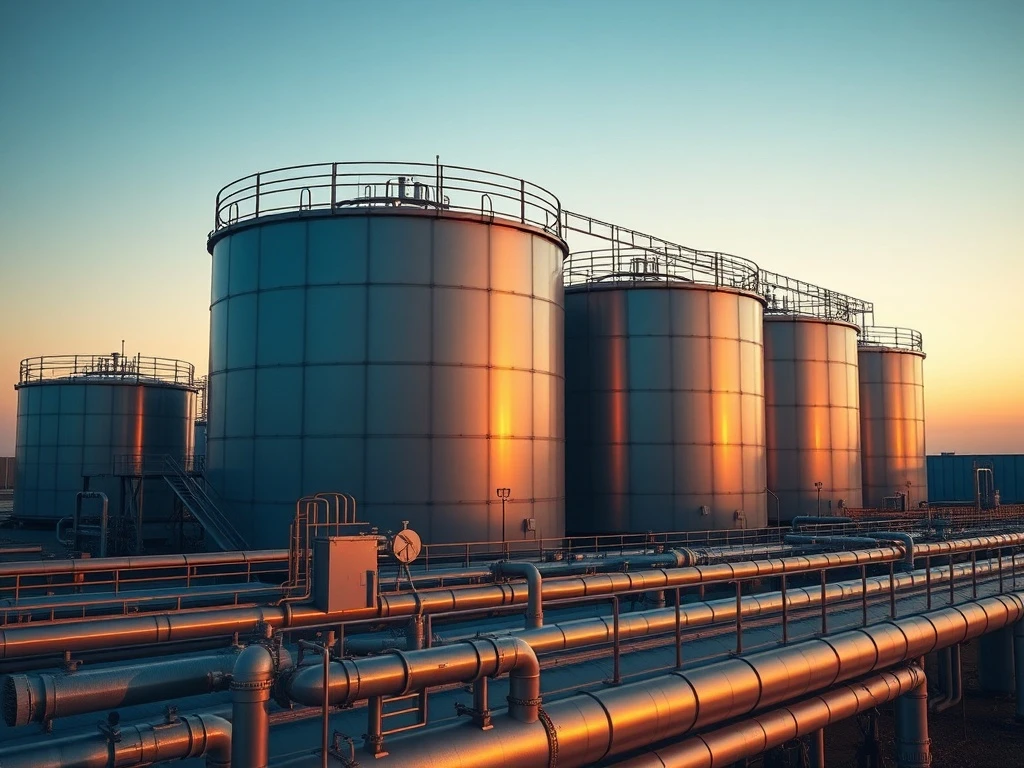
The principle’s effectiveness hinges on the underlying physical capacity and logistical readiness of each member’s reserve system. Not all strategic stockpiles are created equal. The United States maintains the world’s largest SPR, with caverns along the Gulf Coast holding over 600 million barrels. Japan’s reserves, a mix of government and mandated private holdings, are renowned for their dispersal and rapid-drawdown capabilities. European members, however, face more fragmented systems, with storage obligations spread across EU mechanisms and national programs. The table below illustrates key disparities that will influence any future coordinated action.
| G7 Member | Estimated Strategic Reserve (Million Barrels) | Primary Storage Method | Maximum Drawdown Rate (Million Barrels/Day) |
|---|---|---|---|
| United States | ~605 | Underground Salt Caverns | 4.4 |
| Japan | ~480 | Above-ground Tanks, Offshore | 3.8 |
| Germany | ~90 (EU Obligation) | Above-ground Tanks, Salt Caverns | 1.2 |
| United Kingdom | ~45 (Industry Held) | Commercial Facilities | 0.8 |
| France | ~85 (EU Obligation) | Strategic & Commercial | 1.1 |
Next Steps: From Principle to Operational Protocol
The Tokyo statement is a political agreement, not an operational directive. The critical next phase involves technical working groups translating the principle into actionable protocols. Key agenda items include defining transparent trigger mechanisms for coordinated releases, establishing communication channels for real-time data sharing on stock levels and logistics, and harmonizing legal frameworks that govern emergency drawdowns. The G7 energy ministers tasked their senior officials with delivering a draft framework by the third quarter of 2026. This work will occur in close consultation with the IEA, ensuring alignment with the broader 31-member country system.
Industry and Consumer Reactions to the G7 Move
Reaction from the oil and gas industry has been cautiously pragmatic. Major integrated companies publicly acknowledge the role of strategic stocks in smoothing market disruptions. However, privately, some executives express concern that over-reliance on government intervention could distort price signals needed for upstream investment. On the consumer front, automotive and transportation associations have welcomed the move as a potential buffer against fuel price spikes. “Stability supports business planning and household budgets,” stated a spokesperson for the International Transport Forum. This spectrum of reactions confirms the statement’s wide-ranging implications beyond government policy circles.
Conclusion
The G7’s endorsement of using strategic oil reserves marks a pivotal evolution in global energy governance. It moves a critical policy tool from the shadows of national security into the light of collective economic strategy. While the immediate market effect is a modest price adjustment, the long-term significance lies in establishing a deterrent and a framework for stability. The success of this principle will depend on the technical follow-through in 2026 and the group’s willingness to act in unison when tested. For consumers, industries, and markets, the message is clear: the world’s major advanced economies are formally aligning their defenses against energy-driven instability.
Frequently Asked Questions
Q1: What exactly did the G7 energy ministers agree to regarding oil reserves?
The G7 ministers issued a joint statement endorsing the *principle* of using their national strategic petroleum reserves as a tool to address significant market disruptions and enhance global energy security. This is a policy alignment, not an immediate order to release oil.
Q2: How will this G7 statement affect gasoline and diesel prices?
The announcement has already exerted downward pressure on crude oil futures, which typically filter through to pump prices over several weeks. The primary impact is psychological, signaling to markets that a major coordinated release is more likely if prices spike, which can suppress speculative trading.
Q3: What are the next concrete steps following this political statement?
Technical working groups will now develop operational protocols, including defining specific price or supply disruption triggers for action, establishing data-sharing systems, and aligning national legal frameworks. A draft framework is expected by Q3 2026.
Q4: Does this mean the G7 countries will release oil from their reserves now?
Not immediately. The statement affirms their readiness and collective agreement to do so if needed. An actual coordinated release would require a separate decision, likely based on a specific trigger event like a major supply outage.
Q5: How does this G7 move relate to OPEC+ and other oil producers?
It establishes a clearer counterbalance. The G7 is signaling to producer groups that consumer nations have a coordinated response tool, potentially giving the G7 more leverage in diplomatic discussions about production levels and market management.
Q6: How does this affect long-term planning for renewable energy?
Paradoxically, it may help. By providing a managed buffer against fossil fuel volatility, the policy reduces one major source of economic uncertainty, potentially making it easier for businesses and governments to commit capital to long-term renewable energy and transition projects.