
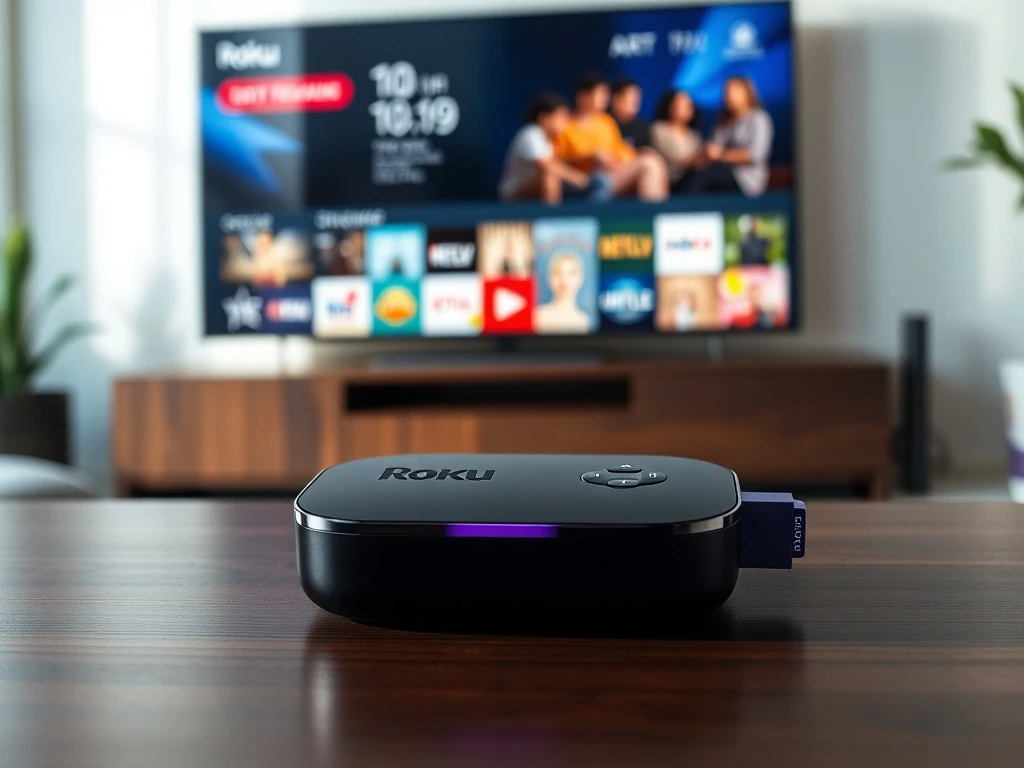
NEW YORK, NY — February 19, 2025: Amid a market reaching consistent all-time highs, streaming platform leader Roku, Inc. (ROKU) has captured significant analyst attention. The company has been named the Bull of the Day by Zacks Investment Research, receiving a coveted Zacks Rank #1 (Strong Buy) rating. This designation follows Roku’s February 13, 2025, earnings report, which delivered a decisive beat on both revenue and earnings per share (EPS) estimates. Consequently, the stock is now a focal point for investors seeking growth opportunities in the evolving digital media landscape, as Wall Street analysts rapidly revise their financial projections upward.
Roku’s Earnings Beat Drives Analyst Optimism
The core driver behind the bullish Zacks Rank is a fundamental shift in Roku’s earnings trajectory. On February 13, Roku reported fourth-quarter 2024 results that exceeded analyst expectations. The company posted revenue that surpassed consensus estimates and provided initial fiscal year 2025 revenue guidance of approximately $4.61 billion. More importantly, the report prompted a wave of positive earnings estimate revisions from analysts covering the stock. According to Zacks Director of Research Sheraz Mian, “The consistency in Roku’s recent performance is notable. We’ve observed five consecutive quarterly earnings beats, which builds a compelling case for a sustained positive trend.” This pattern of estimates starting low and rising throughout the fiscal period is a classic indicator often preceding long-term stock appreciation.
Specifically, the Zacks Consensus Estimate for Roku’s current fiscal year has improved from a projected loss of $0.93 per share sixty days ago to a loss of $0.80 per share. More strikingly, the estimate for the following year has swung from an expected loss of $0.05 to a projected profit of $0.10. This reversal from loss to profitability is a critical psychological and financial milestone that significantly alters the stock’s investment profile. The upgrade reflects growing confidence in Roku’s ability to leverage its platform scale into sustainable earnings.
The Strategic Pillars Behind Roku’s Potential Turnaround
Roku’s business model extends far beyond manufacturing streaming sticks. The company operates a diversified platform centered on three interconnected pillars, which provide multiple revenue streams and reduce dependency on any single product cycle. First, its devices and TV operating system create the essential hardware and software ecosystem, embedding Roku into millions of households. Second, its advertising and content distribution platform represents its primary monetization engine, capitalizing on user engagement. Finally, platform services and subscriptions, including The Roku Channel, offer high-margin revenue and deepen user loyalty.
- Platform Scale Advantage: Roku’s massive active account base provides a powerful moat. This scale is attractive to advertisers and content partners, creating a network effect that smaller competitors cannot easily replicate.
- Advertising Resilience: Despite past digital ad market volatility, Roku’s first-party data on viewer habits within its walled garden offers targeted advertising efficiency that is increasingly valuable in a privacy-focused era.
- Content Aggregation Leadership: As the streaming market fragments with numerous services, Roku’s role as a neutral, unified aggregator becomes more critical for consumers, strengthening its strategic position.
Expert Analysis on the Streaming Media Landscape
Market analysts point to Roku’s unique position at the intersection of hardware, software, and media. “Roku isn’t just competing with other device makers; it’s building an entire television operating system and ad network,” notes a technology sector analyst from a major institutional firm, who requested anonymity for compliance reasons. “Their recent earnings demonstrate improving operational discipline and a path to leveraging their immense user base for profitability.” This perspective is supported by data from the Consumer Technology Association, which continues to report strong year-over-year growth in connected TV device sales, a tailwind for Roku’s ecosystem expansion. The company’s ability to monetize each user through advertising has shown sequential improvement, a key metric watched closely by institutional investors.
Comparative Positioning in a Crowded Market
While Roku faces competition from tech giants like Amazon (Fire TV), Google (Android TV/Google TV), and Apple (Apple TV), its business model differs significantly. Unlike its competitors, Roku does not primarily use its platform to sell other products or services (e.g., Amazon’s e-commerce, Apple’s hardware ecosystem). This neutrality can be an advantage with content partners. Furthermore, its stock valuation, trading significantly below its all-time highs above $450, presents a different risk/reward profile compared to mega-cap tech peers that dominate market indices.
| Streaming Platform | Primary Business Model | Key Advantage |
|---|---|---|
| Roku (ROKU) | Platform/Aggregator; Advertising | Neutral OS; Scale in US connected TV |
| Amazon Fire TV | E-commerce Ecosystem Driver | Integration with Prime, Alexa |
| Google/Android TV | Data & Advertising; Mobile Ecosystem | Global Android integration |
| Apple TV | Premium Hardware & Services | High-end user base; Ecosystem lock-in |
Forward-Looking Trajectory and Investor Considerations
The immediate future for Roku hinges on executing its guidance and continuing to grow its higher-margin platform revenue. Management’s stated focus on achieving positive adjusted EBITDA and improving free cash flow will be scrutinized in upcoming quarters. Key dates for investors include the next earnings report, expected in late April or early May 2025, which will provide evidence of whether the positive Q4 momentum is sustainable. Additionally, any updates on international expansion efforts, which remain a long-term growth lever, will be closely monitored by the market.
Market Reception and Risk Factors
The market’s initial reaction to the earnings and upgrade has been positive, but analysts caution that the stock remains subject to broader market sentiment and sector rotations. Primary risks include intensified competition for advertising dollars, potential economic downturns reducing ad spend, and execution risks in managing costs while investing for growth. However, the consensus from several independent research notes published after the earnings call suggests a growing belief that the worst of Roku’s post-pandemic normalization period may be over, setting the stage for a new phase focused on profitable growth.
Conclusion
Roku’s designation as Zacks’ Bull of the Day underscores a meaningful inflection point driven by concrete financial results and upwardly revised analyst estimates. The company’s fifth consecutive earnings beat and improved guidance for 2025 have shifted the narrative from recovery to potential growth. For investors, the combination of a dominant platform position in connected TV, a diversified revenue model, and a stock price still well below historical peaks presents a compelling case study. While challenges in the competitive digital advertising space persist, Roku’s latest performance suggests it is navigating them effectively. The coming quarters will be critical in determining if this Bull of the Day signal translates into a sustained bullish trend for ROKU stock.
Frequently Asked Questions
Q1: Why did Roku (ROKU) become Zacks’ Bull of the Day?
Roku received the Bull of the Day designation after reporting a strong Q4 2024 earnings beat on February 13, 2025, which led multiple Wall Street analysts to raise their earnings estimates for the company, resulting in a Zacks Rank #1 (Strong Buy).
Q2: What was the key positive from Roku’s recent earnings report?
The company beat both top-line (revenue) and bottom-line (EPS) analyst estimates and provided FY25 revenue guidance of approximately $4.61 billion, signaling confidence in continued growth.
Q3: How have analyst estimates for Roku changed recently?
The Zacks Consensus Estimate for the current fiscal year has improved from a loss of $0.93 to a loss of $0.80 per share. For the next year, estimates have reversed from a $0.05 loss to a $0.10 profit.
Q4: What are the main parts of Roku’s business model?
Roku operates a three-part model: 1) Streaming devices and smart TV operating systems, 2) Advertising and content distribution, and 3) Platform services and subscriptions, including The Roku Channel.
Q5: What are the main risks for investing in Roku stock?
Key risks include competition in the streaming device and digital advertising markets, sensitivity to broader economic cycles that affect ad spending, and the need to continue executing on its path to profitability.
Q6: How does Roku’s current stock price compare to its history?
As of mid-February 2025, Roku stock is trading below $100, which is significantly lower than its all-time high of over $450 reached during the peak of the pandemic-driven streaming boom.



