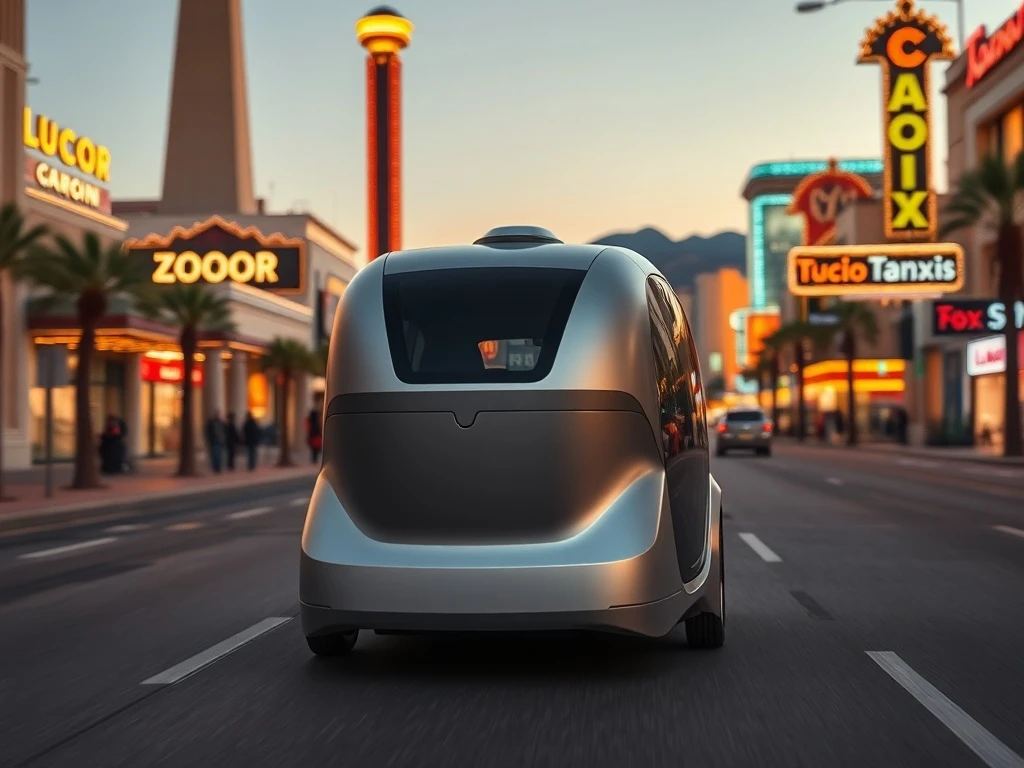
In a move that could reshape urban mobility, Amazon-owned autonomous vehicle company Zoox announced plans on Wednesday, June 9, to make its custom-built robotaxis available for hire on the Uber app in Las Vegas later this year. This strategic partnership, however, hinges on a critical pending decision from the National Highway Traffic Safety Administration (NHTSA). Zoox must first secure federal exemptions from several motor vehicle safety standards because its purpose-built vehicles lack traditional controls like a steering wheel and pedals. The announcement signals a significant acceleration in the commercialization of fully driverless technology and a major new front in the competitive robotaxi landscape.
Zoox Seeks Federal Exemptions for Wheel-Free Robotaxis
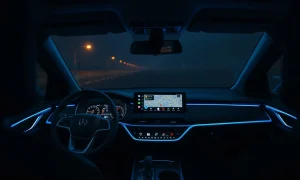
The core hurdle for Zoox’s commercial launch is regulatory. On Wednesday, NHTSA initiated a 30-day public comment period on Zoox’s application for exemptions from eight specific Federal Motor Vehicle Safety Standards (FMVSS). These include standards requiring windshield defrosting systems and windshield wipers—features Zoox’s symmetrical, bidirectional vehicle design may implement differently. Currently, Zoox operates under a demonstration exemption, offering free rides in Las Vegas and San Francisco. “The transition from demonstration to commercial service is a monumental step,” a transportation regulatory expert familiar with the process told TechCrunch. “NHTSA’s scrutiny will be intense, focusing on how Zoox’s novel design achieves equivalent safety to conventional vehicles.” The company stated it plans to launch its own commercial service first before integrating with the Uber platform in Las Vegas.
This regulatory process unfolds as NHTSA expresses renewed urgency in formalizing rules for autonomous vehicles. At a safety hearing on Tuesday, NHTSA chief Jonathan Morrison emphasized the need to move past the “hand-waving and hype” surrounding self-driving cars. He committed the agency to establishing “appropriate and robust oversight” while removing unintended barriers to innovation. The timing of Zoox’s application, therefore, places it at the center of a pivotal regulatory moment that will set precedents for the entire industry.
Strategic Implications of the Uber-Zoox Alliance
The multi-year partnership extends beyond Las Vegas, with plans to launch in Los Angeles in 2027. For Zoox, this marks its first third-party platform partnership, providing immediate scale and a massive, established user base. For Uber, it represents a deepening investment in an autonomous future, adding another major player to its network of over 25 AV partners worldwide. The deal creates a fascinating competitive dynamic, particularly with Waymo, which already offers its robotaxis on Uber in Austin and Atlanta. “This partnership is about optionality and coverage,” an industry analyst noted. “Uber is building an ecosystem where the best available autonomous vehicle serves the customer, whether it’s from Waymo, Zoox, or others. It mitigates risk and accelerates market coverage.”
- Market Expansion: Zoox gains instant access to Uber’s millions of active users, bypassing the costly challenge of building a standalone rider app from scratch.
- Data & Operational Synergy: Uber’s newly formed “Autonomous Solutions” division can provide Zoox with operational software and real-world driving data collected through its “AV Labs” to refine the autonomous system.
- Competitive Pressure: The partnership intensifies competition with Waymo and Cruise, likely accelerating deployment timelines and innovation across the sector.
Regulatory and Safety Scrutiny Intensifies
The exemption request will undergo meticulous review. “NHTSA’s primary mandate is safety,” stated Dr. Evelyn Reed, a former agency official now with the Transportation Research Institute. “They will evaluate whether Zoox’s alternative designs—like its unique sensor suite and passenger compartment—provide an overall level of safety equal to or greater than the existing standards. Public comment will be crucial, especially from safety advocates and other automakers.” The agency has not specified a timeline for a final ruling, but the 30-day comment window offers a clear near-term milestone. Zoox’s application details its safety case, including redundant braking and steering systems and a comprehensive sensor array designed for 360-degree awareness.
Comparing the Robotaxi Landscape: Zoox Enters the Fray
Zoox’s entry into commercial partnerships places it alongside established players, each with distinct strategies. Unlike Waymo and Cruise, which retrofit vehicles like the Jaguar I-PACE or Chevrolet Bolt, Zoox engineered its vehicle from the ground up for autonomous ride-hailing. This allows for a passenger-centric interior but requires novel regulatory approvals. The following table highlights key differences in current commercial approaches.
| Company | Vehicle Strategy | Key Partnerships | Current Commercial Footprint |
|---|---|---|---|
| Zoox | Custom-built, bidirectional robotaxi (no steering wheel) | Uber (planned), Amazon (owner) | Free demos in Las Vegas, SF; mapping 8+ U.S. cities |
| Waymo | Retrofitted Jaguar I-PACE & Zeekr purpose-built vehicle | Uber (Austin, Atlanta), Phoenix airport | Paid service in Phoenix, SF; expanding to LA |
| Cruise (GM) | Custom-built Origin vehicle (no manual controls) | GM, Honda, Microsoft | Had paid service in SF (currently paused) |
| Uber AV Ecosystem | Multi-provider platform | Waymo, Zoox, Baidu, May Mobility, Pony.ai | Operates partner AVs in select cities globally |
The Road Ahead: Deployment and Scaling
Pending NHTSA approval, Zoox’s roadmap involves a phased commercial rollout. The company will first launch its own app-based service in Las Vegas, allowing it to control the initial user experience and gather data. Integration with Uber will follow. Simultaneously, Zoox is actively mapping and building operational readiness in eight other U.S. cities, including Dallas and Phoenix, announced earlier this week. This geographic expansion strategy suggests confidence in its technology’s adaptability to diverse urban environments. The 2027 target for Los Angeles indicates a deliberate, multi-city scaling plan rather than a rapid nationwide blitz.
Industry and Public Reception
Reactions within the transportation industry have been cautiously optimistic. “Another serious player committing to commercial deployment validates the business model,” said a venture capitalist specializing in mobility tech. “It also shows Uber is serious about being the network layer, not just a car operator.” Local responses in Las Vegas have mixed anticipation with pragmatic questions about safety and traffic integration. City officials, who have welcomed AV testing, are monitoring the federal approval process closely. The partnership also highlights the evolving role of data; Uber’s efforts to collect and share real-world driving data with partners like Zoox could become a significant competitive advantage in training more robust AI driving models.
Conclusion
The planned partnership between Zoox and Uber represents a critical inflection point for autonomous ride-hailing, moving from isolated testing toward integrated, multi-provider commercial networks. Its immediate realization rests squarely on a favorable ruling from NHTSA on Zoox’s unique vehicle design—a decision that will resonate across the entire self-driving industry. For consumers in Las Vegas and eventually Los Angeles, it promises a new transportation option. For the market, it intensifies competition and collaboration in equal measure. The next 30 days of public commentary to NHTSA will be a key indicator of regulatory sentiment, setting the stage for what could be one of the most significant autonomous vehicle deployments of the year.
Frequently Asked Questions
Q1: When will I be able to hail a Zoox robotaxi on Uber in Las Vegas?
Zoox aims to make its vehicles available on the Uber app in Las Vegas later this year, but only after it receives commercial deployment exemptions from NHTSA. The company will launch its own commercial service first, followed by the Uber integration.
Q2: Why does Zoox need special permission from the federal government?
Because Zoox’s custom-built robotaxis have no steering wheel, pedals, or traditional manual controls, they do not comply with several Federal Motor Vehicle Safety Standards (FMVSS) written for human-driven cars. NHTSA must grant exemptions if it determines the vehicles provide an equivalent level of safety.
Q3: How does this partnership affect Uber’s existing deal with Waymo?
Uber is pursuing a multi-provider strategy. Its partnership with Waymo in Austin and Atlanta remains active. Adding Zoox expands the portfolio of autonomous options on its platform, giving riders access to different AV technologies depending on the city and availability.
Q4: Are Zoox’s robotaxis safe without a human driver?
Zoox’s safety case rests on its custom design, which includes redundant critical systems (braking, steering, computing) and a sensor suite for 360-degree awareness. Its exemption application details these features to NHTSA, which will evaluate if they meet the required safety threshold.
Q5: What other cities is Zoox planning to expand to?
Beyond Las Vegas and its current testing in San Francisco, Zoox is actively mapping and building a presence in eight other U.S. metropolitan areas. These include Dallas and Phoenix, with Los Angeles targeted for a 2027 launch via the Uber partnership.
Q6: How does this impact traditional rideshare drivers?
In the near term, the scale of Zoox’s deployment will be limited. Uber frames autonomous vehicles as a complement to human drivers, helping meet demand spikes and serve areas with driver shortages. The long-term impact remains a topic of significant economic and policy discussion.