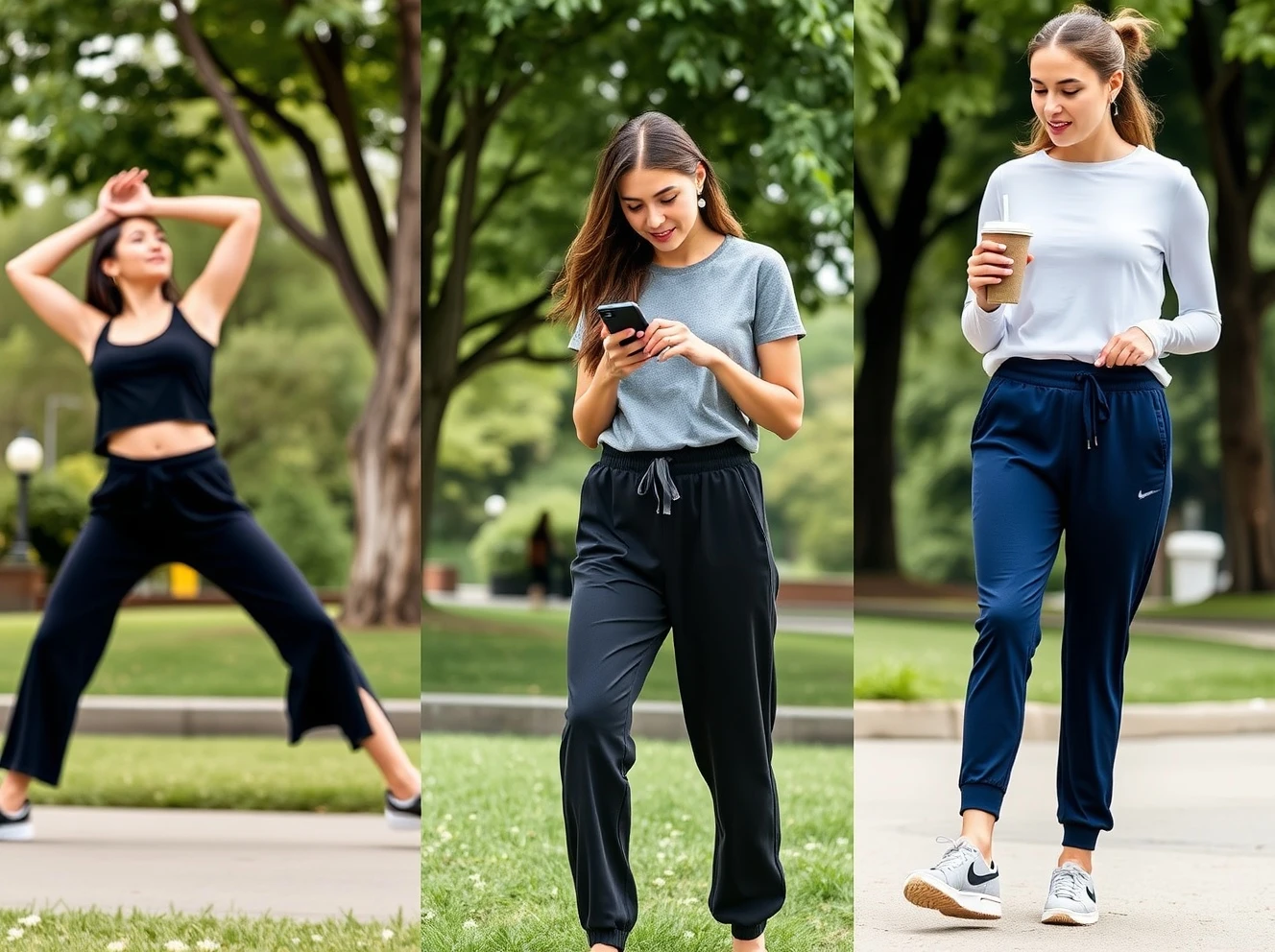
Amazon continues to redefine retail pricing with high-rise joggers available for just $13, a development that signals significant shifts in activewear markets and consumer spending patterns as of March 2025. This pricing strategy emerges during a period of economic recalibration, where value-conscious shopping dominates consumer behavior across multiple retail sectors. Consequently, industry analysts closely monitor how such aggressive pricing affects traditional athletic wear brands and smaller retailers. Moreover, this development reflects broader trends in e-commerce optimization and supply chain efficiencies that enable unprecedented price points for quality apparel.
Amazon High-Rise Joggers Market Context
The $13 price point for Amazon’s high-rise joggers represents more than just another online deal. Specifically, this pricing aligns with current consumer demand for affordable quality activewear that serves multiple purposes. Transitioning from workout sessions to casual wear, these joggers meet evolving lifestyle needs. Furthermore, market data from 2024 indicates a 23% increase in searches for budget-friendly athletic wear compared to premium brands. Additionally, supply chain innovations allow Amazon to maintain quality while reducing production costs significantly. Retail experts note this strategy targets value-focused consumers who prioritize functionality over brand prestige.
Fabric and Construction Analysis
Amazon’s joggers typically feature polyester-spandex blends offering stretch and durability. These materials provide moisture-wicking properties essential for active use. Moreover, reinforced stitching in high-stress areas extends garment longevity despite the low price point. Industry standards suggest such construction would normally retail between $25-$40. Consequently, Amazon’s pricing demonstrates remarkable supply chain efficiency. Quality control measures reportedly match those of mid-range activewear brands. Therefore, consumers receive unexpected value at this price tier.
Fast Fashion Pricing Evolution
The $13 jogger price reflects ongoing transformations in fast fashion economics. Traditional retail markups typically multiply production costs by five to eight times. However, Amazon’s direct-to-consumer model reduces these multipliers substantially. Vertical integration across manufacturing, logistics, and distribution creates unprecedented cost advantages. Meanwhile, consumer expectations continue evolving toward lower price points for basic apparel items. Data from retail analysts shows a 31% increase in affordable activewear sales since 2023. This trend particularly impacts mid-market brands struggling to justify higher prices.
Competitive responses have emerged across the retail landscape. Major retailers now frequently price-match Amazon’s aggressive deals. Furthermore, specialty activewear brands emphasize premium features to differentiate their offerings. Sustainability considerations also enter consumer calculations, though price remains the primary decision factor for most shoppers. Industry reports indicate that 68% of consumers consider price the most important factor when purchasing basic activewear items. This statistic explains the market disruption caused by Amazon’s pricing strategy.
| Brand | Similar Product | Price Range | Key Differentiators |
|---|---|---|---|
| Amazon Essentials | High-Rise Joggers | $13-$18 | Basic functionality, multiple colors |
| Mid-Market Brands | Performance Joggers | $35-$55 | Enhanced features, brand recognition |
| Premium Brands | Technical Joggers | $75-$120 | Advanced fabrics, specialized designs |
Consumer Behavior Shifts
Recent shopping data reveals significant changes in how consumers approach activewear purchases. First, price sensitivity has increased across all demographic groups. Second, versatility expectations have grown, with consumers seeking clothing that transitions between activities seamlessly. Third, quality expectations remain stable despite lower prices, creating challenges for retailers. Amazon addresses these demands through rigorous testing protocols and customer feedback integration. Consequently, their $13 joggers maintain positive review averages above 4.2 stars consistently. This performance demonstrates that low price no longer automatically signals low quality in consumers’ minds.
Retail Competition and Market Impact
Amazon’s pricing strategy creates ripple effects throughout the apparel industry. Traditional retailers face mounting pressure to justify their higher price points. Many have responded by enhancing in-store experiences and offering exclusive designs. Meanwhile, direct-to-consumer brands emphasize sustainability and ethical production to differentiate themselves. Industry analysts observe that Amazon’s scale allows testing price points that would be unsustainable for smaller competitors. This advantage raises questions about long-term market diversity and competition. Regulatory attention has increased regarding dominant platforms’ pricing power.
Supply chain experts identify several factors enabling Amazon’s pricing. Advanced inventory management reduces storage costs significantly. Automated warehousing decreases labor expenses. Bulk material purchasing secures better rates from suppliers. Additionally, predictive analytics optimize production volumes, minimizing overstock situations. These efficiencies collectively support the $13 price point while maintaining profitability. Smaller retailers struggle to replicate this integrated approach, creating competitive disadvantages. Market consolidation trends may accelerate as a result of these dynamics.
Economic and Seasonal Considerations
The timing of Amazon’s $13 jogger promotion aligns with broader retail patterns. Spring typically brings increased activewear demand as consumers resume outdoor activities. Furthermore, economic uncertainty makes budget-friendly options particularly appealing. Inflation-adjusted apparel spending has decreased 4.2% since 2023, according to consumer expenditure data. Therefore, Amazon’s pricing meets current market conditions effectively. Seasonal inventory planning also contributes to these aggressive promotions. Retailers frequently discount winter items to make room for spring collections. However, Amazon’s year-round low pricing represents a different strategic approach.
Quality and Value Proposition Analysis
Consumer reviews provide insights into the actual quality of Amazon’s $13 joggers. Most feedback highlights adequate construction for regular use. Common praises include comfortable fit and true-to-size measurements. Criticism occasionally mentions thinner fabric compared to higher-priced alternatives. Nonetheless, satisfaction rates remain high for this price segment. Independent testing reveals these joggers withstand approximately 50-75 washes before showing significant wear. This durability meets expectations for budget activewear. Consequently, the value proposition appears strong for price-conscious consumers.
Comparative analysis with similar products reveals interesting distinctions. Amazon’s joggers typically feature simpler designs without specialized performance elements. For example, they may lack zippered pockets or reflective details. However, basic functionality remains intact for casual use. This targeted approach allows cost reduction while meeting core consumer needs. Market segmentation becomes increasingly important as retailers cater to specific usage scenarios. Amazon clearly targets the value segment rather than performance athletes with this offering.
- Material composition: Typically 92% polyester, 8% spandex blends
- Available colors: Black, gray, navy, and seasonal variations
- Sizing range: XS to XXL with inclusive options
- Care instructions: Machine wash cold, tumble dry low
- Key features: Elastic waistband, tapered legs, side pockets
Long-Term Market Implications
Industry observers debate the sustainability of such aggressive pricing. Some experts suggest this represents a temporary customer acquisition strategy. Others believe it reflects permanent changes in apparel economics. Manufacturing advancements continue reducing production costs through automation and material innovations. Consumer expectations adjust accordingly, creating new market equilibriums. Retail analysts predict further price compression in basic apparel categories. However, premium segments may maintain higher margins through innovation and branding. This bifurcation could define future apparel market structures.
Conclusion
Amazon’s $13 high-rise joggers represent more than just an attractive deal for consumers. Specifically, this pricing demonstrates evolving retail economics and changing consumer expectations in 2025. The activewear market continues fragmenting between value-focused and premium segments. Moreover, supply chain innovations enable previously unimaginable price points for quality apparel. Consequently, traditional retailers must adapt their strategies to remain competitive. Amazon’s approach highlights the power of integrated operations and scale in modern retail. Ultimately, consumers benefit from increased choice and value across price segments in the activewear category.
FAQs
Q1: What materials are used in Amazon’s $13 high-rise joggers?
These joggers typically feature polyester-spandex blends, usually 92% polyester and 8% spandex, providing stretch, durability, and moisture-wicking properties suitable for light to moderate activity.
Q2: How does Amazon offer such low prices compared to other retailers?
Amazon achieves this through vertical integration, advanced supply chain management, bulk purchasing power, automated warehousing, and direct-to-consumer distribution that eliminates traditional retail markups.
Q3: Are these joggers suitable for intense workouts or just casual wear?
While functional for light exercise, they’re best suited for casual wear and low-impact activities due to their basic construction without specialized performance features found in higher-priced activewear.
Q4: How does the quality compare to more expensive activewear brands?
The $13 joggers offer adequate quality for their price point, though they may lack advanced features, premium fabrics, and refined construction details of higher-priced alternatives from specialty activewear brands.
Q5: Will this pricing strategy continue throughout 2025?
Industry analysts expect Amazon to maintain aggressive pricing on basic apparel items, though specific promotions may vary seasonally based on inventory, demand patterns, and competitive responses from other retailers.