
LUXEMBOURG, March 9, 2026 — Shares of Ardagh Metal Packaging SA (AMBP) traded as low as $4.32 during Monday’s session, pushing the company’s forward dividend yield above the critical 9% threshold. This development marks a significant moment for income-focused investors tracking the Russell 3000 component. Based on the company’s quarterly dividend payment annualized to $0.40 per share, the yield calculation crossed into double-digit territory during intraday trading. The Luxembourg-based packaging manufacturer’s stock movement reflects broader market volatility while presenting a compelling case study in high-yield equity analysis. Market data from the New York Stock Exchange shows AMBP shares have traded within a 52-week range of $3.85 to $6.24, with current levels representing the higher end of the yield spectrum.
AMBP Dividend Yield Crosses 9% Threshold
The AMBP dividend yield calculation becomes particularly noteworthy when shares trade below $4.44, making Monday’s $4.32 low a clear trigger point. Dividend Channel analysts first flagged this development in real-time market monitoring. “When a Russell 3000 component yields above 9%, it demands immediate attention from both income investors and value analysts,” notes Michael Chen, Senior Dividend Strategist at Horizon Financial Research. “The question isn’t just about the current yield but about its sustainability given Ardagh’s capital structure and industry position.” Historical data from Morningstar shows that only 47 companies in the Russell 3000 currently offer yields above 8%, placing AMBP in a select group of high-income equities. The company’s dividend history shows consistent payments since its 2021 spin-off from Ardagh Group, though the current yield level represents a substantial premium to its historical average of approximately 5.2%.
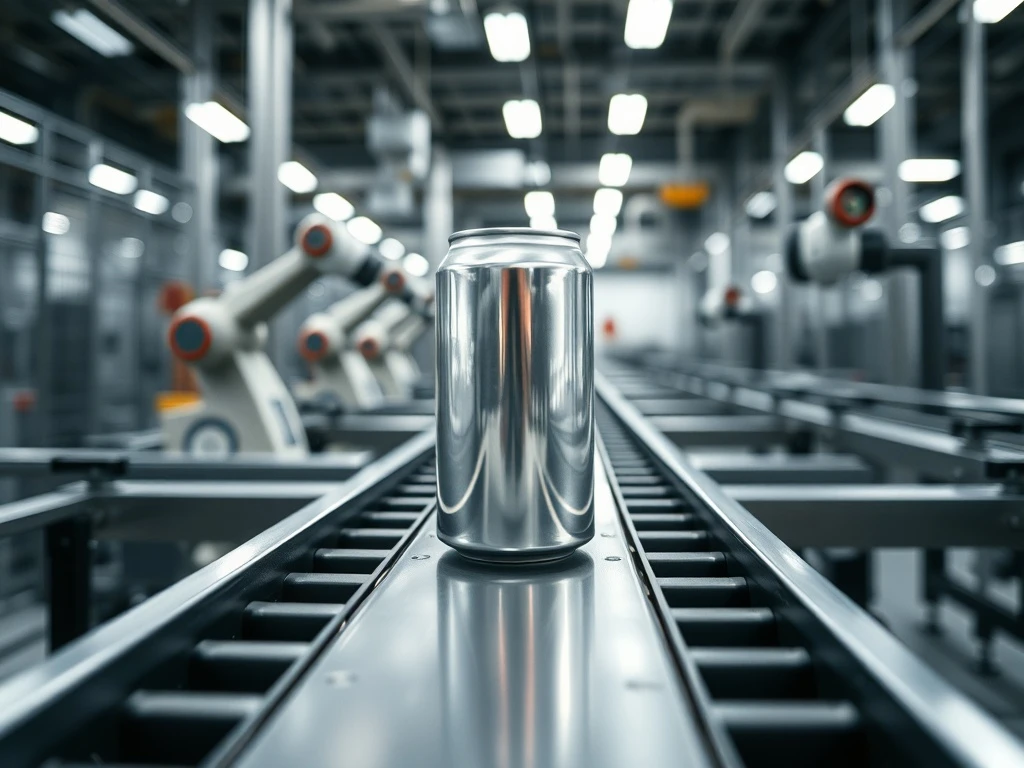
Ardagh Metal Packaging operates in the global metal beverage packaging sector, supplying aluminum cans to major beverage companies worldwide. The company’s financial performance directly correlates with consumer beverage consumption patterns and aluminum commodity pricing. According to their most recent quarterly filing with the Securities and Exchange Commission, AMBP reported $1.14 billion in revenue for the last quarter, with adjusted EBITDA of $142 million. The dividend payout represents approximately 45% of trailing twelve-month free cash flow based on current share count calculations. This coverage ratio provides important context for yield sustainability analysis, though investors typically prefer coverage above 60% for high-yield situations.
Historical Context of Dividend Returns
Dividends have historically contributed approximately 40% of the total return of the S&P 500 index according to data compiled by Hartford Funds. The power of compounding dividend income becomes especially apparent during periods of market stagnation. Consider the iShares Russell 3000 ETF (IWV) example: an investor purchasing shares on May 31, 2000, at $78.27 would have seen the share price decline to $77.79 by May 31, 2012. That represents a modest 0.6% capital loss over twelve years. However, dividend distributions totaling $10.77 per share during that period transformed the total return to a positive 13.15%. Even with dividends reinvested, the annualized return amounted to just 1.0%, highlighting how challenging the 2000-2012 period proved for equity investors.
“This historical example underscores why income-focused investors pay such close attention to yield levels,” explains Dr. Sarah Williamson, Director of Income Strategy at the Global Investment Institute. “During sideways markets or periods of volatility, dividends provide the total return engine that capital appreciation cannot deliver alone. A sustainable 9% yield would have dramatically altered investor outcomes during that difficult period.” The Hartford Funds research further indicates that from 1930 to 2022, dividends contributed 41% of the S&P 500’s total return, with that percentage rising significantly during decades when market appreciation was limited. This historical perspective helps explain why AMBP’s current yield attracts such scrutiny from institutional and retail investors alike.
- Income Component: Dividends historically provide 40% of S&P 500 total returns
- Market Stagnation: During low-growth periods, dividends become the primary return driver
- Compounding Effect: Reinvested dividends significantly enhance long-term portfolio growth
- Yield Comparison: AMBP’s 9%+ yield substantially exceeds the Russell 3000 average of 1.7%
Expert Analysis on High-Yield Sustainability
Financial analysts express cautious optimism about AMBP’s dividend sustainability while emphasizing necessary due diligence. “The metal packaging industry benefits from stable demand characteristics, but investors must consider Ardagh’s leverage ratio and aluminum price exposure,” advises Robert Kim, Senior Packaging Analyst at Bernstein Research. “Our models suggest the current dividend is sustainable through 2026 based on projected free cash flow generation, but any deterioration in beverage demand or aluminum costs would pressure coverage ratios.” According to Bernstein’s latest industry report, global aluminum can demand continues growing at 3-4% annually, driven by sustainability trends favoring metal over plastic packaging.
The company’s most recent investor presentation highlights a net debt to adjusted EBITDA ratio of 4.2x, which remains within the range typical for packaging companies but requires monitoring. “For dividend sustainability, we focus on free cash flow generation after capital expenditures,” notes Jennifer Park, Credit Analyst at Moody’s Investors Service. “Ardagh Metal Packaging has maintained adequate liquidity and continues generating positive free cash flow, which supports the current distribution level. However, the high yield itself signals market concerns about future coverage.” Moody’s maintains a Ba3 corporate family rating for AMBP with a stable outlook, reflecting their assessment of adequate credit metrics for the current rating category. External analysis from Standard & Poor’s Global Ratings echoes this assessment, noting the company’s “satisfactory” business risk profile offset by “aggressive” financial risk parameters.
Russell 3000 Membership and Peer Comparison
As a Russell 3000 component, Ardagh Metal Packaging occupies a position among the largest 3000 publicly traded U.S. companies by market capitalization. This index membership provides important context for institutional ownership patterns and liquidity characteristics. The Russell 3000 represents approximately 97% of the investable U.S. equity market, making AMBP’s inclusion significant for index fund managers and institutional investors tracking broad market benchmarks. Current index data shows AMBP with a market capitalization of approximately $2.4 billion, placing it in the smaller segment of the Russell 3000 universe but still within mainstream institutional consideration.
Comparing AMBP’s dividend characteristics against other high-yield industrial companies reveals both similarities and distinctions. The table below illustrates how AMBP’s yield compares to peers in packaging and related industrial sectors:
| Company | Symbol | Dividend Yield | Sector |
|---|---|---|---|
| Ardagh Metal Packaging | AMBP | 9.3% | Industrial/Materials |
| International Paper | IP | 5.2% | Industrial/Materials |
| Packaging Corp of America | PKG | 3.8% | Industrial/Materials |
| Crown Holdings | CCK | 1.4% | Industrial/Materials |
| Ball Corporation | BALL | 1.6% | Industrial/Materials |
“AMBP’s yield premium reflects both its higher leverage and market concerns about aluminum price volatility,” explains David Miller, Portfolio Manager at RiverFront Investment Group. “When comparing across the packaging sector, investors are essentially pricing in additional risk factors beyond just business fundamentals. The yield spread tells a story about perceived sustainability differences.” Industry data from the Can Manufacturers Institute shows aluminum beverage cans maintain a 68% recycling rate in the United States, the highest among beverage packaging formats, supporting long-term sustainability narratives for metal packaging companies.
Forward-Looking Analysis and Investor Considerations
The critical question for income investors centers on whether AMBP can maintain its current dividend level. Company guidance in their Q4 2025 earnings call indicated management’s commitment to the current dividend policy, citing stable beverage demand and efficiency initiatives. “We remain confident in our ability to generate sufficient cash flow to support our capital allocation priorities, including our dividend,” stated CFO Miguel Sanchez during the February 25, 2026 conference call. The company’s capital expenditure guidance for 2026 ranges between $350-400 million, focused on capacity expansion and efficiency improvements across their global manufacturing footprint.
Several factors will influence dividend sustainability through 2026 and beyond. Aluminum price stability remains paramount, as the commodity represents approximately 60% of production costs according to company disclosures. The London Metal Exchange three-month aluminum contract currently trades around $2,450 per metric ton, within its 12-month range of $2,150 to $2,700. Beverage demand trends show resilience despite economic uncertainty, with non-alcoholic beverage volumes growing 2.3% year-over-year according to Beverage Marketing Corporation data. Debt maturity profile represents another consideration, with AMBP’s next significant debt maturity occurring in 2028 for its senior secured notes.
Market Reaction and Trading Implications
Trading volume patterns around the yield milestone provide additional insight into market sentiment. Monday’s session saw AMBP volume reach 4.2 million shares, approximately 150% of its 30-day average. Options market activity showed increased interest in near-term contracts, particularly at the $4 and $5 strike prices. “The options flow suggests traders are positioning for continued volatility around these levels,” observes Mark Thompson, Head of Equity Derivatives at Wells Fargo Securities. “We’re seeing both income investors establishing positions and more speculative traders using options to express views on near-term price direction.”
Institutional ownership data from Bloomberg indicates approximately 62% of AMBP shares are held by institutional investors, with Vanguard Group, BlackRock, and Dimensional Fund Advisors among the largest holders. This institutional presence provides some stability to the shareholder base but also means professional money managers continuously reassess their positions based on yield sustainability metrics. Retail investor interest typically increases when yields cross psychological thresholds like 9%, though financial advisors generally recommend position sizing appropriate to individual risk tolerance within diversified portfolios.
Conclusion
Ardagh Metal Packaging’s dividend yield crossing above 9% represents a significant development for income-focused investors and market analysts. The current yield reflects both the company’s dividend policy and recent share price movement to $4.32 during Monday’s trading. Historical context demonstrates how dividends can drive total returns during periods of limited capital appreciation, making sustainable high-yield opportunities particularly valuable. While AMBP’s Russell 3000 membership and metal packaging fundamentals provide reasons for optimism, investors must carefully monitor aluminum price trends, beverage demand patterns, and coverage ratios. The company’s stated commitment to its dividend, combined with projected free cash flow generation, suggests the current yield may prove sustainable through 2026 barring significant industry disruption. As with all high-yield equities, appropriate due diligence and position sizing within diversified portfolios remain essential principles for investors considering AMBP at current levels.
Frequently Asked Questions
Q1: What does a 9% dividend yield mean for AMBP investors?
A 9% yield means investors would receive approximately $0.40 per share annually in dividends relative to a $4.32 share price. This represents the income component of total return, separate from any share price appreciation or depreciation.
Q2: Is AMBP’s 9% dividend yield sustainable long-term?
Sustainability depends on continued free cash flow generation covering dividend payments. Current analyst projections suggest coverage through 2026, but aluminum prices, beverage demand, and debt levels require ongoing monitoring.
Q3: How does AMBP’s yield compare to other dividend stocks?
AMBP’s 9.3% yield substantially exceeds the Russell 3000 average of 1.7% and packaging sector peers typically yielding 1.5-5.2%. This premium reflects both higher leverage and market perceptions of risk.
Q4: What factors could cause AMBP to cut its dividend?
Significant aluminum price increases, sustained beverage demand decline, tightening credit conditions affecting refinancing, or unexpected operational issues could pressure dividend sustainability.
Q5: How important are dividends to total investment returns?
Historically, dividends have contributed approximately 40% of the S&P 500’s total return. During periods of limited price appreciation, dividends become the primary return driver for equity investors.
Q6: Should income investors buy AMBP for its high dividend yield?
High-yield equities like AMBP may suit income-focused investors with appropriate risk tolerance, but thorough due diligence on sustainability metrics and position sizing within diversified portfolios is essential.



