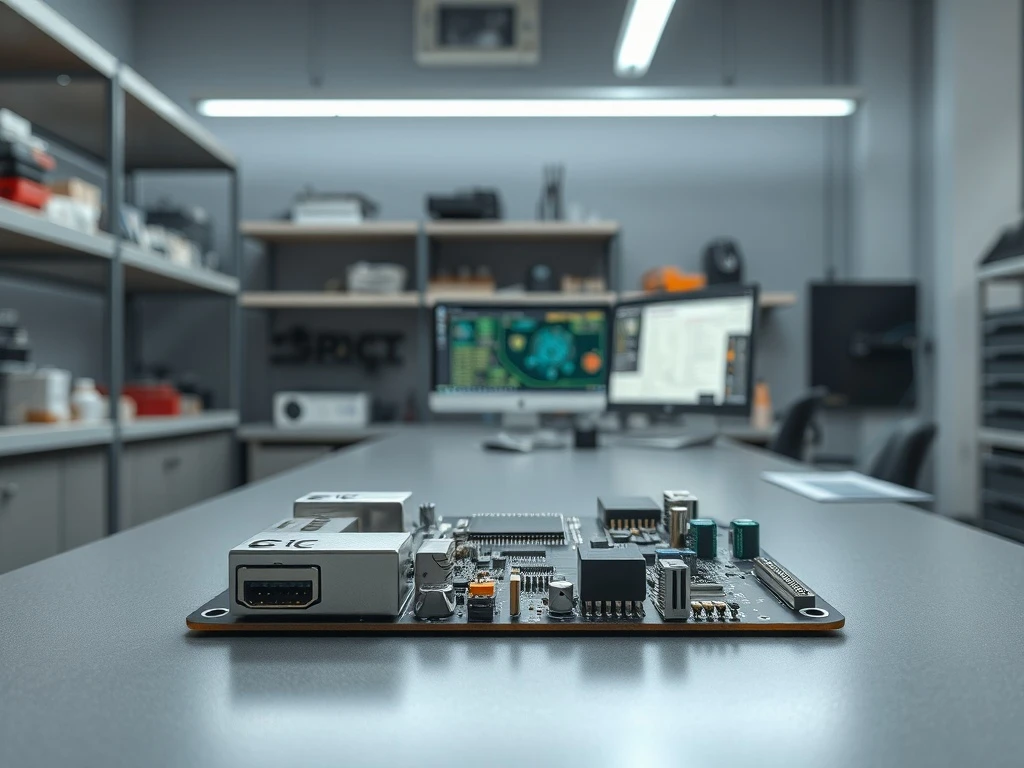
NEW YORK, March 10, 2026 — Arrow Electronics Inc. (NYSE: ARW) unveiled a potentially revenue-driving technological advancement today. The global electronics distributor, in partnership with Infineon Technologies, introduced a groundbreaking 240W USB-C Power Delivery (PD) 3.2 reference design. This development arrives as Arrow’s shares show strong momentum, having surged 30.1% over the past year. Industry analysts immediately began assessing whether this new high-power design platform could accelerate the company’s growth trajectory and close its performance gap with the broader Zacks Computer and Technology sector, which appreciated 36.1% during the same period. The REF_ARIF240GaN design targets a rapidly expanding market for compact, high-performance battery-powered devices.
Technical Breakdown of the 240W USB-C PD 3.2 Reference Design
Arrow Electronics and Infineon Technologies formally launched the REF_ARIF240GaN reference design on March 4, 2026. The system represents a significant leap in power delivery for portable devices. It supports the latest USB Power Delivery 3.2 specification, enabling a full 240 watts of power transfer through a single USB-C connector. Consequently, this power level can charge larger lithium-ion battery packs with up to twelve cells at remarkable speed. The design incorporates Infineon’s new EZ-PD PMGI-B2 USB controller, which features built-in buck-boost functionality. This integration simplifies the engineering challenge for device manufacturers aiming to add robust USB-C charging to their products.
For motor control applications—a key target market—the design utilizes Infineon’s PSoC C3 microcontroller paired with 100V CoolGaN G5 transistors. These Gallium Nitride (GaN) transistors are critical for energy efficiency and thermal management in compact spaces. The reference design’s primary value proposition is its ability to reduce the component count and design complexity for original equipment manufacturers (OEMs). By providing a pre-validated solution, Arrow Electronics shortens development cycles for clients creating everything from advanced power tools and drones to medical devices and high-end laptops.
Potential Financial Impact on Arrow Electronics’ 2026 Outlook
The introduction of this advanced reference design could positively influence Arrow Electronics’ financial performance through two primary channels. First, it drives sales of the specific components within the design, including Infineon’s controllers and GaN transistors. Second, and perhaps more significantly, it generates demand for Arrow’s engineering services. The company helps clients integrate these complex designs into final products. This service-oriented revenue typically carries higher margins than component distribution alone. Management at Arrow has consistently emphasized that technical expertise and design-in services are central to its growth strategy, moving beyond traditional distribution.
- Component Sales Catalyst: The design promotes Infineon’s proprietary chips, creating a captive market for parts distributed by Arrow.
- Engineering Services Revenue: Complex integrations require technical support, a high-value service Arrow provides.
- Market Expansion: The 240W standard opens new product categories previously limited by power constraints.
Analyst and Institutional Perspective on ARW’s Strategy
Zacks Equity Research, which published the initial analysis, maintains a Zacks Rank #2 (Buy) on Arrow Electronics. The firm’s ranking system, founded on earnings estimate revisions, indicates positive sentiment among analysts covering the stock. “Arrow’s role as a technology ecosystem partner is crystallizing with designs like this,” stated a technology hardware analyst at a major investment bank, who spoke on background due to company policy. “They’re not just moving boxes; they’re providing the blueprint for next-generation products.” This perspective aligns with Arrow’s own description of its business model. The company connects technology vendors, software providers, channel partners, and enterprise customers through platforms like ArrowSphere.
Broader Context: Arrow’s Position in the Evolving Tech Landscape
This product launch occurs within a broader strategic framework for Arrow Electronics. The company was recently recognized as Microsoft’s 2025 Distributor Partner of the Year, specifically for its ArrowSphere AI offerings. This platform helps partners sell cloud services, manage subscriptions, and deliver AI-enabled solutions. Therefore, the new hardware reference design complements its growing software and cloud services business. The company’s financial guidance for Q1 2026 projects total revenues between $7.95 billion and $8.55 billion. The Zacks Consensus Estimate sits at $8.26 billion, suggesting a year-over-year increase of 21.22%. Earnings per share are estimated at $2.81, representing a substantial 56.11% jump from the prior year.
| Financial Metric | Q1 2026 Consensus Estimate | Year-over-Year Change |
|---|---|---|
| Net Sales | $8.26 billion | +21.22% |
| Earnings Per Share (EPS) | $2.81 | +56.11% |
| Fiscal 2026 Net Sales | $33.68 billion | +9.15% |
| Fiscal 2026 EPS | $13.24 | +20.15% |
What Happens Next: Market Adoption and Competitive Response
The immediate next step involves market adoption. Arrow’s sales and engineering teams will now work to design this reference platform into the products of their OEM customers. Success will be measured by the number of design wins secured in the coming quarters. The high-power USB-C market is competitive, with other semiconductor vendors like Texas Instruments and ON Semiconductor offering similar solutions. However, the partnership with Infineon, a leader in power semiconductors, provides a strong technological foundation. Furthermore, the industry’s transition toward universal charging standards, driven by regulatory pressures in regions like the European Union, creates a favorable tailwind for compliant, high-performance designs like REF_ARIF240GaN.
Investor Reactions and Alternative Stock Considerations
Following the news, investor attention will focus on whether this innovation can improve Arrow’s stock performance relative to its sector. While ARW carries a Zacks Rank #2 (Buy), the research firm also highlights other top-ranked stocks in the technology sector for investors seeking alternatives. These include Advanced Energy Industries (AEIS), Alps Electric (APELY), and Teradyne (TER), each sporting a Zacks Rank #1 (Strong Buy). These companies have demonstrated significant long-term earnings growth projections and strong stock performance over the past twelve months. This suggests that while Arrow’s new design is promising, the broader component and technology sector offers multiple growth avenues.
Conclusion
Arrow Electronics’ launch of a 240W USB-C PD 3.2 reference design with Infineon Technologies represents a strategic move to capture value in the high-growth, high-power portable device market. The design leverages advanced GaN technology to offer efficiency and compactness, addressing key OEM challenges. Financially, it has the potential to boost both component sales and higher-margin engineering service revenue. With strong consensus earnings estimates for 2026 and a strategic partnership with Microsoft in the AI cloud space, Arrow Electronics is positioning itself as more than a distributor. It is aiming to be an essential technology innovation partner. Investors should monitor the company’s quarterly reports for mentions of design win traction related to this new platform as the primary indicator of its commercial success.
Frequently Asked Questions
Q1: What is the REF_ARIF240GaN reference design announced by Arrow Electronics?
The REF_ARIF240GaN is a joint reference design from Arrow Electronics and Infineon Technologies. It is a complete blueprint for building devices that use the USB-C Power Delivery 3.2 standard to deliver up to 240 watts of power. It is specifically intended for battery-powered motor control applications like power tools, drones, and medical devices.
Q2: How could this new design benefit Arrow Electronics’ stock (ARW)?
The design could benefit ARW stock by driving sales of the specific semiconductor components involved and by generating revenue from the engineering services required to integrate the complex design into final products. Successful adoption could lead to upward revisions in the company’s revenue and earnings estimates, which often positively influence stock price.
Q3: What are the financial expectations for Arrow Electronics in 2026?
According to Zacks Investment Research, the consensus estimate for Arrow’s Q1 2026 net sales is $8.26 billion, a 21.22% year-over-year increase. Earnings per share are estimated at $2.81, a jump of 56.11%. For the full fiscal year 2026, sales are estimated at $33.68 billion with EPS of $13.24.
Q4: What is USB Power Delivery (PD) 3.2 and why is 240W significant?
USB Power Delivery 3.2 is the latest protocol for negotiating higher power levels over USB-C cables. The 240W capability is significant because it dramatically expands the range of devices that can be powered or charged via USB-C. This includes larger laptops, professional monitors, electric bicycles, and substantial industrial equipment, moving far beyond smartphone charging.
Q5: How does this development fit with Arrow Electronics’ partnership with Microsoft?
While separate, both initiatives highlight Arrow’s evolution. The Microsoft partnership, earning Arrow the 2025 Distributor Partner of the Year award, focuses on the ArrowSphere AI cloud platform. The new hardware reference design strengthens its core electronics distribution and design business. Together, they showcase Arrow’s dual strategy in software/AI services and advanced hardware design.
Q6: Who are the main competitors in the high-power USB-C semiconductor space?
Infineon (Arrow’s partner) faces competition from other major semiconductor companies with robust power delivery portfolios. Key competitors include Texas Instruments (TXN), ON Semiconductor (ON), STMicroelectronics (STM), and NXP Semiconductors (NXPI). The market is competitive, but demand is growing rapidly across multiple industries.
This article was produced with AI assistance and reviewed by our editorial team for accuracy and quality.