
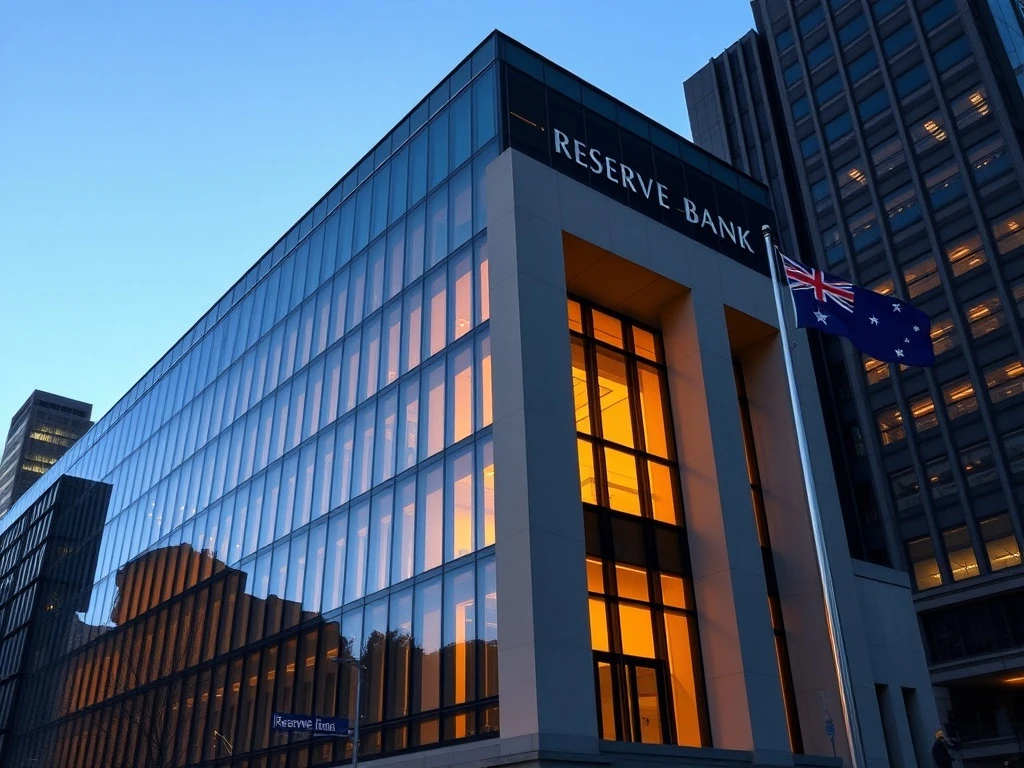
SYDNEY, Australia – February 3, 2026: The Reserve Bank of Australia (RBA) is widely expected to deliver consecutive interest rate increases at its upcoming meetings, according to a pivotal analysis from global financial institution Brown Brothers Harriman (BBH). This hawkish pivot places intense focus on the AUD/USD currency pair, with traders bracing for significant volatility. The forecast, detailed in BBH’s latest client note, signals a decisive shift in the RBA’s approach to persistent inflation pressures, marking a critical juncture for the Australian economy and global forex markets.
RBA’s Hawkish Pivot: Analyzing the BBH Forecast
BBH’s global head of currency strategy, Win Thin, outlined the rationale for expecting back-to-back hikes in a research note circulated to institutional clients on Monday. The analysis cites stubbornly high services inflation and a tighter-than-expected labor market as the primary catalysts. “The RBA’s previous incremental approach appears insufficient,” the note states, referencing the bank’s own February 2026 Statement on Monetary Policy which revised core inflation forecasts upward. Consequently, market pricing, as tracked by the ASX 30-Day Interbank Cash Rate Futures, now implies an 85% probability of a 25-basis-point hike at the March 4 meeting, with a 65% chance of a follow-up move in April.
This potential policy path represents a clear acceleration. The RBA held its official cash rate at 4.60% throughout the latter half of 2025, adopting a “wait-and-see” stance. However, December 2025 CPI data surprised to the upside at 4.2% year-on-year, well above the RBA’s 2-3% target band. The timeline of events is crucial: October’s strong employment figures, November’s robust retail sales, and December’s sticky inflation have collectively forced the central bank’s hand. BBH’s forecast is not an outlier; it aligns with revised projections from three of Australia’s four major domestic banks.
Immediate Impact on the AUD/USD Currency Pair
The direct consequence for the AUD/USD is a recalibration of its interest rate differential with the US dollar. Higher Australian rates typically increase the yield attractiveness of the Aussie, supporting its value. Following the BBH report’s dissemination, the AUD/USD pair rallied 0.8% to breach the 0.6850 resistance level, its highest point in six weeks. However, analysts caution that the impact is twofold and depends heavily on the Federal Reserve’s concurrent actions.
- Short-Term Volatility Spike: Currency markets are repricing risk around the RBA’s meeting dates, leading to increased volatility. The 30-day implied volatility for AUD/USD options has jumped 15% since the start of February.
- Carry Trade Appeal: A wider rate differential could revive the Australian dollar’s role in carry trades, where investors borrow in low-yield currencies to invest in higher-yielding ones.
- Economic Growth Trade-off: Aggressive tightening risks slowing Australia’s GDP growth, projected by the Treasury to be 2.1% in 2026. A weaker growth outlook could eventually cap the currency’s gains, creating a complex dynamic for traders.
Expert Perspectives and Institutional Reactions
Economists are divided on the sustainability of this hawkish path. Luci Ellis, former RBA Assistant Governor and now Chief Economist at Westpac, warned in a public forum last week that “the full impact of prior hikes is still flowing through the mortgage belt.” She emphasized the risk of over-tightening given the high level of household debt. Conversely, Su-Lin Ong, Chief Economist at RBC Capital Markets, supports BBH’s view, telling Bloomberg that “the inflation genie is proving difficult to rebottle, leaving the Board with little choice but to act more forcefully.” The RBA itself has not commented on specific meeting outcomes, but Governor Michele Bullock’s recent parliamentary testimony stressed that the Board “will not hesitate to raise rates further if needed” to return inflation to target, a statement BBH cites as a key signal.
Broader Context: A Global Central Bank Divergence Play
This potential RBA action does not occur in a vacuum. It highlights a growing divergence in global monetary policy. While the European Central Bank and Bank of Canada have signaled a pause, and the Federal Reserve is data-dependent, the RBA may be embarking on a more proactive tightening phase. This divergence is a key theme for 2026 currency markets.
| Central Bank | Current Policy Stance | 2026 Inflation Forecast |
|---|---|---|
| Reserve Bank of Australia (RBA) | Hawkish (Hikes Expected) | 3.5% (Core, year-end) |
| US Federal Reserve (Fed) | Data-Dependent / Pause | 2.3% (Core PCE, year-end) |
| European Central Bank (ECB) | Dovish Hold | 2.1% (year-end) |
| Bank of Canada (BoC) | Hold | 2.2% (year-end) |
This table, based on latest institutional forecasts, illustrates the RBA’s outlier position. The Australian dollar’s performance will therefore hinge not just on domestic hikes, but on whether other major banks remain on hold, thereby widening the yield advantage.
What Happens Next: Scenarios for Traders and the Economy
The immediate forward path is defined by key data releases and the March 4 RBA meeting. Traders will scrutinize the February 28 Monthly CPI Indicator and Q4 Wage Price Index data for final confirmation. A scenario analysis suggests three potential outcomes: a double hike as BBH forecasts, a single hike with hawkish guidance, or a surprise hold that would severely dent the RBA’s credibility and likely trigger an AUD sell-off. Most analysts consider the first two scenarios most probable. Beyond March, the focus will shift to the RBA’s guidance on the terminal rate and any changes to its quantitative tightening program.
Stakeholder Reactions: From Mortgage Holders to Miners
The potential for back-to-back hikes has triggered swift reactions. The Australian Banking Association noted that a further 50 basis points in increases would add approximately A$150 to the monthly repayment on an average A$600,000 mortgage. Conversely, the Minerals Council of Australia welcomed the move, stating that a stronger currency could help curb imported inflation in the mining sector’s extensive capital expenditure programs. Consumer confidence surveys, however, have dipped for two consecutive weeks, reflecting household anxiety.
Conclusion
The BBH forecast for back-to-back RBA rate hikes has set the agenda for the Australian dollar and financial markets in early 2026. This analysis underscores a critical shift from a cautious to a more assertive central bank, driven by unyielding inflation. The immediate AUD/USD rally reflects this repricing, but its durability will be tested by global policy divergence and the domestic economic response to higher rates. Traders should prepare for elevated volatility around key dates, while households and businesses must brace for the tightening financial conditions that now appear imminent. The RBA’s coming decisions will define the economic landscape for the remainder of the year.
Frequently Asked Questions
Q1: What exactly does BBH forecast for the RBA?
Brown Brothers Harriman (BBH) forecasts that the Reserve Bank of Australia will increase its official cash rate by 25 basis points at both its March and April 2026 policy meetings, marking consecutive hikes.
Q2: How would back-to-back RBA hikes affect the Australian dollar (AUD)?
Typically, higher interest rates make a currency more attractive to yield-seeking investors, which can support or increase its value. This has been seen in the AUD/USD’s recent rally, though the full impact depends on actions by other central banks like the US Federal Reserve.
Q3: When is the next RBA meeting, and what data is key before then?
The next RBA Board meeting is on March 4, 2026. Critical data to watch includes the Monthly CPI Indicator on February 28 and the Q4 2025 Wage Price Index, released on February 26.
Q4: Why is the RBA considering more rate hikes if inflation is falling?
While headline inflation has declined from its peak, core inflation—which excludes volatile items—remains stubbornly high, particularly in the services sector. The RBA’s mandate is to return inflation to its 2-3% target band, and recent data suggests progress has stalled.
Q5: How does this affect the global forex market?
It creates a potential divergence trade. If the RBA hikes while other major banks pause, the interest rate differential favoring the AUD widens. This can drive flows into the Australian dollar and increase volatility across currency pairs involving the AUD.
Q6: What does this mean for Australians with a mortgage?
Each 25-basis-point increase adds to monthly mortgage repayments for variable-rate loans. Two hikes could add a significant amount to household budgets, potentially slowing consumer spending and impacting economic growth.



