
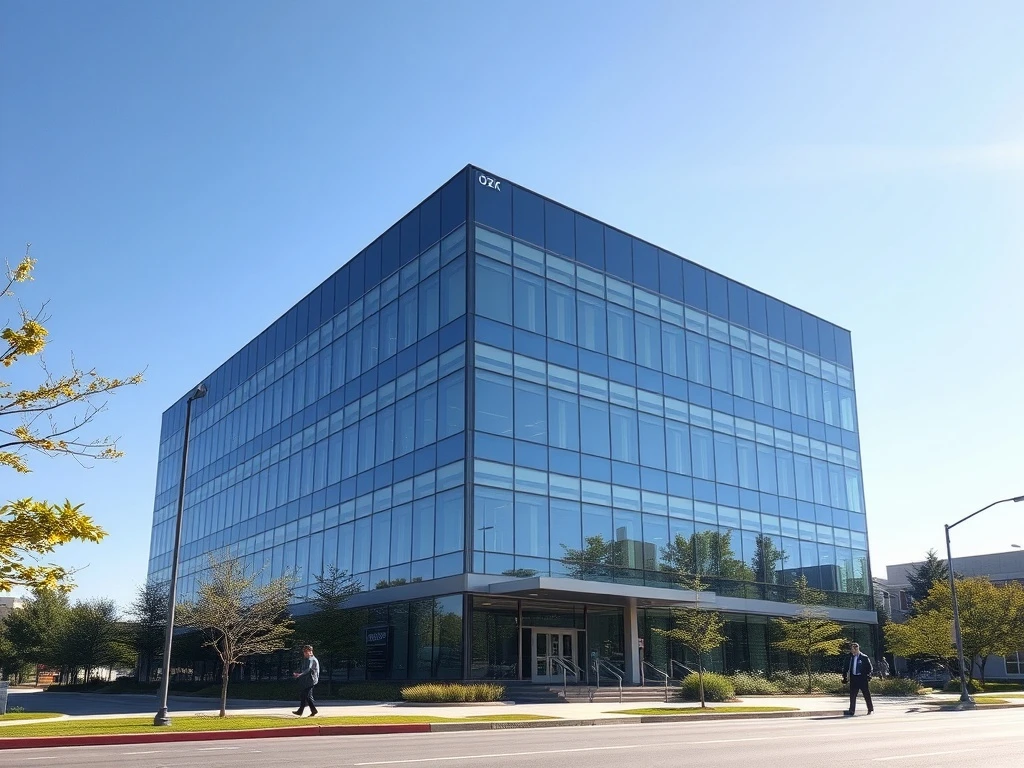
LITTLE ROCK, Ark. — August 23, 2024: Income investors searching for reliable cash flow amidst market volatility have identified a compelling opportunity in regional banking. While mega-cap technology stocks dominate headlines, Bank OZK (OZK) has emerged as a standout high-growth dividend stock with a 3.85% yield that significantly outperforms industry benchmarks. The Little Rock-based bank reported a 12.7% annual dividend increase this week, positioning it uniquely within the finance sector for investors prioritizing both income and growth. This development comes during a period where the S&P 500 yields just 1.57%, highlighting OZK’s attractive proposition for portfolio cash flow generation.
Bank OZK’s Dividend Growth Analysis and Financial Position
Bank OZK’s current annualized dividend of $1.60 per share represents a substantial commitment to shareholder returns. According to Zacks Equity Research data released August 23, the bank has increased its dividend five times over the past five years, achieving an average annual increase of 10.17%. This consistent growth trajectory places OZK in rare company among financial institutions. The bank’s payout ratio stands at a conservative 26%, meaning it distributes just over a quarter of its trailing twelve-month earnings per share as dividends. Consequently, this conservative approach provides a significant buffer for maintaining and growing payouts during economic cycles.
George Gleason, Bank OZK’s Chairman and CEO, has emphasized a long-term strategy focused on disciplined growth and capital management. The bank’s geographic footprint across the Southern and Mid-Atlantic United States provides a stable deposit base. Furthermore, its commercial real estate lending specialization has delivered above-average returns. For the 2024 fiscal year, the Zacks Consensus Estimate projects earnings of $6.01 per share, representing year-over-year growth of 2.39%. This earnings stability directly supports the dividend’s sustainability.
Comparative Yield Advantage in the Current Interest Rate Environment
Bank OZK’s 3.85% dividend yield creates a distinct advantage for income-focused portfolios. Currently, the yield surpasses the Banks – Northeast industry average of 2.8% by over 100 basis points. Moreover, it more than doubles the S&P 500’s yield. In an environment where the Federal Reserve has signaled a higher-for-longer interest rate stance, high-yielding equities like OZK offer an alternative to fixed-income securities. However, investors must recognize that rising rates can pressure bank net interest margins. Bank OZK’s asset-sensitive balance sheet is positioned to benefit from a sustained higher rate environment, potentially fueling further earnings and dividend growth.
- Superior Current Income: OZK’s 3.85% yield provides immediate cash flow, crucial for retirees and income investors.
- Growth Component: A 12.7% dividend hike signals management’s confidence in future earnings power and capital strength.
- Capital Preservation: A 26% payout ratio indicates a high margin of safety, reducing the risk of a dividend cut during downturns.
Expert Analysis on Dividend Sustainability and Bank Fundamentals
Sheraz Mian, Director of Research at Zacks Investment Research, notes that dividend sustainability hinges on earnings quality and balance sheet strength. “Bank OZK’s conservative underwriting and focus on relationship banking have resulted in credit metrics that are among the strongest in the industry,” Mian stated in a recent research briefing. The bank’s Texas ratio—a key measure of credit risk—remains well below peer averages, according to Federal Deposit Insurance Corporation (FDIC) data. Additionally, banking analyst David Chiaverini of Wedbush Securities points to the bank’s disciplined growth in construction lending as a differentiator that supports premium returns. These expert perspectives underscore the fundamental backing behind the dividend story.
The Broader Landscape: Dividend Stocks Versus High-Growth Equities
The search for a high-growth dividend stock often leads investors to a fundamental choice between income and capital appreciation. Technology giants like AAPL, NVDA, and GOOG typically reinvest profits for expansion rather than paying substantial dividends. Conversely, mature companies in sectors like consumer staples (PEP, COST) or utilities offer higher yields but slower growth. Bank OZK occupies a middle ground, offering both a meaningful yield and a demonstrated history of dividend growth. This hybrid profile is particularly valuable in a diversified portfolio, serving as both an income generator and a potential source of total return through dividend compounding.
| Stock (Ticker) | Dividend Yield | 5-Year Dividend CAGR | Sector |
|---|---|---|---|
| Bank OZK (OZK) | 3.85% | 10.17% | Finance |
| Apple Inc. (AAPL) | 0.55% | 5.8% | Technology |
| PepsiCo (PEP) | 2.95% | 7.2% | Consumer Staples |
| S&P 500 Index | 1.57% | 6.1% | Broad Market |
Forward-Looking Outlook for Bank OZK and Dividend Investors
The immediate future for Bank OZK appears anchored to its earnings guidance and macroeconomic conditions. The bank’s management has expressed confidence in its loan portfolio’s performance despite concerns about commercial real estate. Upcoming quarterly reports will be scrutinized for net interest margin trends and credit quality metrics. For dividend investors, the key monitorable is the payout ratio’s trajectory. Should earnings growth accelerate as projected, the bank possesses ample capacity for further dividend increases. The current Zacks Rank of 3 (Hold) suggests a neutral near-term outlook on the stock price, but the dividend story remains distinctly positive.
Investor Considerations and Portfolio Implementation Strategy
Income investors evaluating OZK must weigh its regional banking concentration against its yield advantage. The bank’s performance is tied to economic conditions in its operational footprint, primarily in the South. However, its niche expertise in construction and development lending provides a competitive moat. Portfolio managers often recommend sizing positions appropriately—using dividend stocks like OZK as core holdings for income, while balancing with growth-oriented assets. The recent pullback in share price, down 16.52% year-to-date, may present a more attractive entry point for yield, effectively raising the forward dividend yield for new investors.
Conclusion
Bank OZK presents a compelling case as a high-growth dividend stock in August 2024, combining a superior 3.85% yield with a double-digit dividend growth rate. Its conservative payout ratio and solid earnings outlook provide a foundation for sustainable income. While all investments carry risk, particularly in the interest-rate-sensitive banking sector, OZK’s fundamentals and track record offer a noteworthy option for investors seeking cash flow and growth. As the market continues to reward companies with shareholder-friendly capital allocation, Bank OZK’s commitment to returning capital through a growing dividend warrants close attention from income-focused portfolios in the quarters ahead.
Frequently Asked Questions
Q1: What is Bank OZK’s current dividend yield and how does it compare?
Bank OZK currently offers a dividend yield of 3.85% as of August 2024. This significantly exceeds the S&P 500 average of 1.57% and the Banks – Northeast industry yield of 2.8%, making it a standout for income.
Q2: How sustainable is Bank OZK’s dividend given economic concerns?
The dividend appears sustainable due to a conservative 26% payout ratio, strong credit metrics, and projected earnings growth. The bank has increased its dividend for five consecutive years, demonstrating management’s commitment.
Q3: What are the main risks for an investor in Bank OZK stock?
Primary risks include exposure to commercial real estate lending, sensitivity to interest rate changes, and geographic concentration in the Southern U.S. A severe economic downturn could impact loan performance.
Q4: How does Bank OZK fit into a diversified income portfolio?
It can serve as a core holding in the financial sector allocation, providing above-average yield and growth. It should be balanced with stocks from other sectors and asset classes to mitigate sector-specific risk.
Q5: Why do some high-growth companies like Tesla or Amazon not pay dividends?
High-growth technology firms typically reinvest all profits back into the business to fuel expansion, research, and market capture. They prioritize capital appreciation over current income for shareholders.
Q6: What should income investors monitor regarding Bank OZK going forward?
Key metrics include quarterly earnings reports, net interest margin trends, the Texas ratio for credit quality, and any guidance on future dividend actions from management. The payout ratio should remain manageable.



