
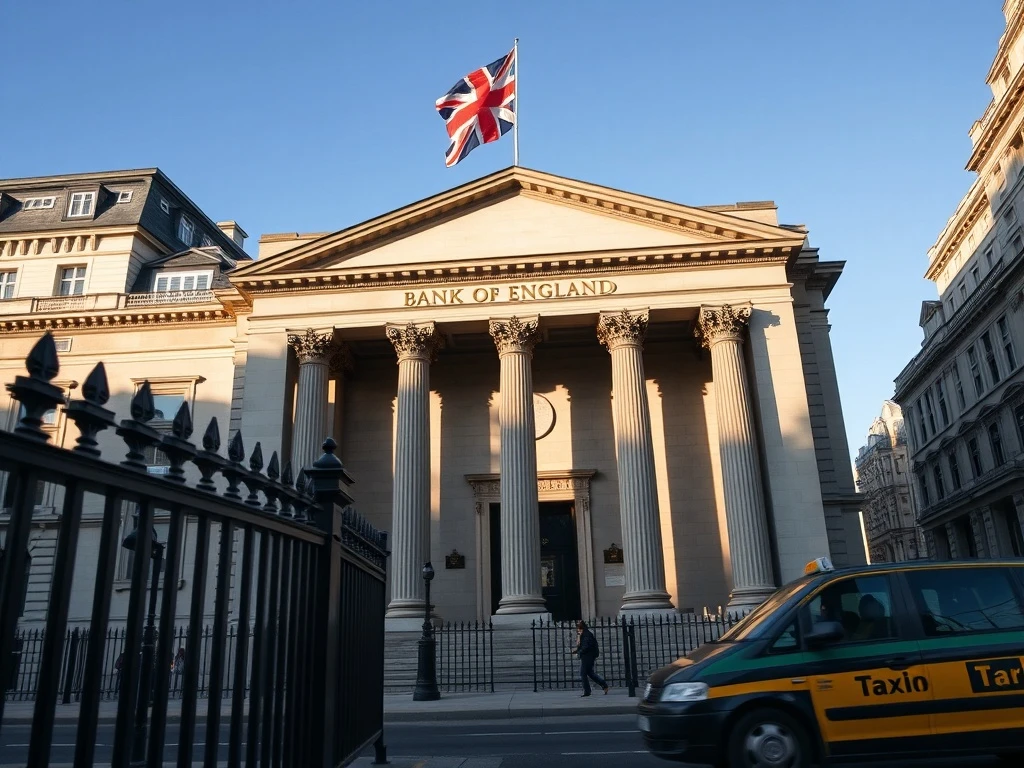
LONDON, March 15, 2026 — The British pound finds near-term support from significant repricing of Bank of England monetary policy expectations, according to fresh analysis from Deutsche Bank’s foreign exchange strategy team. Market participants now anticipate a more gradual easing cycle from the UK central bank following stronger-than-expected January inflation data and hawkish commentary from Monetary Policy Committee members. This GBP BoE repricing supports currency dynamics as traders adjust positions ahead of the March 20 policy decision, creating what analysts describe as a “policy cushion” for sterling against both the dollar and euro.
Deutsche Bank Analysis Details GBP Support Mechanism
Deutsche Bank’s currency strategists, led by George Saravelos, published their latest assessment early Friday. They note markets have removed approximately 40 basis points of expected 2026 rate cuts since the February inflation surprise. Consequently, the repricing creates what the bank terms “asymmetric upside potential” for sterling in the coming weeks. The analysis specifically highlights how shifting expectations around the terminal rate—the point at which the Bank of England stops its tightening cycle—provide structural support. Saravelos states this adjustment reflects deeper concerns about persistent services inflation, which remained at 6.5% year-over-year in the latest Office for National Statistics release.
This development follows three consecutive months of inflation data exceeding Bank of England forecasts. The timeline shows a clear pattern: October’s surprise upside, November’s stickiness, and December’s plateau all contributed to changing market psychology. Meanwhile, MPC member Catherine Mann warned in a February 28 speech that premature easing could “un-anchor” inflation expectations. Her comments triggered immediate front-end gilt yield movements. These yield shifts directly influence currency valuations through interest rate differentials, creating the supportive environment Deutsche Bank identifies.
Immediate Market Impact and Trading Consequences
The repricing manifests in several concrete market movements. First, sterling has gained 1.8% on a trade-weighted basis since February 15. Second, the GBP/USD pair broke through the 1.2850 resistance level that held for most of January. Third, risk reversals—options market indicators of sentiment—show reduced demand for pound puts relative to calls. Deutsche Bank quantifies the support zone between 1.2750 and 1.2950 for cable. Below this range, they identify substantial buying interest from real money accounts adjusting duration exposure.
- Reduced Rate Cut Expectations: Markets now price just 75 basis points of cuts for 2026, down from 115 basis points in mid-February.
- Yield Curve Steepening: The 2-year to 10-year gilt spread widened 15 basis points, attracting foreign capital flows.
- Positioning Adjustment: CFTC data shows leveraged funds reduced net short GBP positions by 12,000 contracts last week.
Institutional and Expert Perspectives on Policy Shift
Other major institutions echo aspects of Deutsche Bank’s assessment. J.P. Morgan Asset Management global strategist Hugh Gimber notes the UK faces a “different inflation composition” than the Eurozone, requiring divergent policy paths. He references the BoE’s own February Monetary Policy Report, which highlighted domestic wage growth and services inflation as particular concerns. Separately, Oxford Economics UK chief economist Andrew Goodwin points to labor market tightness, with vacancies still exceeding pre-pandemic levels despite recent unemployment increases. These expert views collectively underscore why the BoE maintains a cautious stance compared to peers.
Comparative Analysis: BoE Versus Global Central Banks
The UK’s monetary policy trajectory now diverges meaningfully from other major economies. While the Federal Reserve eyes mid-year cuts and the European Central Bank prepares for April easing, the Bank of England signals extended restraint. This divergence creates favorable interest rate differentials that traditionally support currency values. The table below illustrates key policy expectation gaps:
| Central Bank | Expected 2026 Rate Cuts | Inflation Forecast (Q4 2026) | Policy Divergence Impact |
|---|---|---|---|
| Bank of England | 75 bps | 2.1% | Supports GBP via higher real yields |
| Federal Reserve | 100 bps | 2.0% | Narrows USD advantage |
| European Central Bank | 125 bps | 1.9% | Widens GBP-EUR yield spread |
| Bank of Japan | -25 bps (hike) | 2.0% | Creates cross-opportunities |
Forward-Looking Analysis: What Happens Next for Sterling
The immediate catalyst arrives March 20 with the Bank of England’s policy decision and updated projections. Markets will scrutinize voting patterns, particularly whether the 6-3 hawkish split from February persists. Any shift toward 7-2 or 5-4 could trigger volatility. Beyond the meeting, April 17 inflation data represents the next major test. Deutsche Bank’s analysis suggests the near-term support remains intact unless core inflation falls below 5.0% unexpectedly. The bank’s base case maintains a range-bound sterling with upside bias through Q2 2026. However, they identify the Autumn fiscal statement as a potential inflection point, where tax and spending decisions could alter the growth-inflation tradeoff.
Market Participant Reactions and Positioning Shifts
Interviews with London trading desk heads reveal nuanced reactions. A senior FX trader at a major European bank reports “real money slowly adding GBP exposure” as a hedge against Eurozone policy error. Meanwhile, corporate treasurers appear more cautious, with many locking in rates for Q2 deliveries amid uncertainty. The options market shows increased demand for September sterling calls, suggesting some investors anticipate delayed but eventual BoE easing. Retail flow data from UK platforms indicates renewed interest in currency ETFs, though volumes remain below January peaks.
Conclusion
Deutsche Bank’s analysis correctly identifies the GBP BoE repricing supports currency dynamic as a key near-term driver. The combination of sticky inflation, hawkish communication, and shifting market expectations creates a supportive technical and fundamental backdrop. While risks remain—particularly regarding growth data and global risk sentiment—the recalibrated policy outlook provides sterling with relative resilience. Traders should monitor March 20 voting patterns and April inflation prints for confirmation or contradiction of this thesis. The broader implication suggests currency markets increasingly discriminate between central banks based on inflation composition, not just headline rates.
Frequently Asked Questions
Q1: What exactly does “BoE repricing” mean for the British pound?
BoE repricing refers to financial markets adjusting their expectations for future Bank of England interest rate moves. When traders anticipate fewer rate cuts or delayed easing—as currently happening—it typically strengthens the pound because higher interest rates attract foreign investment into UK assets.
Q2: How long might this GBP support from policy repricing last?
Deutsche Bank’s analysis suggests near-term support through Q2 2026, contingent on upcoming inflation data and Bank of England communications. The March 20 policy decision and April 17 inflation release represent critical junctures that could extend or undermine this dynamic.
Q3: What specific data triggered the recent repricing of BoE policy?
January’s inflation report showed services inflation persisting at 6.5% year-over-year, exceeding the BoE’s forecast. Combined with hawkish comments from MPC member Catherine Mann on February 28, this caused markets to reduce expected 2026 rate cuts from 115 to 75 basis points.
Q4: How does this affect UK businesses and international trade?
A stronger pound makes UK exports more expensive for foreign buyers, potentially challenging manufacturers. However, it reduces costs for imported goods and materials, helping businesses that rely on foreign inputs and potentially easing some inflationary pressures.
Q5: How does the BoE’s position compare to other major central banks right now?
The Bank of England currently signals more caution about cutting rates than the Federal Reserve or European Central Bank. This policy divergence creates favorable interest rate differentials that support sterling against both the dollar and euro in currency markets.
Q6: What should ordinary investors watch to understand if this trend continues?
Monitor the Bank of England’s March 20 voting split on rates, April’s inflation data (particularly services inflation), and any changes in wage growth figures. Also watch gilt yield movements—rising short-term yields typically correlate with pound strength during policy repricing periods.



