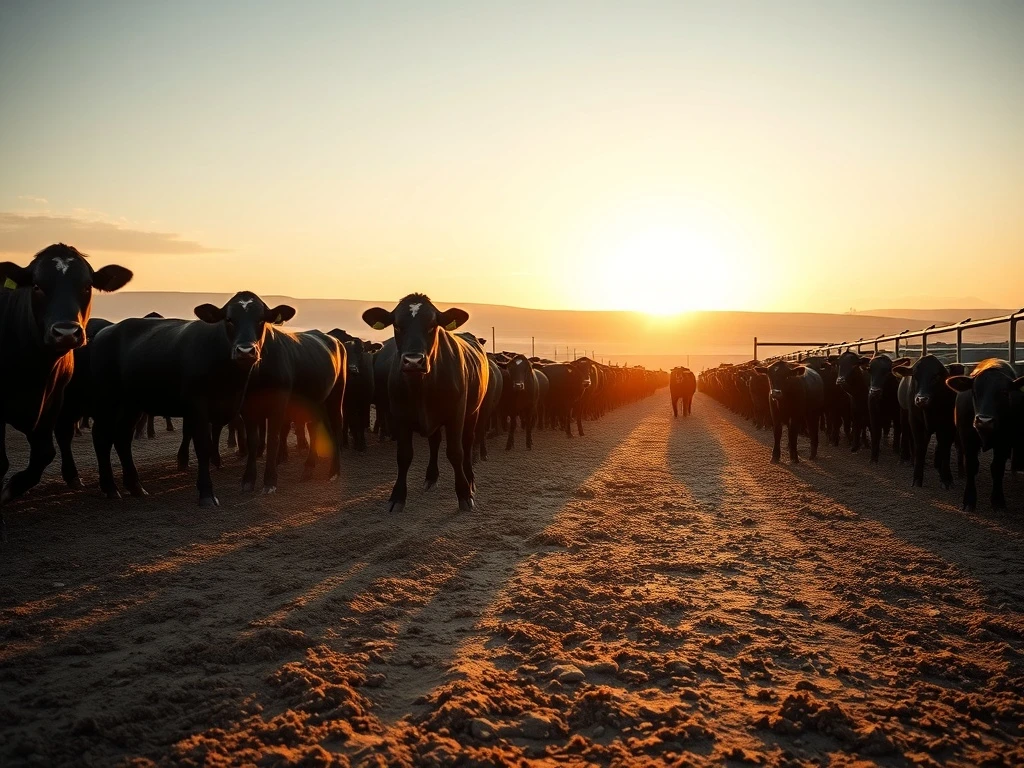
CHICAGO, March 6, 2026 — U.S. livestock markets presented a split picture on Thursday, as live cattle futures posted modest gains while feeder cattle contracts fell sharply. The divergence, recorded during the March 6 trading session at the Chicago Mercantile Exchange (CME), highlights the contrasting pressures from cash market uncertainty and rising feed costs. According to settlement data, front-month April 2026 live cattle closed at $238.525, up 17.5 cents, while March 2026 feeder cattle dropped $1.325 to $362.600. This activity follows a notably weak weekly beef export sales report from the U.S. Department of Agriculture (USDA), which showed a calendar-year low of just 11,163 metric tons sold for the week ending February 26.
Live Cattle Futures Find Modest Support
Live cattle contracts managed to close in positive territory across the board on Thursday. Front-month April 2026 futures edged up 17.5 cents to settle at $238.525. Meanwhile, June 2026 contracts gained 10 cents to $235.275, and August 2026 added 17.5 cents to reach $233.400. The slight upward movement occurred despite a lack of reported cash trade for the week. Analysts point to steady wholesale beef prices as a underlying support. Specifically, the Thursday afternoon boxed beef report showed Choice cuts at $386.89 and Select at $380.61. Consequently, the Choice/Select spread narrowed to $6.28, indicating a tightening supply of premium cuts.
However, the market faced headwinds from a failed Fed Cattle Exchange auction. The online platform showed no sales on its offering of 1,224 head, with bids stalling at $238. “The cash market is in a holding pattern,” noted a report from Barchart. “Packers and feedlots are assessing supply against the backdrop of softer export demand.” The USDA’s estimated federally inspected cattle slaughter for Thursday was 111,000 head, bringing the week-to-date total to 433,000. This figure is 6,000 head above the previous week but remains 34,756 head below the same week last year, reflecting ongoing tighter supplies.
Feeder Cattle Succumb to Corn Market Pressure
In contrast to live cattle, the feeder cattle market faced significant downward pressure. Futures fell between $1.00 and $1.75 across active contracts. The primary driver was strength in the corn market, which increases the cost of finishing cattle in feedlots and directly pressures feeder animal values. The CME Feeder Cattle Index fell another 34 cents to $368.59 as of March 4, extending a recent weakening trend. This dynamic creates a margin squeeze for cattle feeders, who buy lighter feeder cattle and then bear the cost of grain during the finishing process.
- Feed Cost Impact: Rising corn prices immediately translate to higher production costs, making feeders less valuable to buyers.
- Cash Index Decline: The steady drop in the CME Feeder Cattle Index signals softening demand in the physical market for these animals.
- Deferred Contract Weakness: The sell-off was not isolated to spot months, indicating broader concerns about future feed economics and demand.
USDA Data Reveals Export Market Softness
The weekly Export Sales report provided critical context for the day’s mixed trading. The USDA confirmed a total of only 11,163 metric tons (MT) of beef sold in the week ending February 26. This figure marks the lowest weekly total for the 2026 calendar year. Japan was the top buyer at 3,300 MT, followed by South Korea at 2,300 MT. While sales were weak, actual shipments were more robust, totaling 14,914 MT for the week. South Korea was the largest destination for shipped beef at 5,000 MT, with Japan taking 3,700 MT. “The disconnect between weak new sales and strong shipments suggests exporters are working through existing commitments,” an industry analyst explained, referencing the USDA’s Foreign Agricultural Service data. “The concern is whether this sales slump is a one-off or the start of a trend.”
Historical Context and Market Comparisons
Thursday’s divergence is not unprecedented but occurs within a specific macroeconomic environment. Compared to the same period in 2025, total cattle slaughter remains lower, supporting live animal prices. However, the export market, a key demand pillar in recent years, is showing vulnerability. The following table compares key metrics from the latest data against prior periods and highlights the current pressures.
| Metric | Current Week (Mar 2026) | Previous Week | Same Week 2025 |
|---|---|---|---|
| Weekly Beef Export Sales | 11,163 MT (CY Low) | 18,450 MT | 22,100 MT |
| Weekly Beef Shipments | 14,914 MT | 12,800 MT | 15,500 MT |
| CME Feeder Cattle Index | $368.59 | $368.93 | $375.20 |
| Estimated Weekly Slaughter | 433K Head (to date) | 427K Head | ~468K Head |
What Cattle Producers and Traders Watch Next
Market participants will focus on several imminent developments. First, the cash cattle trade for the week must be established, providing a crucial reality check for futures prices. Second, the USDA’s monthly World Agricultural Supply and Demand Estimates (WASDE) report, due next week, will update feed grain outlooks. Finally, weekly export sales data will be scrutinized for signs of a rebound or confirmation of sustained weakness. “The feeder cattle complex is at the mercy of the grain markets,” stated a commodity risk manager from a major agricultural bank. “For live cattle, the story is about domestic beef demand holding up in the face of fading international interest. The path of least resistance depends on which of those forces wins out.”
Industry Reaction and Analyst Outlook
Initial reactions from the cattle industry emphasized caution. Feedlot operators expressed concern over compressed margins, while cow-calf producers noted the resilience in calf prices relative to the feeder futures drop. Independent analysts, like those at Barchart, highlighted the technical levels being tested in both markets. The general consensus is that the market is in a consolidation phase, searching for direction between tight domestic supplies and uncertain demand signals. The lack of a clear trend makes risk management through hedging particularly challenging for physical market participants.
Conclusion
The cattle futures market split on Thursday, March 6, 2026, underscores the complex forces shaping the livestock sector. Live cattle found modest footing on steady domestic beef values, while feeder cattle fell victim to rising corn costs and a soft export sales report. The key takeaways are the resilience of domestic consumer demand, the sensitivity of the supply chain to feed economics, and the emerging question mark over international beef demand. Market watchers should monitor cash trade settlements, weekly export figures, and grain market movements closely. The divergence may narrow quickly, or it could signal the beginning of a more sustained period where the economics of raising cattle and the demand for beef move on different paths.
Frequently Asked Questions
Q1: Why did live cattle futures go up while feeder cattle futures went down?
Live cattle futures, which represent animals ready for slaughter, were supported by steady wholesale beef prices and tight slaughter supplies. Feeder cattle futures, representing younger cattle sent to feedlots, fell primarily due to rising corn prices, which increase feeding costs and reduce their value to buyers.
Q2: How significant was the weak USDA export sales report?
It was significant as the 11,163 metric tons sold marked the lowest weekly total for the 2026 calendar year. This indicates potential softening in international demand, which has been a key support for U.S. cattle prices in recent years.
Q3: What is the immediate next step for the cattle market?
The market awaits confirmed cash cattle trade for the week. The price established in direct negotiations between feedlots and packers will validate or challenge the levels seen in the futures market and set the tone for next week.
Q4: What does the CME Feeder Cattle Index measure?
It is a weighted average of prices for feeder cattle sold in cash markets across the United States. It serves as a benchmark for the physical market and influences the settlement of feeder cattle futures contracts.
Q5: How does the price of corn affect cattle markets?
Corn is the primary feed grain. Higher corn prices directly increase the cost for feedlots to fatten cattle, lowering the price they are willing to pay for feeder cattle and squeezing their profit margins on finished cattle.
Q6: Who is most affected by the divergence between live and feeder cattle?
Cattle feeders, who buy feeder calves and yearlings to place in feedlots, face the greatest immediate pressure from this divergence, as their input costs (feeder cattle, corn) are high or rising while the selling price for finished cattle is only marginally higher.