
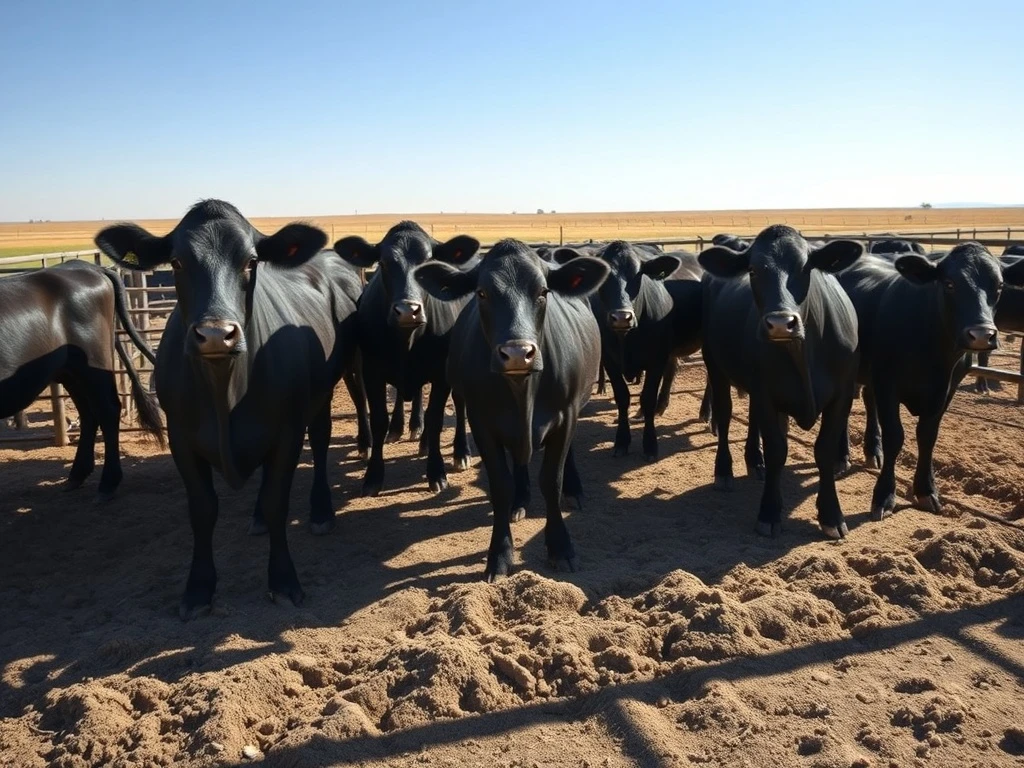
CHICAGO, March 10, 2026 — U.S. cattle futures experienced a significant midday sell-off on Monday, with live cattle contracts down between $3.35 and $4.25. The sharp decline coincides with a looming labor strike threat at a major JBS meatpacking facility in Greeley, Colorado, and follows a week of steady cash trade. Market analysts point to a combination of managed money pulling back from long positions and immediate supply chain concerns as key drivers for the sudden cattle futures falling. The CME Group reported the sell-off accelerated during the morning session, reflecting heightened trader anxiety.
Live and Feeder Cattle Contracts Plunge at Midday
The Chicago Mercantile Exchange (CME) showed uniform pressure across the cattle complex. Specifically, the April 2026 Live Cattle contract traded at $230.325, down $4.250. Meanwhile, feeder cattle futures faced even steeper losses, with the May 2026 contract down $5.50 to $342.575. This price action extends a weakening trend observed in the CME Feeder Cattle Index, which fell $1.47 to $367.32 on March 5. Cash trade settled last week at $240 per hundredweight across most major regions, providing a baseline that futures are now testing. The Monday auction in Oklahoma City noted a “lower undertone” early on for its offering of 4,500 head, confirming the bearish cash sentiment.
Commitment of Traders data released Friday revealed a key shift in speculative positioning. Managed money funds reduced their net long position in live cattle futures and options by 4,494 contracts as of last Tuesday, bringing the total to 114,519 contracts. Similarly, speculators trimmed their net long in feeder cattle by 206 contracts to 17,956. This pullback by large funds often signals a change in short-term momentum and contributed to today’s downward pressure.
Labor Strike Threat Adds Immediate Supply Chain Pressure
The most immediate catalyst for the market’s nervousness is a potential work stoppage at a critical processing node. The United Food and Commercial Workers (UFCW) Local 7 union served notice on Friday for a strike to begin March 16 at the JBS USA plant in Greeley, Colorado. This facility is one of the largest beef processing plants in North America. A strike would severely disrupt the flow of cattle to market, creating a backlog on feedlots and potentially distorting regional cash prices. Consequently, traders are pricing in this uncertainty, leading to the live cattle prices drop.
- Processing Disruption Risk: A prolonged strike at Greeley could bottleneck up to 5,000-6,000 head of cattle daily, forcing feeders to hold animals longer.
- Cash Market Volatility: Regional cash prices near Colorado would likely diverge from national averages if the plant halts operations.
- Wholesale Price Support: Ironically, a reduction in processing capacity could eventually support wholesale beef values by tightening meat supply, even as live animal prices fall.
Expert Analysis on Market Fundamentals
Dr. James Corbin, a livestock economist at the University of Illinois, provided context. “The market is reacting to a perfect storm of technical selling and headline risk,” Corbin stated. “The fund long liquidation was expected after the recent run-up, but the strike threat accelerates the move. The key watchpoint is the feeder cattle index and whether this cash weakness persists.” The USDA’s latest slaughter estimate of 521,000 head for last week, while up 2,000 from the prior week, remains 58,267 head below the same week last year, indicating tighter overall meat production.
Wholesale Beef Prices Defy Live Market Trend
In a contrasting development, wholesale boxed beef prices moved higher in Monday morning’s report from the USDA. Choice boxed beef climbed $3.44 to $390.66 per hundredweight, while Select rose $2.28 to $381.23. The Choice/Select spread widened to $9.43, signaling stronger demand for higher-quality beef. This divergence between falling live animal costs and rising wholesale meat values highlights the complex dynamics and potential margin squeeze for packers. If live costs fall faster than wholesale prices, packer profitability could improve, assuming they can maintain throughput.
| Contract | Price | Change |
|---|---|---|
| Apr ’26 Live Cattle | $230.325 | -$4.250 |
| Jun ’26 Live Cattle | $227.625 | -$3.850 |
| Mar ’26 Feeder Cattle | $351.150 | -$4.475 |
| May ’26 Feeder Cattle | $342.575 | -$5.500 |
Market Outlook and Key Dates to Watch
All eyes are now on Colorado for developments in labor negotiations. The March 16 strike deadline creates a firm event horizon for traders. Furthermore, the USDA’s monthly Cattle on Feed report, due later this month, will provide crucial data on placement numbers and feedlot inventories. Market technicians note that a close below key support levels in the April live cattle contract could trigger another wave of selling. However, the stronger wholesale boxed beef prices may put a floor under the market if consumer demand remains resilient.
Industry and Rancher Response
Initial reactions from producer groups expressed concern over the volatility. “This kind of drop hits the producer’s bottom line directly,” said Sarah Jenkins, a spokesperson for the National Cattlemen’s Beef Association. “While we hope for a quick resolution in Greeley, the market reaction shows how sensitive prices are to any disruption in the supply chain.” Feedlot operators in the Plains states reported taking a more cautious approach to new placements until the price direction becomes clearer.
Conclusion
The cattle market in 2026 faces a pivotal moment, caught between strong underlying consumer demand for beef and acute near-term supply chain risks. The sharp decline in futures on March 10 is a direct reflection of traders discounting the strike threat at JBS Greeley and reacting to a shift in speculative money. The divergence between live cattle prices and wholesale beef values adds a layer of complexity. Market participants should monitor labor negotiations closely this week, as a strike would likely extend volatility, while a settlement could prompt a swift price recovery. The fundamental balance of supply and demand remains tight, suggesting this sell-off may present a buying opportunity once the headline risk passes.
Frequently Asked Questions
Q1: Why are cattle futures falling sharply on March 10, 2026?
The primary drivers are a looming strike at a major JBS processing plant in Colorado and managed money funds reducing their long positions in the market, creating a wave of selling pressure.
Q2: What is the potential impact of the JBS Greeley strike?
A strike would halt processing at one of the nation’s largest beef plants, potentially backing up 5,000-6,000 head of cattle daily and disrupting cash price discovery in the region.
Q3: How did wholesale beef prices react to the falling futures?
Contrary to the live market, wholesale Choice and Select boxed beef prices rose on Monday, widening the spread between live animal costs and meat values.
Q4: What does the Commitment of Traders data show?
The latest report shows speculators reduced their net long bets in both live and feeder cattle futures, signaling a shift in short-term market sentiment toward caution.
Q5: Is this part of a longer-term trend for cattle prices?
While today’s move is acute, it occurs within a longer context of strong consumer demand but volatile supply-side factors, including feed costs and processing capacity.
Q6: How does this affect cattle ranchers and feedlots?
Lower futures prices immediately pressure the value of their inventory, potentially squeezing margins unless cash markets stabilize or wholesale values provide an offset.



