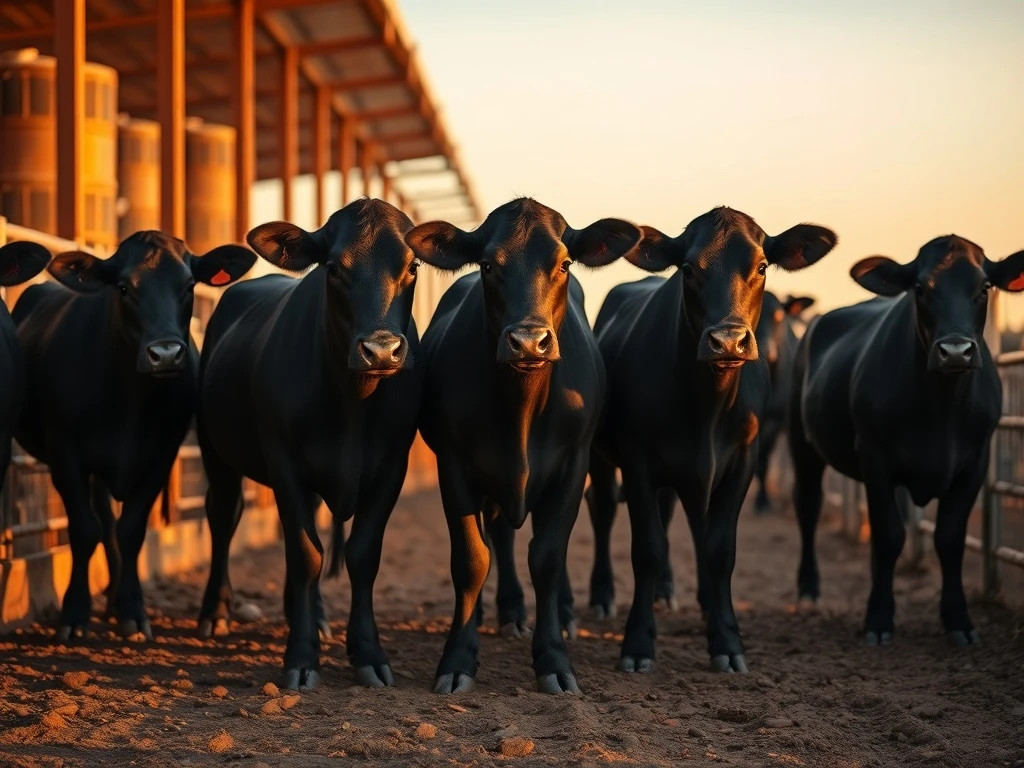
CHICAGO, March 7, 2026 — Cattle futures closed the trading week with significant losses, pressured by a broad decline in equity markets that spilled into agricultural commodities. Live cattle contracts fell $3.80 to $4.50 during Friday’s session on the Chicago Mercantile Exchange, with the April 2026 contract settling at $234.575. The sell-off reflects growing concerns about consumer spending power and protein demand as stock markets retreated. Cash cattle trade settled around $240 across most regions, showing mixed movement with northern areas firming slightly while southern markets dipped. This price action marks one of the sharpest single-day declines in live cattle futures since November 2025, according to CME Group data.
Cattle Futures Market Breakdown and Price Action
The live cattle futures sell-off accelerated throughout Friday’s session, with the most active June 2026 contract dropping $3.80 to close at $231.475. Market analysts immediately pointed to the simultaneous decline in major equity indices as the primary catalyst. “When you see the NASDAQ and S&P 500 down significantly, it creates a risk-off environment that affects all assets, including agricultural commodities,” explained Dr. Sarah Jenkins, agricultural economist at the University of Illinois. “Traders are concerned that weaker consumer sentiment will translate to reduced beef demand at retail.” The April live cattle contract, despite Friday’s losses, remained $2.35 higher than the previous Friday’s close, indicating volatility rather than a pure downward trend.
Commitment of Traders data released Friday afternoon revealed managed money funds reduced their net long position in live cattle futures and options by 4,494 contracts as of Tuesday, bringing the total to 114,519 contracts. This reduction represents the largest weekly decrease in speculative long positions since January 2026. In feeder cattle futures and options, speculators pared back 206 contracts from their net long position, settling at 17,956 contracts. The CME Feeder Cattle Index declined another $1.47 to $367.32 on March 5, continuing a three-week softening trend that has concerned cattle producers.
Economic Impacts on Livestock Producers and Packers
The simultaneous pressure on both live and feeder cattle markets creates a challenging environment for different segments of the beef supply chain. Feedlot operators face narrowing margins as feeder animal costs remain elevated relative to finished cattle prices. Meanwhile, meatpackers benefit from the increased availability of market-ready animals at lower prices. USDA estimated federally inspected cattle slaughter for the week at 521,000 head—2,000 head above the previous week but 58,267 head below the same week last year. This year-over-year reduction reflects ongoing herd rebuilding efforts that began in late 2024.
- Feedlot Economics: Higher feeder cattle prices combined with lower finished cattle prices squeeze operator margins, potentially slowing placement activity.
- Packers’ Advantage: Increased slaughter numbers at lower prices improve packing plant profitability in the short term.
- Retail Dynamics: Wholesale boxed beef prices showed mixed movement, with Choice boxes up 33 cents to $387.22 while Select declined $1.66 to $378.95.
Expert Analysis from Agricultural Economists
Dr. Michael Chen, senior commodity analyst at the American Farm Bureau Federation, provided context for Friday’s movement. “This isn’t fundamentally a cattle story—it’s a macroeconomic story affecting cattle,” Chen stated in an interview. “The correlation between equity markets and agricultural futures has strengthened considerably since 2023’s financial regulations changed margin requirements for commodity traders.” Chen referenced a 2025 USDA Economic Research Service report showing a 40% increase in cross-asset correlation between S&P 500 components and agricultural commodities since 2020. The University of Nebraska’s Livestock Market Information Center issued a market alert Friday afternoon noting that “external financial pressures are temporarily overriding solid beef fundamentals.”
Historical Context and Market Comparisons
Friday’s decline represents the most significant single-day drop in live cattle futures since November 12, 2025, when contracts fell $4.25 amid similar equity market pressures. However, the current market structure differs importantly from previous sell-offs. The April-June live cattle spread tightened to just $3.10 on Friday, compared to a $5.25 spread at the same time last year. This compression suggests traders see near-term supply as adequate but not excessive. The feeder cattle market showed even steeper declines, with May 2026 contracts falling $7.45 to $348.075, reflecting concerns about feed costs and placement economics.
| Contract | Friday Close | Daily Change | Weekly Change |
|---|---|---|---|
| Apr 26 Live Cattle | $234.575 | -$3.950 | +$2.350 |
| Jun 26 Live Cattle | $231.475 | -$3.800 | +$1.850 |
| Mar 26 Feeder Cattle | $355.625 | -$6.975 | -$5.225 |
| May 26 Feeder Cattle | $348.075 | -$7.450 | -$6.950 |
Forward-Looking Analysis and Market Catalysts
Market participants will closely monitor several key developments in the coming week. The USDA’s monthly Cattle on Feed report, scheduled for March 20, will provide crucial data on feedlot inventories and placement intentions. Additionally, the April live cattle contract enters its delivery period in three weeks, which typically increases volatility as traders roll positions. “The fundamental picture for beef remains constructive,” noted Jennifer Martinez of CattleFax. “Beef exports to Asia continue at strong levels, and domestic demand indicators from restaurant sales data remain positive. Once equity markets stabilize, cattle futures should reflect these fundamentals.” The CME Group has scheduled a special webinar for Monday morning titled “Navigating Cross-Asset Volatility in Agricultural Markets,” featuring economists from both financial and agricultural backgrounds.
Industry Response and Producer Sentiment
Initial reactions from cattle producers expressed frustration with financial market influence on agricultural prices. “We’re raising animals, not trading algorithms,” said Texas rancher James Wilson, president of the Ranchers-Cattlemen Action Legal Fund. “When our livelihoods swing with the NASDAQ, something’s broken in the market structure.” The National Cattlemen’s Beef Association issued a statement Friday evening acknowledging market volatility while emphasizing strong underlying beef demand. Packers, including Tyson Foods and JBS USA, declined immediate comment on futures movements but are scheduled to participate in the USDA’s weekly boxed beef report conference call on Monday morning.
Conclusion
Cattle futures experienced substantial pressure from declining equity markets on March 7, 2026, with live cattle contracts falling $3.80-$4.50 and feeder cattle dropping nearly $7.50. While the sell-off appears dramatic in isolation, market structure indicators suggest underlying beef fundamentals remain solid. The key takeaways include the heightened correlation between financial and agricultural markets, mixed impacts across the supply chain, and the importance of distinguishing between technical selling and fundamental deterioration. Market participants should monitor equity market stability, upcoming USDA reports, and cash market developments for direction. Despite Friday’s losses, the cattle market’s long-term outlook continues to reflect tightening supplies and steady demand, suggesting potential recovery once external financial pressures subside.
Frequently Asked Questions
Q1: Why did cattle futures fall so sharply on March 7, 2026?
Cattle futures declined primarily due to spillover pressure from falling equity markets, which created a risk-off trading environment. Live cattle contracts dropped $3.80-$4.50 as traders reduced positions across multiple asset classes simultaneously.
Q2: How does the stock market affect cattle prices?
Financial markets influence cattle futures through several channels: commodity trading firms managing diversified portfolios, margin call pressures forcing position liquidation, and perceptions about consumer spending power affecting protein demand forecasts.
Q3: What happens to cattle prices next week?
Market direction will depend on equity market stability, cash cattle trade developments, and the USDA’s weekly export sales report scheduled for Thursday. Technical support levels for April live cattle appear around $232.50 based on recent trading patterns.
Q4: Should cattle producers be worried about this decline?
While concerning in the short term, most analysts view this as a technical correction rather than fundamental deterioration. Beef demand indicators remain positive, and herd rebuilding continues to support longer-term price prospects.
Q5: How does this compare to previous cattle market sell-offs?
Friday’s decline was the largest single-day drop since November 2025 but less severe than the May 2024 sell-off that saw $6.00 declines. Current market structure shows tighter spreads than during previous corrections, suggesting better supply balance.
Q6: What should cattle market investors watch next?
Key indicators include the March 20 Cattle on Feed report, weekly beef export data, cash market developments, and any changes in managed money positioning in Commitment of Traders reports released each Friday.