
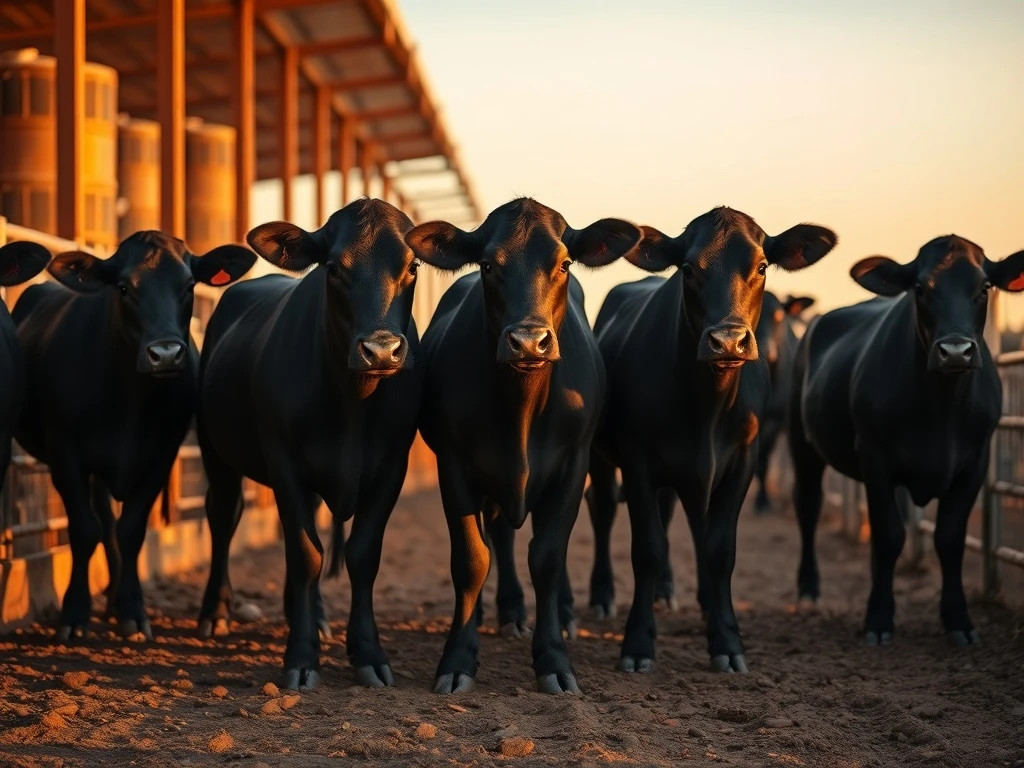
CHICAGO, March 9, 2026 — Cattle futures closed the trading week with significant losses, pressured by a broad sell-off in equity markets. At the close on Friday, March 9, 2026, live cattle futures contracts on the Chicago Mercantile Exchange (CME) were down $3.80 to $4.50. The decline rounds out a volatile week for the livestock complex, directly tying agricultural commodity prices to movements in the broader financial markets. The April live cattle contract settled at $234.575, down $3.950 for the day, though it remained $2.35 higher than the previous Friday’s close, highlighting the session’s sharp reversal.
Cattle Futures Market Suffers Broad-Based Decline
The sell-off was not isolated to live cattle. Feeder cattle futures experienced even steeper declines, with contracts falling between $6.97 and $7.42. The March feeder cattle contract closed at $355.625. According to the latest Commitment of Traders (COT) report from the Commodity Futures Trading Commission (CFTC), managed money speculators reduced their net-long position in live cattle futures and options by 4,494 contracts as of Tuesday, March 5. This brought the total net-long position down to 114,519 contracts. Analysts at Barchart, which first reported the data, noted this activity often precedes further price pressure as large funds reduce exposure.
Meanwhile, cash cattle trade across major feeding regions settled mostly at $240 per hundredweight. However, reports showed firming prices in some northern areas and slight weakening in southern markets, with a handful of sales reaching $241-$242. This cash market activity provides a critical physical anchor for the futures contracts. The CME Feeder Cattle Index, a benchmark for cash prices, fell another $1.47 to $367.32 on March 5, confirming the downward trend in the underlying physical market.
Impact on Wholesale Beef and Packer Margins
The pressure in live animal markets created a mixed picture for wholesale beef products. The USDA’s afternoon boxed beef report on Friday showed Choice cutout values up 33 cents to $387.22 per hundredweight. Conversely, Select cutout values dropped $1.66 to $378.95. Consequently, the Choice/Select spread widened to $8.27, indicating stronger consumer demand for higher-quality beef even as overall supply remains ample. This price divergence is a key signal watched by meatpackers to gauge profitability.
- Packers: Mixed cutout values may squeeze processing margins if live cattle costs do not adjust downward in tandem.
- Feeders: Steep losses in feeder cattle futures increase hedging costs and reduce profitability for cattle backgrounding operations.
- Producers: Weaker futures can delay marketing decisions, potentially leading to heavier cattle and increased beef tonnage later in the year.
Expert Analysis from Agricultural Economists
Dr. James Corbin, a livestock economist at the University of Illinois, provided context for the market movement. “Friday’s decline appears directly correlated with the sharp downturn in major equity indices,” Corbin stated. “While the fundamental supply and demand picture for cattle hasn’t dramatically shifted this week, the market is reacting to macro-economic sentiment. Risk-off trading flows out of equities can spill over into commodity markets, especially those like cattle with significant speculative participation.” The USDA’s estimated federally inspected cattle slaughter for the week stood at 521,000 head, which is 2,000 head above the prior week but remains 58,267 head below the same week last year, indicating tighter overall supplies compared to 2025.
Broader Context: Livestock Markets and Financial Volatility
This event underscores the increasing interconnectedness of agricultural and financial markets. Historically, cattle futures were primarily driven by feed costs, herd sizes, and consumer demand. Now, algorithmic trading and cross-asset portfolio strategies can create short-term dislocations. The table below compares key metrics from the recent report against averages from the first quarter of 2026.
| Metric | March 9, 2026 Close | Q1 2026 Average (to date) |
|---|---|---|
| April Live Cattle Futures | $234.575 | $238.40 |
| CME Feeder Cattle Index | $367.32 | $372.15 |
| Choice Boxed Beef Cutout | $387.22 | $383.75 |
| Weekly Cattle Slaughter (head) | 521,000 | 528,000 |
What Happens Next for Cattle Prices?
Market participants will closely monitor several key data points in the coming week. The monthly USDA Cattle on Feed report, scheduled for release on March 22, will provide critical insight into future slaughter supplies. Additionally, cash trade activity at the start of the new week will test whether Friday’s futures decline pulls physical prices lower or if strong packer demand provides support. Analysts will also watch grain markets, as rising corn prices could further pressure feeder cattle profitability and influence placement decisions.
Industry and Producer Response
Initial reaction from producer groups emphasized the challenge of managing volatility. “Days like today are a stark reminder of the financial risks inherent in producing a commodity,” said Sarah Jenkins, a spokesperson for the National Cattlemen’s Beef Association (NCBA). “Producers utilize the futures market as a risk management tool, and these swings validate the importance of having those tools available.” Meanwhile, some traders viewed the pullback as a potential buying opportunity, citing the still-tight underlying supply picture and strong consumer demand for beef at the retail level.
Conclusion
The cattle futures market concluded the week of March 9, 2026, with pronounced losses, driven by spillover selling from equity markets. While live cattle fell $3.80-$4.50, feeder cattle saw sharper declines. The mixed wholesale beef report and reduced speculative positioning suggest a cautious near-term outlook. Ultimately, the market’s direction will hinge on the upcoming USDA data, cash trade fundamentals, and broader macroeconomic trends. Producers and traders must navigate this volatility by focusing on core supply fundamentals while acknowledging the growing influence of external financial flows on agricultural commodity prices.
Frequently Asked Questions
Q1: Why did cattle futures fall sharply on March 9, 2026?
Cattle futures declined primarily due to a broad sell-off in equity markets, which triggered risk-averse trading across multiple asset classes, including commodities. Managed money speculators also reduced their net-long positions, adding downward pressure.
Q2: What is the immediate impact on cattle producers?
Lower futures prices can lead to weaker cash cattle prices, directly reducing income for producers selling animals. It also increases the cost and complexity of hedging future production.
Q3: When will the next major data point for the cattle market be released?
The USDA’s monthly Cattle on Feed report is scheduled for March 22, 2026. This report details the number of cattle placed on feed, marketed, and in feedlots, providing key supply-side information.
Q4: How does the Choice/Select beef spread affect the market?
A widening spread, as seen on Friday, indicates stronger consumer demand for higher-quality (Choice) beef over leaner (Select) beef. This can benefit packers who can deliver more Choice-grading cattle.
Q5: Are cattle supplies currently tight or ample?
Supplies remain relatively tight compared to last year. The weekly slaughter estimate of 521,000 head is nearly 60,000 head below the same week in 2025, supporting longer-term price strength despite short-term volatility.
Q6: How should a livestock farmer respond to this kind of market move?
Farmers should consult their marketing plan and risk management strategy. Such moves underscore the importance of tools like forward contracts, futures hedges, or livestock risk protection insurance to manage price uncertainty.



