
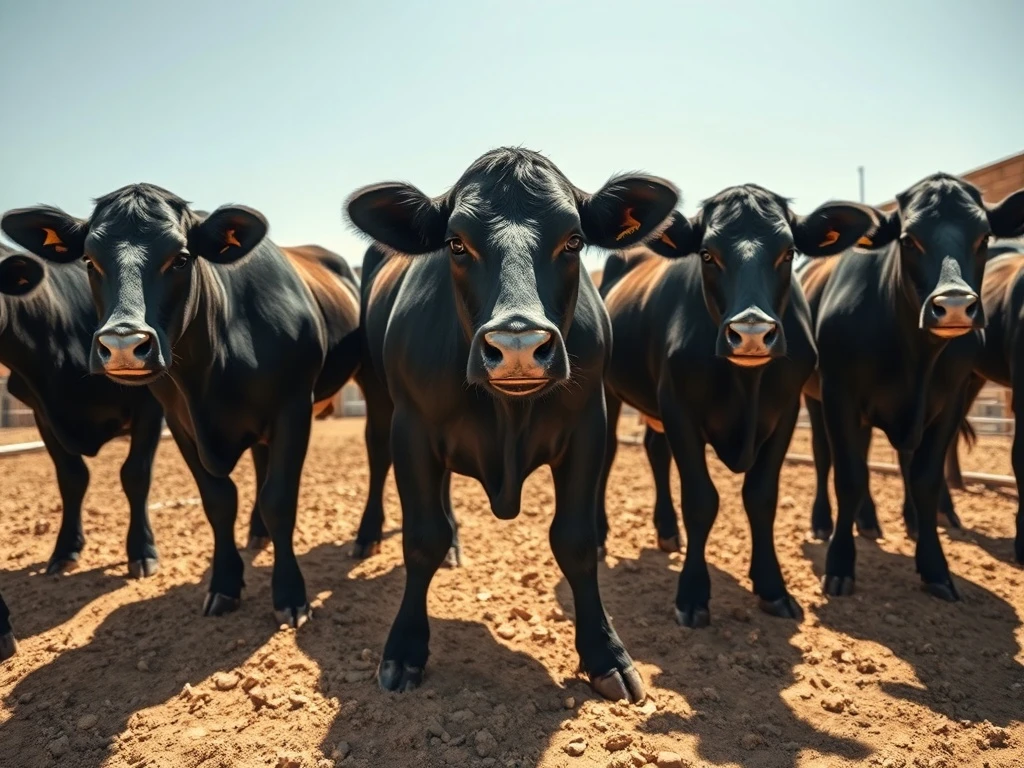
CHICAGO, March 7, 2026 — U.S. cattle markets are concluding a turbulent trading week with substantial losses across both live and feeder cattle futures. Consequently, midday figures from the Chicago Mercantile Exchange show front-month contracts falling $4 to $8.30 as multiple pressures converge on the livestock sector. Specifically, the April 2026 live cattle contract traded at $234.125, down $4.40, while feeder cattle contracts experienced even steeper declines. This sell-off coincides with broader equity market weakness and emerging animal health concerns along the U.S.-Mexico border, creating what analysts describe as a perfect storm for cattle producers.
Cattle Futures Market Plunge: The Immediate Data
The Friday trading session delivered concrete numbers that quantified the market’s anxiety. According to CME Group data released at midday, June 2026 live cattle futures fell $4.675 to $230.600. Meanwhile, August contracts dropped $4.70 to $228.700. Feeder cattle markets faced more severe pressure, with March contracts down $7.350 to $355.250 and May contracts plunging $8.275 to $347.250. These declines represent some of the most significant single-day moves in the cattle complex this year. Market participants immediately pointed to the morning’s Fed Cattle Exchange auction results as a contributing factor. The online auction showed sales of only 272 head at $240-$242 per hundredweight, with broader trade reported at $240 in northern regions. This cash market activity fell below many traders’ expectations, triggering the futures sell-off.
Simultaneously, the CME Feeder Cattle Index provided additional context for the weakness. The index declined another 34 cents to $368.59 on March 4, continuing a downward trend observed throughout the week. Market analysts at Barchart, the financial data provider, noted the correlation between equity market declines and livestock futures. “When broad risk-off sentiment hits equities, commodities often feel secondary pressure,” explained senior commodity analyst David Becker in a midday commentary. “Today we’re seeing that dynamic play out across the agricultural sector, with cattle particularly vulnerable due to its sensitivity to input costs and consumer demand signals.”
Disease Concerns and Supply Chain Impacts
Beyond financial market correlations, concrete supply chain factors are weighing on trader sentiment. The Animal and Plant Health Inspection Service (APHIS), a division of the U.S. Department of Agriculture, released its weekly update showing eight new cases of New World screwworm in the Mexican state of Tamaulipas. Significantly, four of these cases occurred in bovine animals. The total active cases in the border state now stand at 19. While the infestation remains confined to Mexico, cattle market participants are monitoring the situation closely due to its potential implications for U.S. imports and border health protocols. Historically, screwworm outbreaks have led to temporary trade restrictions and increased production costs for surveillance and treatment.
- Animal Health Risk: The proximity of cases to major cattle-producing regions raises monitoring costs and potential trade friction.
- Producer Psychology: Disease concerns can lead to accelerated marketings as producers seek to move animals before potential value impacts.
- Input Cost Pressure: Enhanced biosecurity measures and veterinary costs directly affect production economics.
USDA and Industry Expert Perspectives
Dr. Samantha Reyes, a veterinary epidemiologist at Texas A&M University’s AgriLife Extension, provided context about the screwworm situation. “New World screwworm is a devastating parasite, but the current cases are being managed aggressively by Mexican authorities,” Reyes stated. “The established barrier zone and sterile insect release program between the U.S. and Mexico have proven effective for decades. However, any increase in cases warrants vigilance, particularly for states like Texas that engage in significant cross-border cattle movement.” Meanwhile, USDA’s daily slaughter report provided concrete supply data. Federally inspected cattle slaughter for Thursday, March 6, was estimated at 111,000 head. The week-to-date total reached 433,000 head, which is 6,000 head above the previous week but 34,756 head below the same week last year. This year-over-year deficit continues a pattern observed throughout early 2026, reflecting tighter cattle supplies that typically would support prices.
Wholesale Beef and Consumer Demand Signals
Downstream market data presented a mixed picture that failed to provide a bullish counterweight to the futures decline. The USDA’s morning boxed beef report showed Choice cutout values up 18 cents to $387.07 per hundredweight. Conversely, Select boxes fell 54 cents to $380.07. Consequently, the Choice/Select spread widened to $7.00. This widening spread often indicates stronger demand for higher-quality beef, typically a positive signal. However, the absolute price levels remain below winter peaks, suggesting some demand softness at current price points. Retail and foodservice buyers appear selective, purchasing for immediate needs rather than building inventory.
| Product | Price (3/7/26 AM) | Daily Change |
|---|---|---|
| Choice Boxed Beef | $387.07/cwt | +$0.18 |
| Select Boxed Beef | $380.07/cwt | -$0.54 |
| Choice/Select Spread | $7.00 | +$0.72 |
Market Outlook and Forward-Looking Analysis
Looking ahead, market participants will focus on several key developments. First, the monthly USDA Cattle on Feed report, scheduled for release on March 21, will provide crucial data about feedlot inventories and placement patterns. Second, spring grazing conditions across major cattle-producing regions will influence feeder cattle availability and costs. Finally, consumer spending patterns as reflected in grocery sales data will determine whether beef demand can absorb current production at profitable levels. The Cattlemen’s Beef Board has scheduled a quarterly demand analysis webinar for March 15, which may provide clearer signals about domestic and international beef movement.
Producer and Processor Reactions
Initial reactions from industry stakeholders reflect cautious concern rather than panic. “Today’s market is painful, but it reflects real-time information processing,” said Michael Chen, operations manager for Heartland Feeders in Nebraska. “We’re focused on managing risk through the tools available—forward contracts, options, and careful marketing timing. The fundamentals of tight supply haven’t disappeared.” Meanwhile, meatpacking margins have shown improvement recently, which could support cash bids in coming weeks if processor competition for animals increases. However, export demand remains a wild card, with Asian markets showing inconsistent buying patterns amid currency fluctuations and competing protein supplies.
Conclusion
The cattle futures sell-off on March 7, 2026, represents a convergence of financial market sentiment, animal health concerns, and mixed demand signals. While the immediate price action is negative, underlying supply fundamentals remain relatively supportive compared to historical averages. Market participants should monitor cash trade developments next week, along with any updates on the animal health situation. The widening Choice/Select spread suggests quality differentiation in the beef complex that may benefit producers with higher-grading cattle. Ultimately, today’s volatility underscores the interconnected nature of modern agricultural markets, where equity indices, border health reports, and weekly slaughter data collectively determine prices for one of America’s foundational food commodities.
Frequently Asked Questions
Q1: Why did cattle futures fall so sharply on March 7, 2026?
The decline resulted from multiple factors: weak cash auction results, broader equity market losses creating risk-off sentiment, and concerns about New World screwworm cases in northern Mexico affecting market psychology.
Q2: How much did feeder cattle contracts lose compared to live cattle?
Feeder cattle futures experienced steeper losses, down $7.35 to $8.30 across front months, while live cattle fell $4.00 to $4.70. This reflects greater sensitivity to feed costs and future placement economics.
Q3: What is the significance of the Choice/Select spread widening?
The spread widening to $7.00 indicates stronger relative demand for higher-quality beef cuts. This quality differentiation can benefit producers who market cattle that grade Choice or better.
Q4: Are the screwworm cases in Mexico an immediate threat to U.S. cattle?
According to veterinary experts, the established biosecurity barrier and sterile insect program provide strong protection. However, increased cases warrant monitoring due to the parasite’s economic impact if established.
Q5: What should cattle producers watch for in coming weeks?
Key indicators include weekly cash trade volumes and prices, the March 21 USDA Cattle on Feed report, spring pasture conditions, and boxed beef movement through Easter seasonal demand.
Q6: How does equity market performance affect cattle futures?
During risk-off periods when stocks fall, commodity funds may reduce exposure across sectors, including agriculture. This can create selling pressure unrelated to specific commodity fundamentals.



