
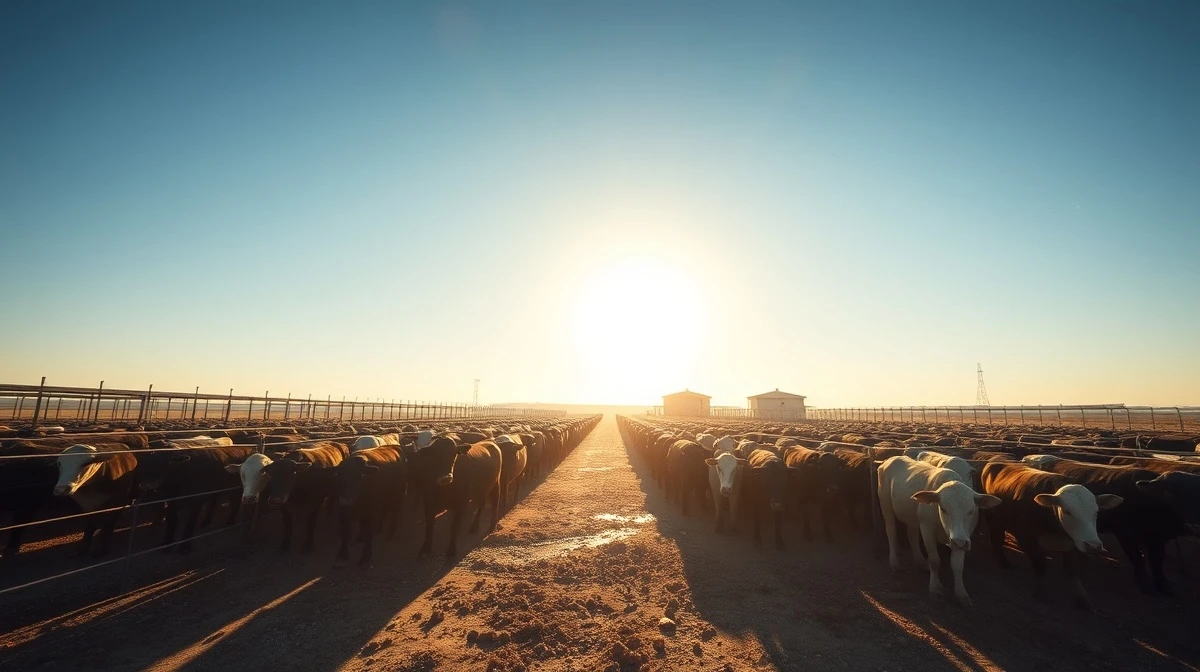
April 11, 2026 — Cattle futures posted solid gains, driven by firm cash prices and steady export demand. The rally underscores ongoing strength in the physical beef market.
Live cattle contracts on the Chicago Mercantile Exchange (CME) were up between $1.00 and $1.60. Feeder cattle futures showed even stronger momentum, with gains ranging from $1.95 to $2.85. Data from the CME Feeder Cattle Index supported the move, rising 78 cents to $250.25 earlier in the week.
Also read: Amazon Stock Jumps 15%: Is the Rally Sustainable?
Cash Market Provides Foundation
The rally found its footing in the cash market. A key online auction reported sales of 775 head at prices between $188 and $189. This activity followed a pattern of Southern sales at $188 and Northern sales reported at $296 for beef. Market watchers note that tight supplies continue to support prices at the producer level.
This cash strength is filtering through the supply chain. According to the U.S. Department of Agriculture (USDA), wholesale boxed beef prices moved higher. Choice boxed beef climbed $1.33 to $320.59 per hundredweight. Select boxed beef rose $1.23 to $294.75. The price spread between the two grades widened to $25.84.
Also read: Soybean Meal Rally Lifts Futures to Weekly Gain
Export Demand Holds Steady
International buyers provided another pillar of support. USDA export sales data for a recent week showed 14,100 metric tons of beef were sold. That figure represents a 2.55% increase from the prior week.
Japan was the leading buyer at 4,600 MT. South Korea followed, purchasing 2,600 MT. Actual shipments for the week totaled 15,300 MT, with Japan and South Korea each receiving 3,800 MT. China took delivery of 1,900 MT. This suggests global demand for U.S. beef remains resilient despite broader economic concerns.
Slaughter and Supply Context
The USDA estimated federally inspected cattle slaughter for a recent Thursday at 118,000 head. That brought the weekly total to 488,000 head. While this was 14,000 head above the previous week, it remained 13,670 head below the same week last year.
This year-over-year decline in slaughter numbers points to a smaller available cattle supply. The implication is that tighter supplies are a fundamental driver of the current price strength. Industry analysts note that herd rebuilding efforts are progressing slowly, which could maintain a firm price floor.
Futures Market Reaction
The futures market reacted directly to these fundamentals. Key contract prices at settlement were:
- Dec 2024 Live Cattle: $187.650, up $1.475
- Feb 2025 Live Cattle: $188.550, up $1.575
- Nov 2024 Feeder Cattle: $248.025, up $2.275
- Jan 2025 Feeder Cattle: $245.950, up $2.825
The across-the-board gains in deferred contracts indicate traders see the strength persisting. Feeder cattle, which are more sensitive to grain price moves, outperformed live cattle. This could signal confidence in feed cost stability or stronger demand for calves.
What This Means for the Market
The simultaneous rise in cash prices, wholesale values, and futures points to a coordinated uptrend. Strong exports to key Asian markets help absorb domestic production. But the smaller slaughter numbers compared to last year highlight the supply constraint.
For investors and producers, the current setup suggests continued volatility but with a bullish bias. The critical factor will be whether consumer demand at the retail level can sustain these higher wholesale prices. Any significant drop in grocery store beef sales would pressure the entire complex.
Market participants will monitor upcoming USDA reports for further clues on herd size and placement intentions. For now, the data shows a market finding strength from multiple angles.
For official market data, visit the CME Group livestock futures page. Detailed export statistics are available from the USDA Foreign Agricultural Service.

This article was produced with AI assistance and reviewed by our editorial team for accuracy and quality.



