
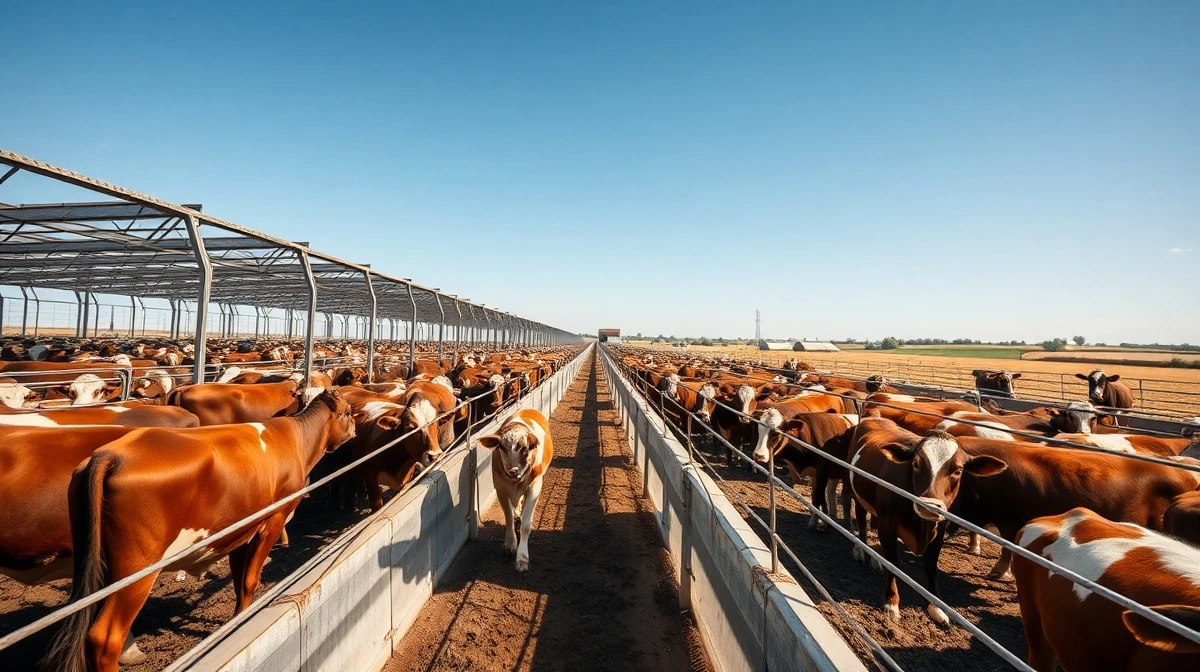
March 31, 2026 — Cattle futures posted solid gains to start the week, lifted by firming cash markets and a jump in wholesale beef values. The move extends a period of resilience for livestock markets.
Futures and Cash Markets Gain
According to data from Barchart, live cattle futures for April 2026 delivery closed at $239.55, up $1.05. The June contract gained $1.425 to finish at $240.20. The gains were widespread across the board.
Also read: Lean Hog Futures Close Mostly Lower on Monday
Cash trade provided underlying support. While activity was light last week, a few early sales were reported between $234 and $235. Later sales in southern regions reached as high as $238. This firmness in physical cattle prices helped pull futures higher.
Feeder cattle futures, which track younger animals destined for feedlots, also rallied. The April 2026 contract rose $1.85 to $363.30. The CME Feeder Cattle Index, a benchmark for cash prices, increased $2.14 to $365.12 as of March 26.
Also read: Corn Futures Drop Ahead of USDA Planting Data
Support from the Supply Chain
Wholesale beef prices moved higher, adding another layer of support. The USDA’s Monday afternoon boxed beef report showed Choice cuts up $1.13 to $394.10 per hundredweight. Select cuts rose $1.14 to $391.01.
Higher wholesale prices can improve packer margins, potentially increasing demand for market-ready cattle. This dynamic often supports live cattle futures.
Slaughter data indicated strong processing activity. The USDA estimated federally inspected cattle slaughter for Monday at 109,000 head. That figure is 4,000 head above the previous Monday and 5,738 head more than the same week last year. Increased slaughter can signal reliable demand from meatpackers.
Auction and Broader Context
The Monday feeder cattle auction in Oklahoma City saw an estimated 8,000 head sold. Prices for feeders and calves were reported as mostly steady to $4-$8 higher. Steady auction prices help maintain confidence in the feeder cattle complex.
Industry watchers note that cattle markets have shown notable strength compared to other livestock sectors, like hogs, which have recently faced price pressure. The divergence highlights specific supply and demand factors at play in the beef complex.
For market participants, the key metrics to watch remain cash cattle trade volumes and prices, along with weekly beef export sales data from the USDA. Sustained strength in these areas would be needed to maintain the current price momentum. Any sign of softening consumer demand at the grocery counter could pressure the complex.
What This Means for the Market
The simultaneous strength in futures, cash markets, and wholesale beef points to a tight supply scenario meeting steady demand. The higher slaughter rate suggests packers are actively sourcing cattle, which is a positive signal for producers.
However, the market remains sensitive to broader economic factors. Consumer spending on premium proteins like beef can be affected by inflation and disposable income levels. Feed costs also continue to be a major variable for cattle feeders’ profitability.
The recent data paints a picture of a firm market. But its longevity will depend on the next set of cash trade results and whether the beef market can absorb current production at higher price levels.
Market data sourced from Barchart and official USDA reports.

This article was produced with AI assistance and reviewed by our editorial team for accuracy and quality.



