
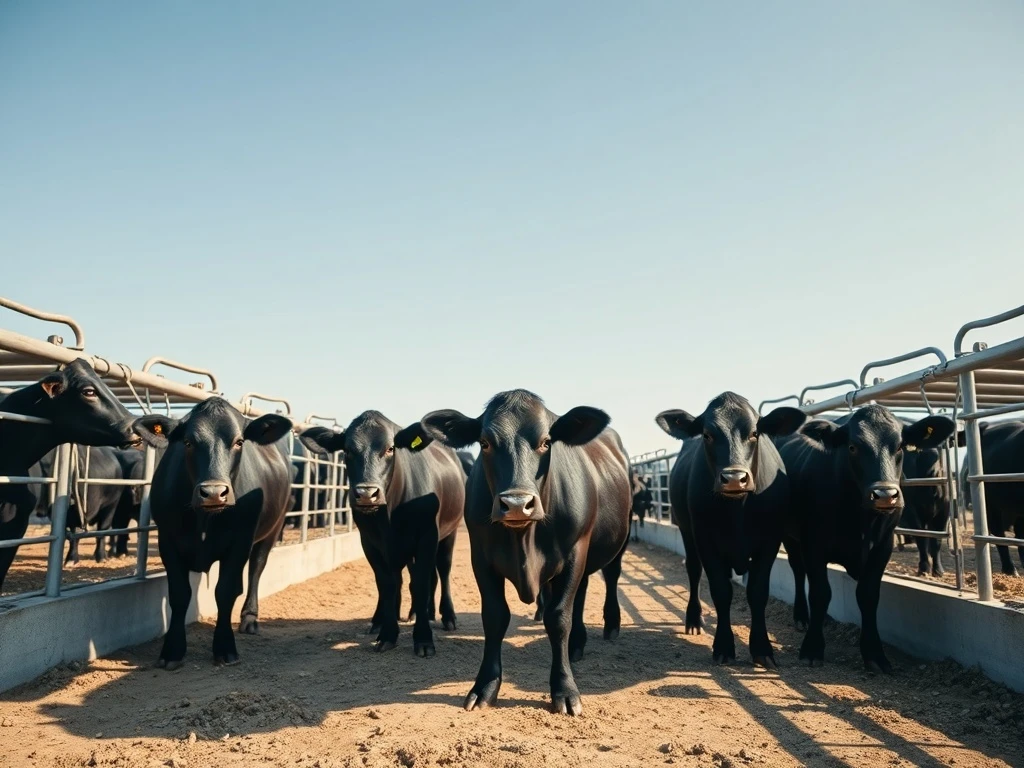
CHICAGO, March 10, 2026 — U.S. cattle futures staged a significant rebound during Tuesday’s session, posting substantial gains as the agricultural complex showed resilience amid broader market volatility. Front-month live cattle futures on the Chicago Mercantile Exchange (CME) rallied between $2.30 and $2.60, marking a decisive Turnaround Tuesday following recent pressure. The midday surge coincided with firmer wholesale beef prices and a steady cash trade foundation, signaling potential strength in spring demand. This price action unfolds as traders digest last week’s national cash average of $240 and assess slaughter rates that remain below year-ago levels.
Live and Feeder Cattle Futures Rally on Technical Buying
The CME’s livestock pit witnessed aggressive buying on March 10. Specifically, the April 2026 live cattle contract climbed $2.30 to $232.450. Meanwhile, the June contract led the rally, gaining $2.600 to settle at $230.025. Analysts at Barchart point to short-covering and technical buying as primary drivers following a period of consolidation. “The market found support at key technical levels,” noted a senior commodity strategist from the Chicago-based firm, who requested anonymity per company policy. “The combination of steady cash last week and today’s stronger boxed beef values provided the fundamental excuse for a technical bounce.” This move represents a notable shift in sentiment from the previous session.
Consequently, feeder cattle futures, which reflect the cost of young cattle sent to feedlots, posted even stronger gains. The March 2026 feeder contract rose $3.650 to $354.300. The April contract gained $3.875. This rally occurred despite the CME Feeder Cattle Index dropping $1.47 to $366.39 as of March 5. The disconnect between the index and futures suggests traders are anticipating tighter supplies ahead. However, a Monday auction in Oklahoma City told a different story, with 4,303 head selling $10 to $20 lower, highlighting the nuanced and regionally varied nature of the physical market.
Wholesale Beef Prices Provide Fundamental Support
The rally in futures found a concrete foundation in the morning’s wholesale beef report. The USDA’s mandatory price reporting data showed Choice boxed beef cutout values jumping $6.33 to $397.62 per hundredweight. Select boxes followed, rising $3.78 to $387.40. This price increase widened the Choice/Select spread to $10.22, a key indicator of consumer preference for higher-quality beef. “The strength in the boxed beef market is critical,” explained Dr. James Corbin, a livestock economist with the University of Illinois Extension. “It indicates that packer demand is filtering through the system. When retailers are willing to pay more for beef, it supports the entire chain, from the feedlot back to the rancher.”
- Packers’ Margin Pressure: Higher wholesale prices help offset packers’ costs for live cattle, potentially supporting future cash bids.
- Consumer Demand Signal: Rising boxed beef values, especially for Choice grade, suggest steady retail and foodservice demand.
- Supply Chain Timing: The gains may reflect preparations for spring grilling season, a period of traditionally stronger demand.
Expert Analysis on Slaughter and Production Trends
Supporting the complex price picture, the USDA estimated Monday’s federally inspected cattle slaughter at 103,000 head. This figure sits 1,000 head above the previous week but remains 11,935 head below the same Monday in 2025. This year-over-year deficit continues a trend of tighter cattle supplies, a fundamental factor long cited by bullish analysts. “The herd rebuild phase is slow,” states a recent market outlook from the Livestock Marketing Information Center (LMIC), an authoritative consortium of university and industry economists. “Placements into feedlots have been cautious, which points to continued manageable supplies through mid-2026. Today’s futures action may be pricing in that continued tightness.” The LMIC’s publicly available data and models are frequently cited by the Federal Reserve in its agricultural economic reports.
Broader Market Context and Commodity Comparisons
Tuesday’s cattle rally occurred alongside a mixed session for equities, with major indices like the Nasdaq and S&P 500 clawing back some losses. This decoupling of livestock from financial markets is not uncommon but underscores commodities’ unique supply-driven fundamentals. Unlike tech stocks, cattle prices are tethered to biological cycles, feed costs, and meat demand. A comparison of recent performance across key agricultural futures reveals cattle’s relative strength. For instance, while live cattle rallied over 1%, grain markets like corn and soybeans were mostly flat to lower, reflecting different demand drivers and weather concerns.
| Commodity Contract | Price as of March 10 | Daily Change | Key Driver |
|---|---|---|---|
| Apr ’26 Live Cattle (CME) | $232.450/cwt | +$2.30 (+1.0%) | Boxed beef strength, technical buying |
| Apr ’26 Feeder Cattle (CME) | $350.425/cwt | +$3.875 (+1.1%) | Live cattle rally, anticipated supply tightness |
| May ’26 Corn (CBOT) | $4.52/bushel | -$0.02 | South American harvest pressure |
| May ’26 Lean Hogs (CME) | $88.125/cwt | +$0.500 | Follow-through from pork export news |
What Cattle Producers and Traders Watch Next
The sustainability of Tuesday’s gains hinges on several immediate factors. First, the cash cattle trade for the week ahead needs to show strength. Bids and asking prices will be closely monitored on Wednesday and Thursday. Second, the weekly USDA Cold Storage report, due later this week, will provide data on beef inventory levels. High stocks could cap wholesale gains. Finally, the USDA’s monthly Cattle on Feed report, scheduled for March 20, will offer the next major snapshot of supply. “The market is in a wait-and-see mode between now and the Cattle on Feed report,” advises the Barchart analysis. “Today’s move is encouraging for bulls, but it needs confirmation from the cash market.”
Industry Reaction and Rancher Sentiment
Initial reaction from producer groups was cautiously optimistic. A spokesperson for the National Cattlemen’s Beef Association (NCBA) emphasized that price stability is crucial for ongoing herd expansion efforts. “Any upward movement in futures provides more certainty for producers making long-term decisions,” they stated. However, feedlot operators in the High Plains expressed concern about the rising cost of feeder cattle, as captured in the futures rally, which could compress their margins if live cattle prices don’t keep pace. This tension between different segments of the supply chain—cow-calf, backgrounding, and feedlot—remains a defining feature of the cattle market’s complexity.
Conclusion
The Cattle Posting Turnaround Tuesday Gains on March 10, 2026, represent a significant technical and fundamental rebound for the livestock complex. Driven by a sharp rise in wholesale boxed beef values and technical buying, live and feeder cattle futures erased prior losses. However, the market’s forward path remains contingent on confirming strength in the cash trade and navigating the ongoing reality of tighter cattle supplies compared to last year. For traders and producers, the coming week’s cash negotiations and the upcoming USDA reports will be critical in determining whether Tuesday’s rally marks a genuine reversal or a temporary bounce in a longer-range pattern. The interplay between futures speculation and physical market fundamentals continues to define the volatile landscape of agricultural commodities.
Frequently Asked Questions
Q1: What caused the sharp gain in cattle futures on March 10, 2026?
The rally was driven by a combination of technical short-covering and a supportive fundamental report showing wholesale boxed beef prices increased by over $6 for Choice cuts. This signaled stronger packer and retail demand.
Q2: How does the feeder cattle index differ from feeder cattle futures?
The CME Feeder Cattle Index is a calculated average of cash market prices for feeder cattle across the U.S. It reflects actual physical sales. Feeder cattle futures are exchange-traded contracts based on expectations of future prices at a specific delivery point. They can diverge, as seen on March 10.
Q3: What is the significance of the Choice/Select beef spread widening?
A widening spread, which reached $10.22, indicates stronger consumer and retailer preference for higher-quality Choice beef over Select. This is a positive demand signal for the industry and supports higher overall values.
Q4: Will this futures rally lead to higher prices for ranchers selling calves?
Potentially, but not immediately. Feeder cattle futures influence the prices backgrounders and feedlots are willing to pay for calves. A sustained rally in futures typically filters down to the cash market for calves with a lag of several weeks.
Q5: How do cattle slaughter numbers impact the market?
Slaughter numbers indicate the current supply of market-ready cattle. Monday’s estimate of 103,000 head was below last year’s level, continuing a trend of tighter available supplies, which is a fundamentally supportive factor for prices.
Q6: What should a cattle producer do in response to this market move?
Producers should use rallies as opportunities to review their risk management plans. This could involve considering forward pricing a portion of their expected production through cash forward contracts or hedging with futures/options, depending on their individual cost structure and market outlook.



