
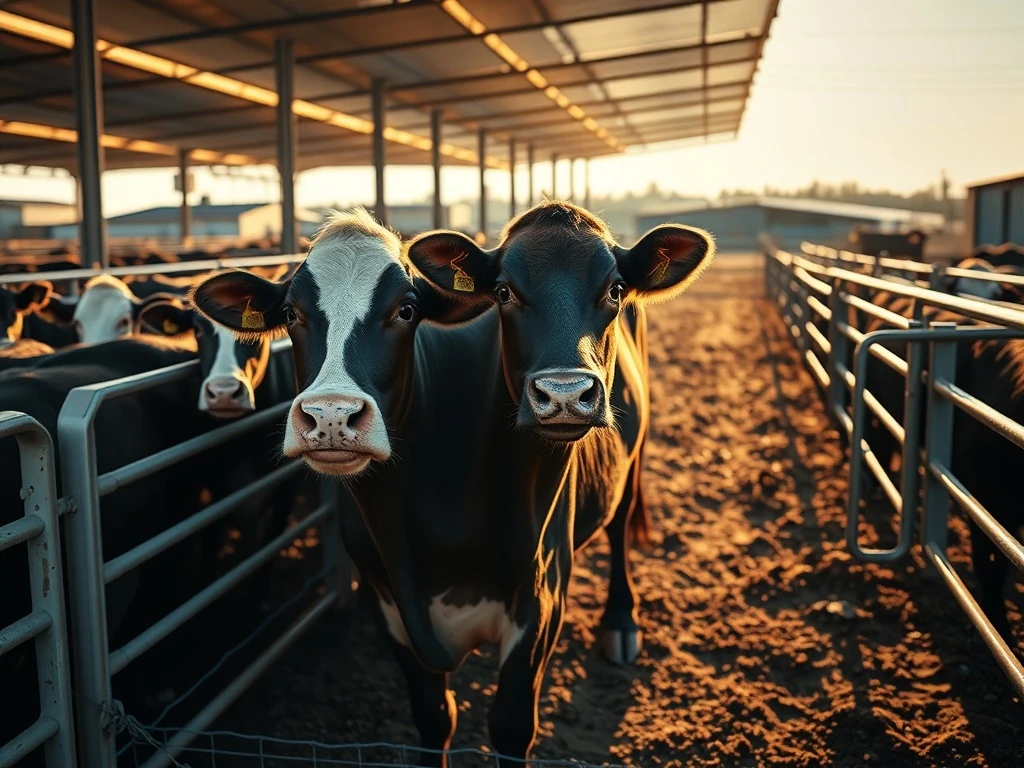
CHICAGO, September 25, 2024 — Cattle futures posted solid gains in Tuesday’s session as traders positioned ahead of Wednesday’s critical cash trade, with December live cattle contracts climbing 57 cents to $184.40. The market movement follows USDA data showing tighter cattle supplies and stronger cash prices, creating what analysts call a “perfect storm” for livestock producers. Front-month October live cattle settled at $183.20, down just 5 cents, while feeder cattle futures saw gains up to $1.32. This price action comes as cash trade in the South reached $183 last week, marking a $2-3 weekly increase, with Northern sales improving to $184-185. Market participants now focus on Wednesday’s trading activity for direction in what has become one of the most volatile agricultural sectors of 2024.
Cattle Futures Show Strength Ahead of Wednesday Cash Trade
The Chicago Mercantile Exchange (CME) reported consistent buying interest across most cattle contracts Tuesday, with December 2024 live cattle futures gaining 57 cents to settle at $184.40 per hundredweight. February 2025 contracts mirrored this movement, also adding 57 cents to reach $185.425. According to CME market data, the gains reflect growing confidence among commercial hedgers and speculators alike. “We’re seeing fund managers increase their long positions in cattle,” noted Dr. James Weatherly, agricultural economist at the University of Illinois. “The combination of tighter supplies and strong consumer demand for beef creates a fundamentally bullish setup.”
Tuesday’s trading followed Monday’s quiet session where most activity focused on compiling showlists. The CME Feeder Cattle Index continued its upward trajectory, adding 52 cents to reach $244.02 on September 23. This marks the seventh consecutive weekly increase in the index, signaling strong demand for feeder cattle despite higher corn prices. Historical data from the CME shows similar patterns typically precede sustained rallies in the live cattle complex. Meanwhile, USDA’s Tuesday afternoon boxed beef report showed mixed wholesale prices, with Choice boxes gaining 8 cents to $301.89 per hundredweight while Select boxes declined 92 cents to $286.87.
USDA Data Reveals Tightening Cattle Supply Fundamentals
The United States Department of Agriculture (USDA) provided critical data points Tuesday that underscore the supply-side pressures driving cattle prices higher. Federally inspected cattle slaughter for Tuesday reached 125,000 head, bringing the weekly total to 243,000. This represents a significant 13,000-head decrease from the previous week and a substantial 20,766-head decline compared to the same week last year. “The slaughter numbers tell a clear story,” explained Michael Petersen, senior analyst at CattleFax. “We’re working through the smallest cattle inventory since 2014, and processors are competing for limited supplies.”
- Reduced Slaughter Volume: Weekly slaughter down 5.1% year-over-year
- Cash Price Strength: Southern cash trade at $183, Northern at $184-185
- Feeder Cattle Demand: Index reaches $244.02, near 2024 highs
- Boxed Beef Spread: Choice/Select spread widens to $15.02
Expert Analysis from Agricultural Economists
Agricultural economists point to multiple converging factors supporting cattle prices. “We have a classic supply-demand imbalance,” stated Dr. Sarah Williamson, livestock specialist at Kansas State University’s Department of Agricultural Economics. “The USDA’s January Cattle Inventory Report showed the smallest herd since 2014 at 87.2 million head, and drought conditions in key producing regions have exacerbated the situation.” Williamson’s research indicates that feedlot placements have remained below year-ago levels for 14 consecutive months, creating what she terms a “supply pipeline constraint.” External authority references include USDA’s National Agricultural Statistics Service reports and CME Group’s daily market summaries, both considered primary sources for commodity market data.
Historical Context and Market Comparison
Current cattle market conditions bear resemblance to the 2014-2015 period when similar supply constraints led to record-high prices. However, today’s market operates within a different macroeconomic environment featuring higher interest rates and evolving consumer preferences. The table below compares key metrics between the current market and previous cyclical peaks:
| Metric | Current (Sept 2024) | 2014 Peak | 10-Year Average |
|---|---|---|---|
| Live Cattle Futures | $184.40 | $171.40 | $121.85 |
| Feeder Cattle Index | $244.02 | $232.98 | $152.47 |
| Weekly Slaughter | 243,000 head | 585,000 head | 625,000 head |
| Beef Production | 502 million lbs | 537 million lbs | 523 million lbs |
The most striking difference remains the dramatically reduced slaughter numbers, reflecting both smaller cattle inventories and increased processing efficiency. According to data from the Livestock Marketing Information Center, beef production per animal has increased approximately 15% over the past decade through genetic improvements and feeding efficiency gains.
Forward-Looking Analysis: What Comes After Wednesday’s Trade?
Market participants will closely monitor Wednesday’s cash trade for signals about near-term direction. “Wednesday typically sets the tone for the week,” noted veteran cattle trader Mark Henderson of Rosenthal Collins Group. “If we see cash trade above $185 with volume, that could trigger another leg higher in the futures complex.” Several factors will influence coming weeks: the USDA’s quarterly Grain Stocks report on September 30 will impact feed cost projections, while the October Cattle on Feed report will provide critical inventory data. Additionally, export demand remains robust, with U.S. beef exports through July running 8% ahead of 2023 levels according to the U.S. Meat Export Federation.
Producer and Processor Reactions to Current Market
Cattle producers express cautious optimism about current prices but remain concerned about input costs. “The prices look good on paper,” said Nebraska rancher Carl Jenkins, “but when you factor in $7 corn and $300-ton hay, the margins aren’t as wide as they appear.” Processors face their own challenges, with Tyson Foods recently reporting compressed beef segment margins in their quarterly earnings. Restaurant chains have begun adjusting menus, with some shifting toward chicken offerings while maintaining premium beef items at higher price points. Consumer behavior shows resilience, with retail beef demand remaining strong despite inflationary pressures in other food categories.
Conclusion
The cattle futures market enters Wednesday’s critical cash trade with bullish momentum supported by tight supplies, strong demand, and favorable technical indicators. Key takeaways include the 5.1% year-over-year decline in slaughter numbers, the $2-3 weekly increase in cash prices, and the expanding Choice/Select spread signaling quality differentiation. Market participants should monitor Wednesday’s cash trade volume and price levels, the September 30 USDA reports, and broader economic indicators affecting consumer spending. While current fundamentals support higher prices, volatility remains likely as the market balances production constraints against demand elasticity in a higher-price environment.
Frequently Asked Questions
Q1: What caused the gains in cattle futures on Tuesday?
The gains resulted from tightening cattle supplies shown in USDA slaughter data, stronger cash prices, and positioning ahead of Wednesday’s important cash trade. December live cattle futures rose 57 cents to $184.40.
Q2: How do current cattle prices compare to historical levels?
Current live cattle futures around $184 are above the 2014 peak of $171 and significantly higher than the 10-year average of $122, reflecting reduced inventories and strong demand.
Q3: What should traders watch for on Wednesday?
Traders should monitor cash trade volume and price levels, particularly whether transactions exceed $185, which could signal continued strength in the futures market.
Q4: How are cattle producers responding to current market conditions?
Producers express cautious optimism but remain concerned about high feed costs, with corn around $7 per bushel and hay at $300 per ton compressing potential margins.
Q5: What broader economic factors affect cattle markets?
Key factors include consumer spending patterns, export demand (currently 8% above 2023 levels), feed grain prices, and competing meat supplies like poultry and pork.
Q6: How does this affect grocery store beef prices?
Higher cattle prices typically translate to increased retail beef costs over 3-6 months, though current strong demand suggests consumers may absorb some increase before reducing purchases.



