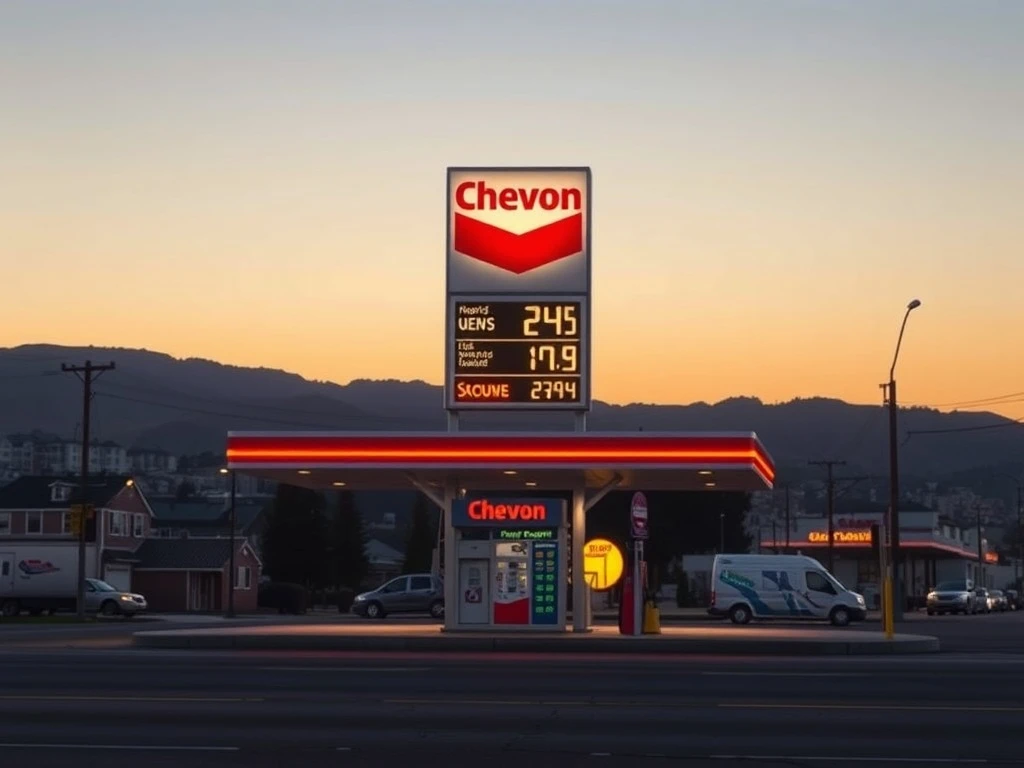
SACRAMENTO, California — March 15, 2026: Chevron Corporation issued a stark warning today that Governor Gavin Newsom’s “adversarial” energy agenda will cripple California’s economy and send gasoline prices soaring to unprecedented levels. The oil giant’s blunt assessment, delivered in a formal statement and subsequent briefing, marks the most direct confrontation yet between the state’s ambitious climate policies and its established energy industry. Chevron executives specifically cited pending legislation and regulatory actions that they claim will increase costs, reduce supply, and undermine California’s economic competitiveness. This warning comes as the state legislature prepares to debate the Clean Energy Acceleration Act, a package of measures targeting rapid decarbonization.
Chevron’s Dire Economic Warning on California Energy Policy
Chevron’s Chief Policy Officer, Michael Wirth, outlined the company’s concerns during a virtual press conference from the company’s San Ramon headquarters. “California’s current trajectory represents an existential threat to reliable, affordable energy,” Wirth stated. “The cumulative effect of regulations, taxes, and permitting obstacles creates an environment where investment becomes untenable.” The company provided a detailed analysis projecting that gasoline prices could increase by 40-60% above current levels within three years if all proposed policies take effect. Furthermore, Chevron economists estimate the state could lose between 125,000 and 180,000 energy-related jobs by 2030. These projections consider both direct employment in extraction and refining, plus indirect jobs in transportation, maintenance, and supporting industries.
The timing of Chevron’s warning coincides with critical legislative deadlines. The California Assembly must vote on SB-1278, the Clean Transportation Mandate, by April 30. This bill would accelerate the phase-out of gasoline-powered vehicles and impose stricter carbon intensity standards on transportation fuels. Meanwhile, the California Air Resources Board (CARB) is finalizing its 2027-2032 Scoping Plan, which includes controversial provisions about refinery emissions and production caps. Industry analysts note that Chevron’s public stance represents a strategic shift from behind-the-scenes lobbying to overt public pressure as legislative battles intensify.
Projected Impacts on California’s Economy and Consumers
Chevron’s economic analysis identifies multiple channels through which California’s energy policies could affect the state’s economy. The most immediate impact would hit consumers at the pump, with ripple effects throughout the transportation-dependent economy. California already maintains the highest gasoline prices in the continental United States, averaging $1.80 more per gallon than the national average as of February 2026. The company’s modeling suggests this gap could widen to $2.50-$3.00 under proposed regulations. Small businesses, particularly in agriculture, logistics, and tourism, would face disproportionate cost increases that could force operational changes or relocation.
- Gasoline Price Surge: Projected increases of $2.00-$3.00 per gallon above current prices within 36 months, potentially pushing premium grades above $10 per gallon in some regions.
- Job Losses: Estimated reduction of 125,000-180,000 energy sector positions by 2030, with concentrated impacts in Kern County, Contra Costa County, and the Los Angeles Basin refining corridor.
- Economic Contraction: Potential reduction of 1.5-2.5% in California’s annual GDP growth rate due to increased energy costs affecting all economic sectors.
- Energy Reliability Risks: Reduced in-state refining capacity could increase dependence on imported fuels, creating supply vulnerabilities during disruptions.
Expert Perspectives on the Policy Collision
Energy policy experts offer contrasting views on Chevron’s warnings. Dr. Sarah Chen, Director of the Energy and Climate Program at Stanford University’s Precourt Institute, acknowledges the transition costs but questions the magnitude of Chevron’s projections. “All economic transitions involve dislocation,” Chen notes. “The critical question is whether California’s policies include adequate support for affected workers and communities while accelerating clean energy job creation.” She references California’s own economic analyses projecting net job growth in the clean energy sector, though with different geographic and skill distributions than current energy jobs.
Conversely, James O’Connell, Senior Fellow at the Berkeley Energy and Resources Collaborative, finds Chevron’s concerns substantively valid. “California’s regulatory approach often creates cumulative burdens that individual agencies don’t fully account for,” O’Connell explains. “The interaction between climate policies, air quality rules, permitting processes, and tax structures creates uncertainty that discourages long-term investment.” He cites California’s unique gasoline blend requirements, refinery-specific carbon caps, and proposed well stimulation prohibitions as examples of policies with interacting effects. The Western States Petroleum Association has published similar concerns, noting that California refineries have faced 15 major new regulatory initiatives since 2020, with compliance costs exceeding $12 billion industry-wide.
California’s Energy Policy Landscape and Historical Context
Governor Newsom’s energy agenda builds upon California’s longstanding climate leadership, but with accelerated timelines and expanded scope. The state has committed to carbon neutrality by 2045, a goal requiring transformation across electricity generation, transportation, industry, and buildings. Key components include the 2035 ban on new gasoline-powered vehicle sales, the 2045 phase-out of oil extraction, and increasingly stringent low-carbon fuel standards. These policies enjoy strong legislative support and align with California’s commitment to environmental justice, particularly in communities near refineries and drilling sites.
However, the practical implementation faces complex challenges. California remains the seventh-largest oil-producing state, with production concentrated in the San Joaquin Valley and coastal regions. The industry contributes approximately $150 billion annually to the state’s economy and supports over 365,000 jobs when including indirect and induced employment. Previous policy transitions, such as electricity deregulation in the 1990s and renewable portfolio standards, produced both successes and unintended consequences. The current confrontation echoes earlier debates about California’s business climate, with technology companies generally thriving while manufacturing faces higher costs.
| Policy Initiative | Current Status | Chevron’s Primary Concern |
|---|---|---|
| Clean Transportation Mandate (SB-1278) | Assembly Committee Review | Accelerated demand destruction for gasoline |
| 2035 Gas Vehicle Sales Ban | Regulations Finalized | Infrastructure gaps and consumer cost |
| Refinery Emissions Caps | CARB Rulemaking | Operational constraints and capital requirements |
| Oil Extraction Phase-Out | 2045 Deadline Set | Asset stranding and supply security |
| Low Carbon Fuel Standard | Annual Intensity Reductions | Compliance cost passthrough to consumers |
What Happens Next: Legislative and Market Responses
The immediate legislative calendar sets the stage for decisive actions. The Assembly Utilities and Energy Committee will hold hearings on SB-1278 beginning March 25, with Chevron expected to testify alongside environmental advocates, labor representatives, and community groups. Simultaneously, the California Energy Commission must finalize its 2026 Integrated Energy Policy Report by June 30, which will include assessments of energy reliability and affordability. Market responses are already emerging, with California refineries delaying maintenance investments and exploring conversion projects for renewable diesel and sustainable aviation fuel production.
Political dynamics add complexity to the policy debate. Governor Newsom faces pressure from environmental constituencies to maintain aggressive climate action, particularly as he positions himself nationally. Meanwhile, moderate Democrats from affected districts express concerns about economic impacts, especially with state tax revenues showing volatility. The California Chamber of Commerce has placed several energy-related bills on its “Job Killer” list, signaling broader business community apprehension. International factors also matter, as California’s policies influence other jurisdictions while global energy markets remain interconnected.
Stakeholder Reactions and Public Response
Reactions to Chevron’s warning reveal deep divisions. Environmental organizations dismiss the projections as exaggerated. “Chevron is protecting profits, not people,” asserts Alicia Rivera, spokesperson for the California Environmental Justice Alliance. “The true cost is in the health impacts and climate damage from continued fossil fuel dependence.” Labor unions offer mixed responses, with building trades unions emphasizing job preservation while some service sector unions highlight energy affordability for low-income members. Consumer advocates express concern about disproportionate impacts on rural residents and essential workers with long commutes.
Public opinion polling conducted by the Public Policy Institute of California shows nuanced attitudes. While 68% of Californians support aggressive climate action generally, only 42% approve of policies that would significantly increase gasoline prices. Support varies dramatically by region, with Bay Area residents most accepting of higher costs and Central Valley residents most opposed. This regional divide mirrors political representation, creating tension within the Democratic supermajority that controls Sacramento. The coming months will test whether California can balance its climate ambitions with economic stability and energy security.
Conclusion
Chevron’s stark warning about California’s energy agenda highlights the difficult trade-offs in the state’s climate transition. The confrontation between corporate economic projections and governmental policy ambitions will play out through legislative debates, regulatory proceedings, and market responses. Key takeaways include the significant gasoline price increases projected under current policies, the substantial job impacts concentrated in specific regions, and the complex balancing required between environmental goals and economic stability. California’s approach will influence national and global climate policy, making this collision between Chevron and Governor Newsom’s administration a case study with far-reaching implications. Observers should monitor the Assembly’s actions on SB-1278, CARB’s final Scoping Plan, and Chevron’s investment decisions in California assets as leading indicators of how this conflict resolves.
Frequently Asked Questions
Q1: What specific policies is Chevron warning about?
Chevron’s warning focuses on several pending California policies including the Clean Transportation Mandate (SB-1278), refinery emissions caps under development by CARB, the 2035 ban on new gasoline vehicle sales, and the 2045 phase-out of oil extraction. The company argues these policies interact to create cumulative burdens that will dramatically increase costs.
Q2: How much could gasoline prices increase according to Chevron’s projections?
Chevron economists project gasoline prices could rise by $2.00-$3.00 per gallon above current levels within three years if all proposed policies take effect. This could push premium gasoline above $10 per gallon in some California markets, compared to the current statewide average of approximately $5.80 for regular.
Q3: What is the timeline for these policy decisions?
The California Assembly must vote on SB-1278 by April 30, 2026. CARB will finalize its 2027-2032 Scoping Plan by September 2026. The California Energy Commission’s Integrated Energy Policy Report is due June 30, 2026. These documents will shape the regulatory landscape for years.
Q4: How does California justify these policies given the economic warnings?
California officials cite climate change imperatives, public health benefits from reduced air pollution, and long-term economic opportunities in clean energy. The state’s analyses project net job growth in renewable energy, electric vehicle manufacturing, and related sectors, though with different geographic distribution than current energy jobs.
Q5: Are other energy companies expressing similar concerns?
Yes, the Western States Petroleum Association, representing multiple companies, has published analyses warning about regulatory costs and energy reliability. Smaller producers and refiners have testified about permitting challenges and compliance burdens during legislative hearings.
Q6: How might this affect California residents beyond gasoline prices?
Beyond direct fuel costs, impacts could include higher prices for goods transported by truck, potential electricity reliability issues if refinery operations are constrained, job losses in energy-producing regions, and increased state budget pressures if economic growth slows significantly.