
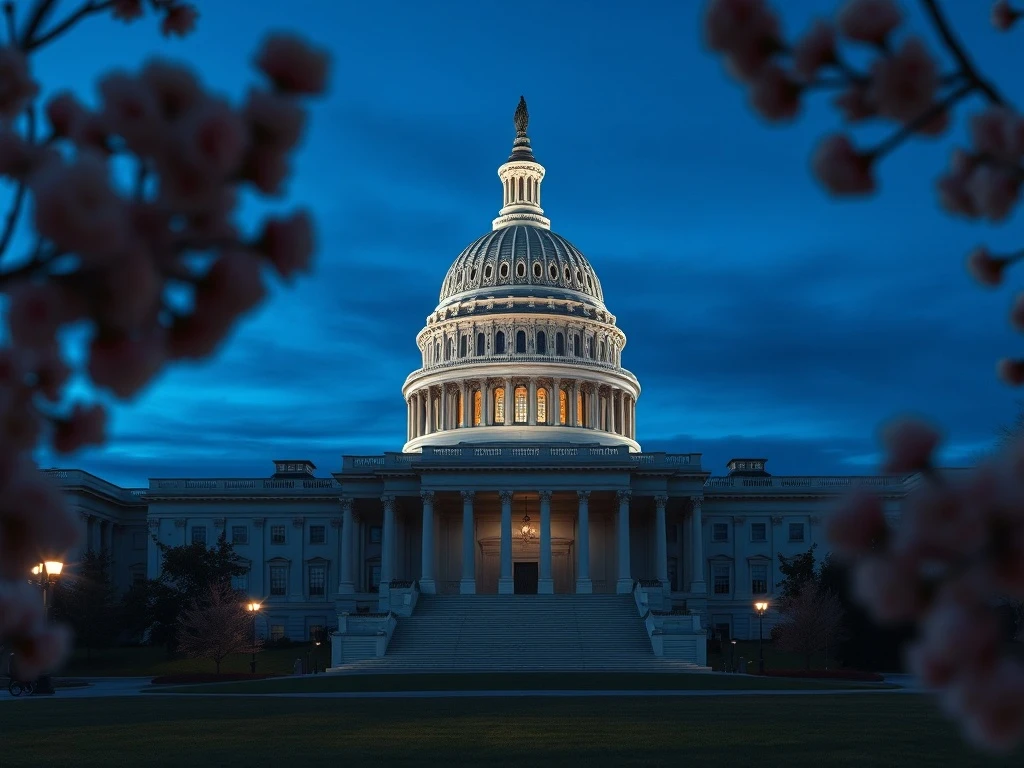
WASHINGTON, D.C. — March 15, 2026: The CLARITY Act, a long-stalled legislative proposal to establish a comprehensive federal framework for cryptocurrency regulation, has regained significant momentum in the U.S. Congress. Key committee hearings scheduled for next week signal the most serious movement on the bill since its 2023 introduction. This development arrives amid heightened global regulatory scrutiny and could fundamentally reshape the legal landscape for Bitcoin and thousands of other digital assets operating in the United States. Lawmakers from both parties now cite market stability and national security as urgent drivers for action.
CLARITY Act Gains Momentum: Decoding the Proposed Crypto Legislation
The Crypto-Asset Legal Integration and Taxonomy Yield Act, or CLARITY Act, seeks to resolve the persistent regulatory ambiguity that has defined the U.S. digital asset space for over a decade. Representative Maxine Waters (D-CA), a primary co-sponsor, stated in a press release that the bill aims to “provide the legal certainty necessary for innovation to thrive responsibly within our borders.” The legislation proposes a clear division of regulatory authority between the Securities and Exchange Commission (SEC) and the Commodity Futures Trading Commission (CFTC), a contentious point that previously stalled progress.
Specifically, the bill introduces a formal process for determining whether a digital asset is a security or a commodity. This classification would hinge on the asset’s level of decentralization and the ongoing managerial efforts of a central party. For context, the SEC’s enforcement-centric approach under former Chair Gary Gensler resulted in over 150 enforcement actions against crypto firms between 2021 and 2025, according to agency reports. The CLARITY Act’s renewed push follows a series of high-profile court rulings that questioned the SEC’s jurisdictional boundaries, creating pressure for a legislative fix.
What the Proposed U.S. Crypto Bill Means for Bitcoin and Market Stability
The immediate and most significant impact of the CLARITY Act would be on Bitcoin. The bill’s current draft explicitly classifies Bitcoin as a commodity under the primary purview of the CFTC. This statutory classification would preempt future regulatory challenges to Bitcoin’s status, potentially unlocking new avenues for mainstream financial product development, including spot Bitcoin ETFs from major asset managers that have faced years of SEC resistance. Conversely, the legislation imposes new compliance mandates for crypto exchanges and custodians, which could increase operational costs.
- Regulatory Certainty for Institutions: Major banks and asset managers, who have cited regulatory uncertainty as a primary barrier to entry, would receive a clear rulebook. JPMorgan Chase analysts noted in a recent client memo that definitive legislation could catalyze an estimated $100 billion in new institutional capital inflows into the crypto sector within 18 months.
- Consumer Protection Framework: The bill mandates strict reserve proof and custody standards for platforms holding customer assets, directly addressing vulnerabilities exposed by the collapses of FTX and Celsius Network. It also establishes clearer disclosure requirements for token projects.
- Impact on Altcoins and Tokens: Hundreds of alternative cryptocurrencies would face a formal classification process. Assets deemed securities would fall under SEC registration and disclosure rules, potentially forcing significant operational changes or delistings from U.S. platforms.
Expert Analysis and Institutional Response to the Legislation
Industry and academic experts are cautiously optimistic but highlight implementation challenges. “The devil is in the details of the classification test,” said Dr. Carla Hoffman, Director of the Georgetown University Law Center’s FinTech Program. “A poorly designed test could still create arbitrary lines, stifling genuine decentralized projects while letting centralized ones slip through.” Hoffman, who testified before the House Financial Services Committee last month, emphasized that the bill’s success hinges on the expertise of the newly proposed interagency working group.
Meanwhile, the Crypto Council for Innovation, a leading industry advocacy group, issued a statement calling the bill’s progress “a watershed moment for the U.S. digital economy.” In contrast, some blockchain purists and decentralization advocates express concern that any federal framework inherently centralizes control. An external reference to the Congressional Research Service’s report R47064, “Digital Assets and SEC Regulation,” provides essential background on the legal complexities the CLARITY Act attempts to solve.
Broader Context: The U.S. in a Global Regulatory Race
The CLARITY Act’s revival occurs within a fiercely competitive global landscape. The European Union’s Markets in Crypto-Assets (MiCA) regulation went fully into effect in December 2025, providing a comprehensive rulebook for its 27 member states. The United Kingdom and Singapore have also advanced their own tailored regulatory regimes. This global patchwork places pressure on the U.S. to establish its stance or risk ceding influence and innovation to other jurisdictions. The following table compares key aspects of the major regulatory approaches.
| Jurisdiction | Regulatory Framework | Primary Bitcoin Classification | Status |
|---|---|---|---|
| United States (Proposed) | CLARITY Act | Commodity (CFTC) | Committee Hearing Stage |
| European Union | Markets in Crypto-Assets (MiCA) | Not Specified (Case-by-case) | Fully Implemented (2025) |
| United Kingdom | Financial Services and Markets Act 2023 | Regulated Financial Instrument | Phased Implementation |
| Singapore | Payment Services Act | Digital Payment Token | Fully Implemented |
What Happens Next: The Legislative Path and Potential Roadblocks
The bill must now navigate a complex legislative process. The House Financial Services Committee will mark up the text, where amendments on issues like environmental reporting for mining and DeFi protocols are expected. Following committee approval, the bill would proceed to a full House vote. An identical or companion bill must also advance through the Senate Banking Committee, where Chair Sherrod Brown (D-OH) has historically expressed deeper skepticism about the crypto industry. Political analysts note that the 2026 election cycle adds pressure for both parties to demonstrate legislative achievement on a high-profile economic issue.
Stakeholder Reactions from Industry and Advocacy Groups
Reactions reveal a spectrum of opinions. Major crypto exchanges like Coinbase and Kraken have publicly endorsed the bill’s framework. Conversely, some privacy-focused projects and decentralized autonomous organizations (DAOs) warn that the legislation’s definitions could inadvertently encompass decentralized software protocols. Public interest groups, including the Americans for Financial Reform, have called for stronger investor protection clauses, particularly around marketing and conflict-of-interest rules for crypto platforms. This mosaic of perspectives ensures a vigorous debate as the bill moves forward.
Conclusion
The renewed momentum for the CLARITY Act represents the most concrete step toward a national cryptocurrency regulation framework in U.S. history. Its passage would provide the legal certainty that markets have demanded, explicitly cement Bitcoin’s status as a commodity, and establish guardrails for the wider digital asset ecosystem. However, the path to becoming law remains fraught with political and technical hurdles. The coming committee markups will be critical in shaping the final legislation. For investors, developers, and policymakers, the next six months will determine whether the United States adopts a proactive blueprint for the digital asset future or remains mired in regulatory ambiguity.
Frequently Asked Questions
Q1: What is the CLARITY Act and why is it important now?
The CLARITY Act is a proposed U.S. law to create a clear federal regulatory framework for cryptocurrencies. It’s gaining momentum now due to court rulings challenging the SEC’s authority, global regulatory competition, and pressure from the financial industry for legal certainty to foster responsible innovation.
Q2: How would the CLARITY Act directly impact Bitcoin investors?
The bill would legally classify Bitcoin as a commodity, shielding it from being regulated as a security. This could lead to greater mainstream adoption, more approved financial products like ETFs, and potentially reduced regulatory risk for U.S.-based Bitcoin businesses and services.
Q3: What is the expected timeline for the CLARITY Act to become law?
The bill is entering committee hearings. If it advances smoothly, a House vote could occur by late 2026. However, the process requires Senate approval and presidential signature, making early 2027 a more realistic timeline for full enactment, contingent on political alignment.
Q4: How does this bill differ from how cryptocurrencies are currently regulated?
Currently, regulation is primarily through enforcement actions by the SEC and CFTC based on existing, often ambiguous laws. The CLARITY Act would proactively establish new, dedicated rules and clear jurisdictional lines, moving from a reactive to a structured regulatory system.
Q5: Are other countries doing something similar?
Yes. The European Union’s MiCA regulation is the most comprehensive existing framework. The UK, Singapore, Japan, and others are implementing their own rules. The U.S. is seen as lagging, which adds urgency to the CLARITY Act’s passage to maintain economic competitiveness.
Q6: How might this affect developers building new cryptocurrency projects?
Developers would have clearer guidelines from the start on whether their token might be classified as a security, requiring specific disclosures and registrations. This could reduce legal uncertainty but also impose new compliance steps during the development and launch phases.



