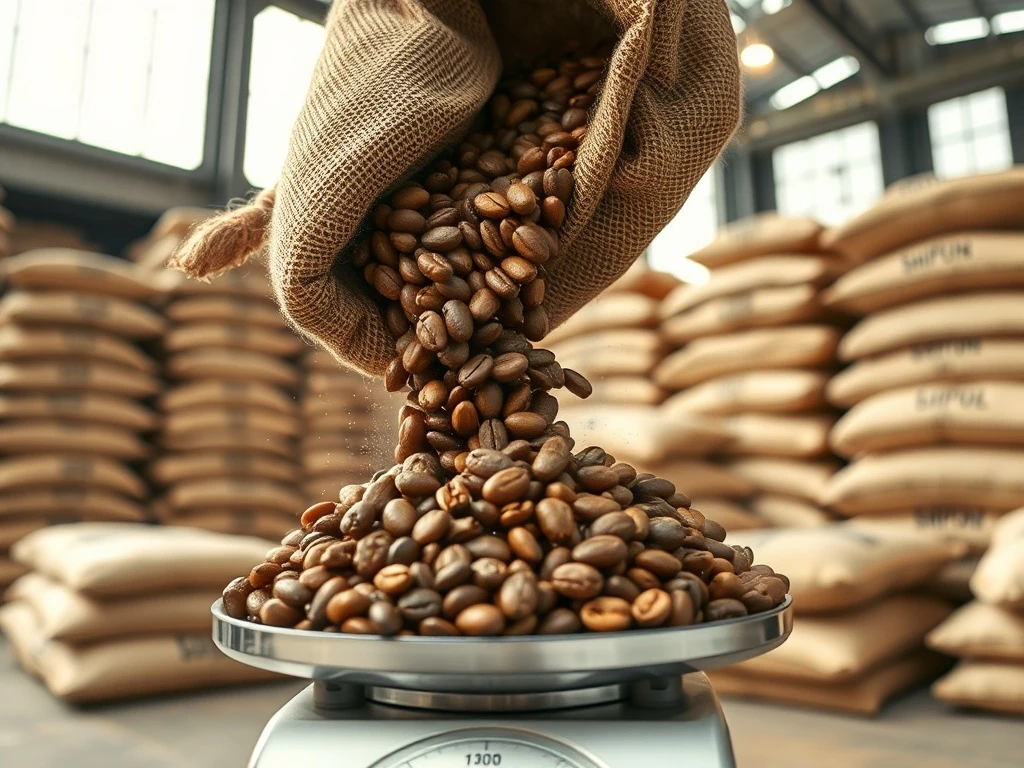
NEW YORK & ABIDJAN, March 11, 2026 — Global cocoa markets entered a consolidation phase on Wednesday after a sharp rally the previous day. The price movement follows confirmed reports of substantial export contract purchases in Ivory Coast, the world’s leading producer. May ICE NY cocoa futures (CCK26) traded down $11 (-0.32%) in afternoon trading, while May ICE London cocoa #7 (CAK26) showed modest gains of +£3 (+0.12%). This stabilization comes directly after Tuesday’s surge of +4.80% in New York and +5.12% in London contracts, marking a significant shift in market sentiment. The cocoa prices consolidate pattern reflects traders digesting conflicting signals between emerging demand and persistent global surplus forecasts.
Cocoa Export Purchases Spark Market Volatility
A Reuters report published Tuesday morning triggered the initial rally. According to the exclusive dispatch from Abidjan, local grinders purchased more than 400,000 metric tons of Ivory Coast cocoa export contracts during a ten-day period. This buying activity followed the resumption of purchases for the mid-year crop. Market analysts immediately interpreted the volume as a signal that new demand was emerging despite recent price cuts to farmers. Consequently, the cocoa prices consolidate movement represents a classic market pause as participants assess whether this demand is sustainable.
The purchasing surge coincides with dramatic policy shifts in West Africa. Last month, Ghana’s Cocoa Board (Cocobod) slashed the official farmgate price by nearly 30% for the 2025/26 season. Similarly, the Ivory Coast’s Coffee-Cocoa Council announced a 57% reduction in farmer pay last Wednesday. This reduction will apply to the mid-crop harvest beginning this month. Together, these nations produce over half of the world’s cocoa supply, making their pricing decisions globally significant. The recent export purchases suggest processors are capitalizing on these lower farm costs, potentially rebuilding inventories after months of restrained buying.
Global Supply Chain Pressures Support Prices
Beyond West African developments, several structural factors are providing underlying support to cocoa values. The ongoing closure of the Strait of Hormuz continues to disrupt global shipping lanes. This geopolitical situation has elevated freight rates, marine insurance premiums, and bunker fuel costs across all commodity sectors. For cocoa importers in Europe and North America, these additional logistics expenses directly increase their landed costs. Therefore, even with weaker terminal market prices, the final cost to chocolate manufacturers remains elevated.
- Shipping Disruptions: The Strait of Hormuz closure has increased voyage times and insurance costs for cocoa shipments from West Africa to Europe by an estimated 15-20%.
- Port Deliveries Slow: Cumulative data shows Ivory Coast farmers shipped 1.35 million metric tons (MMT) to ports from October 1, 2025, through March 1, 2026. This figure represents a 3.6% decline from the 1.40 MMT shipped during the same period last year.
- Inventory Build: As a countervailing force, ICE-monitored cocoa inventories rose to a seven-month high of 2,228,673 bags this Monday. This build suggests available supply is meeting current demand.
Institutional Forecasts Paint a Mixed Picture
Major agricultural institutions offer divergent views on the market’s direction. The International Cocoa Organization (ICCO) recently revised its global 2024/25 surplus estimate upward to 75,000 metric tons (MT). This adjustment from a November forecast of 49,000 MT represents the first projected surplus in four years. The ICCO also predicts global cocoa production will climb 8.4% year-over-year to 4.7 MMT for the season. In contrast, consultancy StoneX provided a more bearish outlook on January 29. Their analysts forecast a global surplus of 287,000 MT for the 2025/26 season and 267,000 MT for 2026/27. These conflicting projections contribute to the current cocoa prices consolidate environment as traders weigh long-term fundamentals against short-term demand signals.
Chocolate Demand Concerns Weigh on Market Sentiment
The ultimate driver for cocoa remains consumer demand for chocolate. Here, evidence points to persistent weakness. On January 28, Barry Callebaut AG, the world’s largest bulk chocolate manufacturer, reported troubling figures. The company’s cocoa division suffered a 22% year-over-year sales volume decline for the quarter ending November 30. Management attributed the drop to “negative market demand” and a strategic shift toward higher-margin product segments. This report from an industry bellwether confirmed fears that high retail chocolate prices have altered consumer behavior.
Regional grinding data reinforces this concerning trend. The European Cocoa Association reported that Q4 2025 cocoa grindings fell 8.3% year-over-year to 304,470 MT. This decline was significantly worse than market expectations of a 2.9% drop and marked the lowest Q4 volume in twelve years. Similarly, the Cocoa Association of Asia reported a 4.8% year-over-year decline in Q4 Asian grindings to 197,022 MT. North America showed minimal growth, with the National Confectioners Association reporting a mere 0.3% increase to 103,117 MT. This collective data suggests the demand destruction feared by analysts is materializing.
| Region | Q4 2025 Grindings (MT) | Year-over-Year Change |
|---|---|---|
| Europe | 304,470 | -8.3% |
| Asia | 197,022 | -4.8% |
| North America | 103,117 | +0.3% |
Production Outlook and Forward Price Trajectory
Looking ahead, production forecasts from key origins will dictate price direction. Nigeria, the world’s fifth-largest producer, reported a 17% year-over-year increase in December cocoa exports, reaching 54,799 MT. However, the Nigerian Cocoa Association projects 2025/26 production will fall 11% to 305,000 MT. This decline follows a projected 344,000 MT output for the 2024/25 crop year. More crucially, the Ivory Coast projects its 2025/26 production will drop 10.8% to 1.65 MMT from 1.85 MMT the previous season. A smaller crop from the top producer could tighten the physical supply balance.
Analyst Revisions and Market Implications
Financial institutions are adjusting their models in response to these evolving fundamentals. On February 10, Rabobank trimmed its 2025/26 global cocoa surplus estimate to 250,000 MT. This revision down from a November forecast of 328,000 MT reflects concerns over West African production. The bank’s analysts cited unfavorable weather patterns and the impact of lower farmer prices on crop maintenance and fertilization. For traders, the immediate question is whether the current cocoa prices consolidate phase represents a temporary pause before another leg down, or a basing pattern ahead of a recovery. Much depends on whether the Ivory Coast export purchases mark the beginning of sustained restocking or a one-time inventory adjustment.
Conclusion
The cocoa market remains at a crossroads. Tuesday’s rally on news of heavy export buying demonstrated latent demand exists at lower price levels. However, the subsequent consolidation highlights deep-seated concerns about chocolate consumption and large projected global surpluses. The conflicting signals—strong short-term physical purchases versus weak grinding data and bearish institutional forecasts—create the current equilibrium. Market participants should monitor upcoming mid-crop harvest data from Ivory Coast and Ghana, along with Q1 2026 grinding reports from Europe and Asia. The path for cocoa prices will likely be determined by whether consumer demand stabilizes or continues to erode in the face of historically expensive chocolate. For now, the market takes a breather, weighing every new data point with heightened sensitivity.
Frequently Asked Questions
Q1: Why did cocoa prices rally on Tuesday, March 10, 2026?
Cocoa futures surged after a Reuters report revealed local grinders purchased over 400,000 metric tons of Ivory Coast export contracts in ten days. This signaled potential renewed demand following recent farmgate price cuts.
Q2: What are the main bearish factors currently weighing on cocoa markets?
Key bearish factors include weak consumer demand for chocolate, declining regional grinding volumes, large forecasted global cocoa surpluses from the ICCO and StoneX, and rising exchange-monitored inventories.
Q3: How have West African producer policies recently changed?
Ghana cut its official cocoa farmer price by nearly 30% for the 2025/26 season. Ivory Coast announced a 57% reduction in farmer pay for the mid-crop harvest beginning March 2026. These cuts aim to align farmgate prices with lower international market levels.
Q4: What is the significance of the Strait of Hormuz closure for cocoa?
The closure disrupts global shipping, increasing freight rates, insurance costs, and fuel prices. These added logistics expenses raise the final delivered cost of cocoa for importers, providing underlying support to prices.
Q5: Which institution forecasts the largest cocoa surplus, and what is the figure?
Consultancy StoneX issued the most bearish forecast, projecting a global cocoa surplus of 287,000 metric tons for the 2025/26 season, followed by a 267,000 MT surplus for 2026/27.
Q6: How does this market consolidation affect chocolate companies and consumers?
Consolidation suggests price stability in the short term. For chocolate makers, it provides a clearer cost outlook for planning. For consumers, it indicates retail chocolate prices may stabilize but are unlikely to see significant declines given persistent supply chain costs and weak grinding demand.