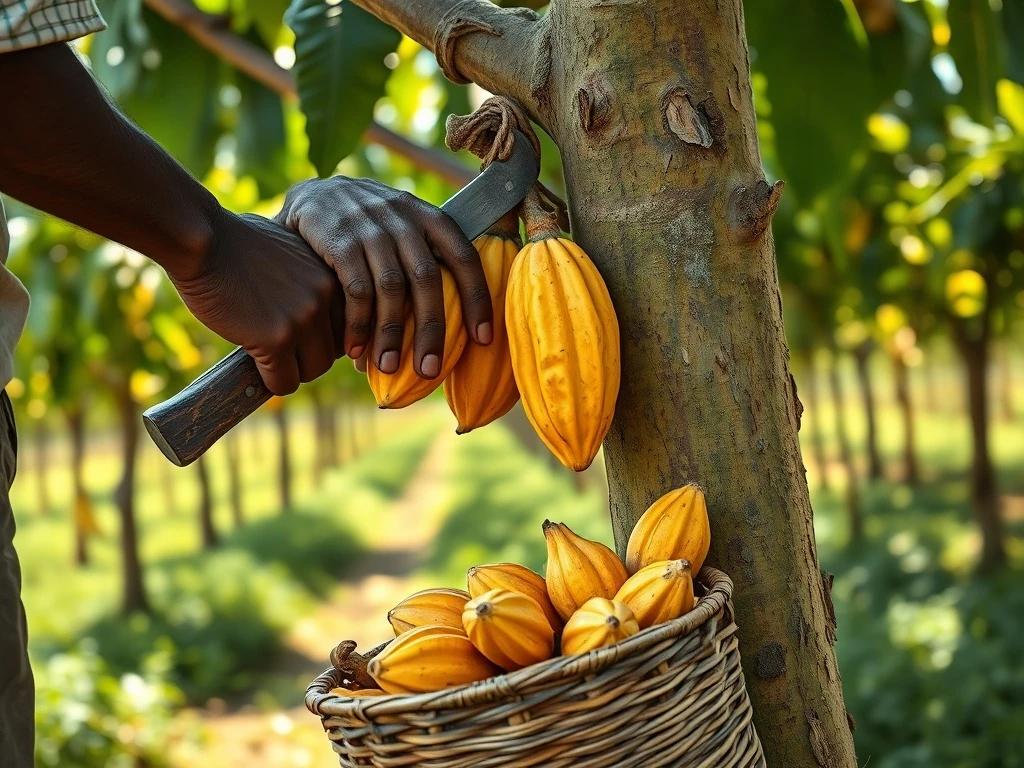
NEW YORK/LONDON, March 27, 2025 — Global cocoa markets showed tentative stability Wednesday as prices consolidated above recent four-month lows. May ICE NY cocoa futures (CCK25) closed up 0.61% at +49 points, while May ICE London cocoa #7 (CAK25) gained 1.12% at +69 points. This modest recovery follows five consecutive weeks of declines that pushed cocoa to its lowest levels since November 2024. The consolidation reflects a complex balance between improving supply fundamentals and persistent concerns about West African harvests. Market participants now assess whether this represents a temporary pause or a genuine inflection point for the volatile commodity that saw unprecedented price surges throughout 2024.
Cocoa Prices Find Support After Steep Decline
Wednesday’s price action marked the first positive close in six trading sessions for New York cocoa. The gains remained modest but significant given the commodity’s recent trajectory. London cocoa’s stronger performance, meanwhile, received an additional boost from currency dynamics. The British pound fell to a two-week low against the U.S. dollar, making sterling-priced London cocoa more attractive to international buyers. This currency effect amplified the technical rebound from oversold conditions. However, trading volumes remained below average, suggesting cautious participation rather than conviction buying.
The consolidation follows a dramatic shift in market sentiment that began in late February. After reaching historic highs above $12,000 per metric ton in April 2024, cocoa has surrendered approximately 40% of those gains. The decline accelerated following the International Cocoa Organization’s (ICCO) February 28 forecast, which projected the first global cocoa surplus in four years. This fundamental reassessment triggered a wave of long liquidation from speculative positions that had built during the previous year’s deficit-driven rally.
Supply Recovery Reshapes Market Fundamentals
The ICCO’s latest quarterly report delivered the most significant bearish catalyst. The organization forecast a global cocoa surplus of 142,000 metric tons for the 2024/25 season, ending a three-year deficit cycle. This projection hinges on a 7.8% year-over-year increase in global production to 4.84 million metric tons. Improved weather conditions in West Africa, particularly more consistent rainfall patterns in Ghana and Ivory Coast during the 2024 growing season, supported this optimistic outlook. Consequently, the supply recovery has fundamentally altered the market’s pricing structure.
- Inventory Rebound: ICE-monitored cocoa inventories held in U.S. ports climbed to a 4¾-month high of 1,790,262 bags on Wednesday. This represents a substantial recovery from the 21-year low of 1,263,493 bags recorded on January 24. Rising visible stocks provide physical evidence of improving availability.
- Regional Production Shifts: Nigeria, the world’s fifth-largest producer, reported a 27% year-over-year increase in January cocoa exports to 46,970 metric tons. This surge from a secondary origin helps compensate for ongoing challenges in larger producing nations.
- Ghana’s Revised Forecast: Ghana’s Cocobod regulator cut its 2024/25 harvest forecast in December to 617,500 metric tons, down 5% from its August estimate. While still below historical averages, this revision was less severe than previous adjustments, suggesting stabilization.
Institutional Analysis and Expert Perspectives
The ICCO’s data provides the authoritative framework for understanding the market transition. “The shift from deficit to surplus represents a critical inflection point,” explains Dr. Michel Arrion, Executive Director of the International Cocoa Organization. “While structural challenges remain in West African production, the 2024/25 season shows measurable improvement in yields and farmer access to inputs.” The organization’s detailed report contrasts sharply with the previous season’s statistics. For 2023/24, the ICCO confirmed a global cocoa deficit of 441,000 metric tons—the largest in over sixty years. Production during that period fell 13.1% year-over-year to 4.380 million metric tons, while the stocks-to-grindings ratio hit a 46-year low of 27.0%.
Market analysts at Barchart, which first reported Wednesday’s price action, note the technical significance of the consolidation. “The market needed to absorb the ICCO data,” says senior commodity strategist Rich Asplund. “Wednesday’s bounce suggests some participants view the sell-off as overdone, particularly given uncertainties around the upcoming mid-crop. However, the broader trend remains cautiously bearish unless weather disruptions emerge.” This perspective aligns with trading patterns showing increased hedging activity from commercial chocolate manufacturers seeking to lock in lower prices for future needs.
Demand Destruction Emerges as Critical Factor
While supply improvements dominate recent headlines, demand-side developments contribute equally to the price correction. Chocolate manufacturers worldwide have reported significant consumer pushback against higher retail prices. The quarterly cocoa grinding reports from major consumption regions reveal the tangible impact. In Europe, Q4 2024 grindings fell 5.3% year-over-year to 331,853 metric tons—the lowest quarterly volume in over four years. Asia reported a 0.5% decline to 210,111 metric tons, also a four-year low. North America saw a more modest 1.2% reduction to 102,761 metric tons.
These statistics confirm warnings from industry executives throughout February. Mondelez International CFO Luca Zarmella stated on February 4, “We are seeing signs, particularly in parts of the world like North America, where cocoa consumption is coming down.” The company later warned that chocolate prices could rise as much as 50% due to the cocoa price surge, which would further curb demand. Hershey’s management offered similar commentary on February 6, revealing that high cocoa prices are forcing recipe reformulations, including partial substitution of cocoa with other ingredients. This demand elasticity represents a new variable in cocoa market equations, as previous deficits assumed relatively inelastic consumption.
| Region | Q4 2024 Grindings | Year-over-Year Change | Significance |
|---|---|---|---|
| Europe | 331,853 MT | -5.3% | Lowest in 4+ years |
| Asia | 210,111 MT | -0.5% | Lowest in 4 years |
| North America | 102,761 MT | -1.2% | Moderate decline |
West African Mid-Crop Uncertainty Limits Downside
Despite the improving broader outlook, specific regional uncertainties prevent a more aggressive price decline. Market attention now shifts to Ivory Coast’s upcoming mid-crop, the smaller of two annual harvests that typically begins in April. Current estimates project this year’s mid-crop at approximately 400,000 metric tons, 9% below last year’s 440,000 metric tons. The reduction stems from several factors: delayed fertilizer applications due to earlier high prices, aging tree stock in some regions, and variable rainfall during the critical development period last autumn.
Export data reveals another nuanced trend. Ivorian farmers shipped 1.43 million metric tons of cocoa to ports from October 1 to March 23, a 12% increase from the same period last year. However, this growth rate has decelerated significantly from the 35% year-over-year rise recorded in December. The slowing pace suggests that while the main crop was stronger than anticipated, the tail of the harvest may be less robust. This creates uncertainty about total season availability, particularly if the mid-crop underperforms current estimates. Ghana faces similar challenges, with its revised harvest forecast still representing a substantial reduction from historical averages above 800,000 metric tons.
Market Structure and Forward Price Curve Implications
The changing fundamentals are reshaping cocoa’s forward price curve. The previously steep backwardation—where near-term prices traded significantly above deferred prices—has flattened considerably. This normalization reflects reduced concern about immediate physical shortages. However, the curve remains in mild backwardation through mid-2025, indicating that some supply tension persists. Trading patterns show increased activity in calendar spreads as participants position for the transition between crop cycles. Options markets, meanwhile, indicate elevated volatility expectations through the mid-crop harvest period, reflecting uncertainty about final production figures.
Commercial hedging activity provides another window into industry expectations. Chocolate manufacturers have increased their forward purchasing for 2025 delivery, suggesting they view current price levels as attractive for securing future needs. Processors and traders, conversely, have reduced their long speculative positions while increasing inventory hedging. This divergence highlights the different risk exposures across the supply chain. Manufacturers focus on input cost certainty, while intermediaries manage price risk on physical holdings.
Conclusion
Cocoa markets have entered a transitional phase characterized by competing narratives. The consolidation of recent losses reflects this equilibrium between improving supply fundamentals and persistent regional uncertainties. Three key takeaways emerge from Wednesday’s price action and the surrounding data. First, the ICCO’s surplus projection for 2024/25 has fundamentally reset market expectations, ending the deficit-driven mentality that dominated 2024. Second, demand destruction has become a measurable factor, with grinding data confirming consumer resistance to higher chocolate prices. Third, West African production challenges, particularly regarding the upcoming mid-crop, continue to provide underlying support that prevents a more dramatic collapse.
Looking forward, market participants should monitor several developments. The progression of the Ivorian mid-crop harvest through April and May will provide crucial evidence about total season availability. Currency fluctuations, particularly the pound-dollar exchange rate affecting London cocoa, may introduce additional volatility. Finally, consumer demand elasticity will become clearer as chocolate manufacturers implement price adjustments and recipe changes. While the era of relentless cocoa price increases appears to have paused, the market’s path forward remains contingent on weather, economics, and agricultural realities across West Africa’s cocoa belt.
Frequently Asked Questions
Q1: Why did cocoa prices consolidate on March 26, 2025?
Cocoa prices found technical support after five weeks of declines, with additional lift in London from a weaker British pound. The consolidation reflects market digestion of improved supply forecasts alongside concerns about the upcoming West African mid-crop harvest.
Q2: What did the International Cocoa Organization forecast for 2024/25?
The ICCO projected a global cocoa surplus of 142,000 metric tons for the 2024/25 season—the first surplus in four years. The organization expects global production to increase 7.8% year-over-year to 4.84 million metric tons.
Q3: How has high cocoa pricing affected chocolate demand?
Quarterly grinding data shows significant demand reduction: European grindings fell 5.3% year-over-year to a four-year low, Asian grindings dropped 0.5% to a four-year low, and North American grindings declined 1.2%. Chocolate manufacturers report consumer resistance to higher prices.
Q4: What is the Ivory Coast mid-crop and why does it matter?
The mid-crop is the smaller of two annual cocoa harvests in Ivory Coast, typically beginning in April. Current estimates project 400,000 metric tons for 2025, 9% below last year. This harvest will determine whether supply improvements continue through the second half of the season.
Q5: How have cocoa inventories changed recently?
ICE-monitored cocoa inventories in U.S. ports reached 1,790,262 bags on March 26—a 4¾-month high. This represents a substantial recovery from the 21-year low of 1,263,493 bags recorded on January 24, providing physical evidence of improving availability.
Q6: What should investors watch in coming weeks?
Key monitoring points include: progress of the Ivorian mid-crop harvest through April-May, currency effects on London cocoa prices, and further demand signals from chocolate manufacturers’ quarterly reports and retail pricing strategies.