
March 20, 2026 — Cocoa futures declined sharply, with New York prices hitting a two-week low, pressured by a stronger U.S. dollar and signs of improving crop conditions in key West African growing regions.
Market Movement and Key Drivers
May ICE NY cocoa futures closed down 2.28% on Friday, while May London cocoa fell 1.67%. The drop pushed New York prices to their lowest level in a fortnight. Analysts pointed to two immediate factors: currency movements and weather. A rally in the U.S. Dollar Index made dollar-denominated cocoa more expensive for holders of other currencies, dampening demand.
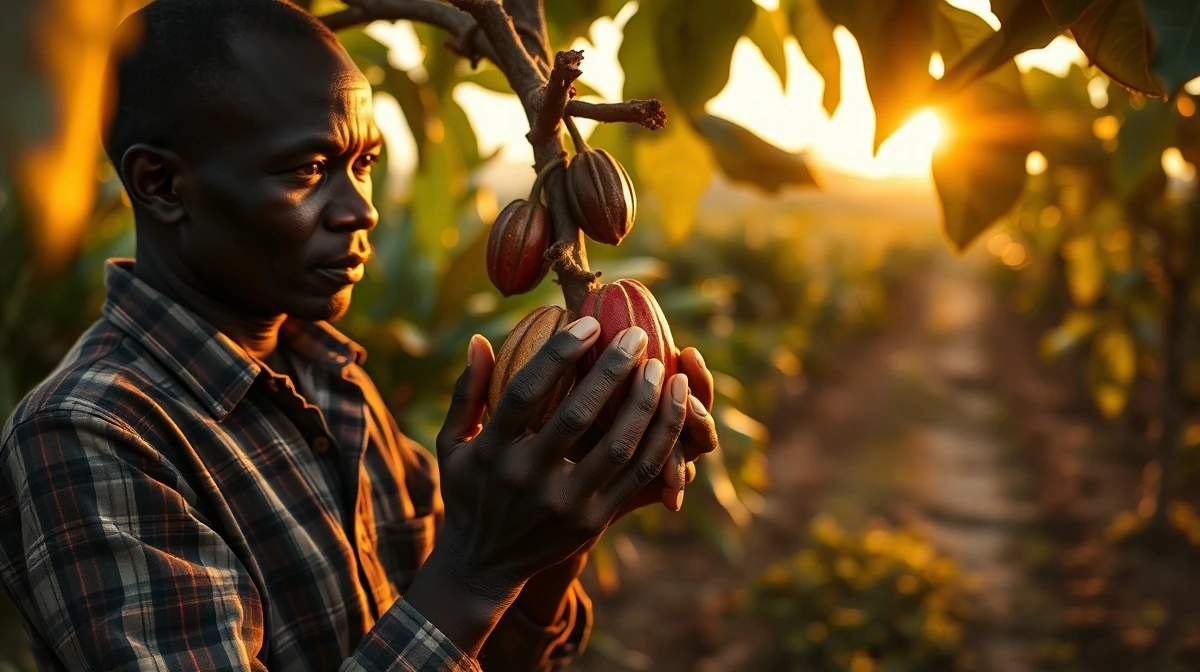
Simultaneously, reports from Ivory Coast and Ghana indicated that consistent rainfall has been beneficial for pod development on cocoa trees. These two nations collectively produce more than half of the world’s cocoa, making their crop health a primary market focus.
Mounting Inventories and Shifting Farmer Prices
Supply pressures intensified as ICE-monitored cocoa inventories rose to a 7.5-month high of over 2.3 million bags. This build-up suggests ample physical supplies are available, countering previous concerns about tightness.
Recent government actions in the top producing nations have also altered the market landscape. In February, Ghana reduced the official farmgate price paid to its cocoa farmers by nearly 30% for the 2025/26 season. The Ivory Coast followed last week, announcing a 57% cut in the price paid to farmers for the mid-crop harvest that began this month. These cuts are intended to reflect lower global market prices and may influence future planting and maintenance decisions by growers.
Demand Picture Remains Weak
Consumer resistance to high chocolate prices continues to suppress demand. Barry Callebaut AG, the world’s largest bulk chocolate maker, reported a 22% year-over-year sales volume decline in its cocoa division for the quarter ending November 30. The company cited “negative market demand.”
Regional cocoa grinding data, a key indicator of demand, has been soft. The European Cocoa Association reported that fourth-quarter 2025 grindings fell 8.3% year-over-year to 304,470 metric tons, the lowest Q4 total in 12 years. Asian grindings fell 4.8%, while North American processing rose a marginal 0.3%.
Conflicting Supply Forecasts
Market analysts present a mixed picture for global cocoa supply. The International Cocoa Organization (ICCO) recently raised its estimate for the 2024/25 global cocoa surplus to 75,000 metric tons. This marks the first production surplus in four years, with the ICCO estimating global output climbed 8.4% for that season.
However, forecasts for the current 2025/26 season vary. Rabobank reduced its surplus forecast to 250,000 metric tons in February, down from a prior estimate. The Ivory Coast government projects its own 2025/26 production will fall 10.8% year-over-year. In contrast, StoneX forecast a surplus of 287,000 metric tons for 2025/26 in a January report.
Additional Market Factors
Other elements are creating crosscurrents in the market. The closure of the Strait of Hormuz has increased global shipping rates and insurance costs, raising expenses for cocoa importers. Slower deliveries from farms to ports in the Ivory Coast also provided some underlying price support earlier in the season.
Exports from Nigeria, the world’s fifth-largest producer, rose 17% year-over-year in December, according to a Bloomberg report. Nigeria’s Cocoa Association projects the nation’s 2025/26 production will fall 11%.
The cocoa market now balances improved near-term supply prospects against uncertain future production and persistently weak demand. Traders will monitor upcoming grinding reports and West African weather patterns for the next price signals.
This article was produced with AI assistance and reviewed by our editorial team for accuracy and quality.



