
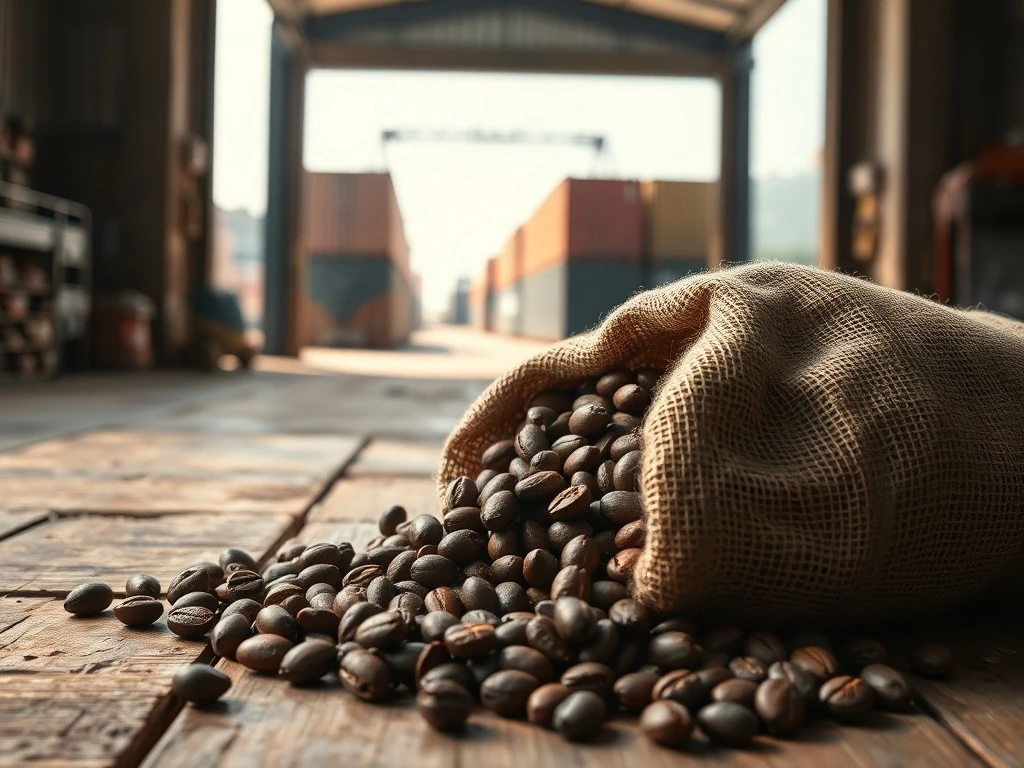
NEW YORK, March 9, 2026 — Cocoa futures showed minimal movement in Monday trading following last week’s dramatic 5.73% surge, as market participants weighed geopolitical risks against persistent demand concerns. May ICE NY cocoa (CCK26) settled unchanged, while May ICE London cocoa #7 (CAK26) gained a modest +5 (+0.22%). The sideways trading pattern emerged after Friday’s rally pushed New York cocoa to a two-week high, reflecting the complex interplay between Middle East tensions and fundamental cocoa market dynamics. The ongoing conflict in Iran has injected fresh volatility into commodity markets, with the potential closure of the Strait of Hormuz raising transportation costs that could ripple through global cocoa supply chains. Meanwhile, West African production data continues to paint a mixed picture for the 2025/26 season.
Cocoa Prices Find Equilibrium After Geopolitical Spike
The cocoa market entered a consolidation phase on March 9, 2026, following last week’s sharp rally that caught many traders off guard. May NY cocoa futures reached $3,450 per metric ton before settling at $3,448, essentially flat from Friday’s close. This stabilization occurred despite continued concerns about shipping disruptions in the Middle East. The Strait of Hormuz handles approximately 20% of global oil shipments and serves as a critical transit route for container ships carrying West African cocoa to European and Asian markets. Consequently, insurance premiums for vessels passing through the region have increased by 35-40% since February, according to maritime security analysts.
Market analysts attribute last week’s rally primarily to short covering rather than new bullish positions. “Traders who had bet on continued price declines rushed to exit positions when the Iran situation escalated,” explained commodities strategist Maria Chen of StoneX Group. “The fundamental picture hasn’t changed dramatically, but geopolitical risk premiums are being repriced across soft commodities.” The International Cocoa Organization (ICCO) maintains its forecast for a global surplus in the 2024/25 season, though revised estimates show the surplus shrinking from earlier projections. Meanwhile, physical delivery data from Ivory Coast ports shows cumulative shipments of 1.35 million metric tons for the current marketing year, representing a 3.6% decline from the same period last year.
West African Supply Dynamics Create Market Tension
The world’s two largest cocoa producers, Ivory Coast and Ghana, face unprecedented challenges as they attempt to balance farmer livelihoods with market realities. In February 2026, Ivory Coast announced a 57% reduction in the official farm-gate price paid to cocoa farmers for the upcoming mid-crop harvest beginning this month. Ghana had already implemented a nearly 30% price cut for the 2025/26 growing season. These drastic measures reflect the growing disconnect between government-set prices and international market levels. Consequently, international buyers have become increasingly reluctant to purchase cocoa at official prices, leading to growing stockpiles at ICE-certified warehouses.
- Inventory buildup: ICE cocoa inventories reached 2,204,098 bags last Friday, the highest level in 6.5 months
- Production forecasts: Ivory Coast projects 2025/26 production will fall 10.8% year-over-year to 1.65 million metric tons
- Regional shifts: Nigerian cocoa exports rose 17% year-over-year in December 2025, reaching 54,799 metric tons
- Quality concerns: Delayed shipments from Ivory Coast ports have raised questions about bean quality as the mid-crop approaches
Institutional Analysis and Revised Forecasts
Major agricultural research institutions have adjusted their cocoa balance sheet projections in recent weeks, reflecting changing supply expectations. On February 10, 2026, Rabobank reduced its global cocoa surplus estimate for the 2025/26 season to 250,000 metric tons, down from a November forecast of 328,000 metric tons. This revision followed earlier adjustments by the International Cocoa Organization, which in January raised its 2024/25 surplus estimate to 75,000 metric tons from 49,000 metric tons. “The surplus is real but shrinking,” noted Dr. Samuel Owusu, ICCO’s senior economist. “Weather patterns in West Africa during the coming months will determine whether we see a meaningful production recovery or continued constraints.”
StoneX Group maintains a more bullish surplus forecast, projecting 287,000 metric tons for 2025/26 and 267,000 metric tons for 2026/27. These institutional differences highlight the uncertainty surrounding West African production capabilities amid climate variability and farmer response to price reductions. The Ghana Cocoa Board has initiated farmer support programs to maintain production quality despite price cuts, while Ivory Coast’s Coffee-Cocoa Council faces pressure to ensure the mid-crop harvest meets both volume and quality expectations.
Global Demand Picture Remains Concerning for Chocolate Industry
While supply-side factors dominate short-term price movements, demand fundamentals continue to pressure the cocoa market long-term. Consumer resistance to high chocolate prices has persisted through the 2025 holiday season, with major chocolate manufacturers reporting disappointing sales volumes. Barry Callebaut AG, the world’s largest bulk chocolate maker, reported a 22% decline in cocoa division sales volume for the quarter ending November 30, 2025. Company executives cited “negative market demand and a prioritization of volume toward higher-return segments within cocoa” as primary factors. This trend reflects broader industry challenges as manufacturers reformulate products and reduce portion sizes to maintain affordability.
| Region | Q4 2025 Cocoa Grindings | Year-over-Year Change | Significance |
|---|---|---|---|
| Europe | 304,470 MT | -8.3% | Lowest Q4 in 12 years |
| Asia | 197,022 MT | -4.8% | Continued decline from peak |
| North America | 103,117 MT | +0.3% | Marginal growth only |
| Global Estimate | ~1.45 million MT | -4.1% | Based on available data |
The grinding data reveals regional variations in chocolate demand erosion. European processors, facing the highest energy costs and most pronounced consumer inflation, have reduced activity most significantly. Asian grindings continue their downward trend from 2024 peaks, while North American processors show only marginal growth. These figures suggest that high cocoa prices have structurally reduced chocolate consumption rather than simply causing temporary demand destruction. Industry analysts now question whether demand will recover even if prices moderate, given lasting changes in consumer behavior and manufacturer formulations.
Forward-Looking Analysis: Key Factors to Monitor
The cocoa market faces competing pressures as it moves through the first quarter of 2026. On the geopolitical front, the situation in Iran represents an ongoing risk premium that could reignite volatility. Shipping companies have already begun rerouting vessels around the Cape of Good Hope, adding 10-14 days to transit times between West Africa and Europe. These extended journeys increase fuel consumption by approximately 30% and create scheduling complications for just-in-time manufacturing processes. Chocolate companies with lean inventory systems face particular vulnerability to these disruptions.
West African Weather and Farmer Response Critical
Agricultural conditions in Ivory Coast and Ghana during the coming months will significantly influence the mid-crop harvest quality and volume. The region has experienced irregular rainfall patterns through the dry season, with some growing areas receiving below-average precipitation. Farmers responding to price cuts by reducing fertilizer applications or diverting labor to other crops could further impact production. “The relationship between official prices and farmer economics has reached a breaking point,” observed Kofi Mensah, director of the West African Agricultural Monitor. “We’re watching closely to see how cultivation practices change in response to these unprecedented price reductions.”
Market participants should monitor several key developments through March and April 2026. The mid-crop harvest beginning this month will provide the first tangible evidence of how farmers are responding to price signals. Shipping logistics through the Middle East will either normalize or face further disruption depending on geopolitical developments. Finally, quarterly earnings reports from major chocolate manufacturers in April will reveal whether demand erosion is stabilizing or accelerating. These factors will collectively determine whether cocoa prices resume their downward trend or establish a new equilibrium at higher levels.
Conclusion
Cocoa prices have entered a period of consolidation following last week’s dramatic rally, reflecting the market’s attempt to balance geopolitical risks against persistent demand weakness. The 5.73% surge on March 6, 2026, demonstrated how quickly external factors can override fundamental analysis in commodity markets. While the Iran conflict has introduced new transportation cost pressures, the underlying cocoa market continues to grapple with surplus production estimates, weakening demand, and unprecedented price cuts for West African farmers. Market participants should prepare for continued volatility as these competing narratives unfold through the second quarter. The mid-crop harvest beginning this month will provide critical data on whether production can meet revised forecasts, while chocolate manufacturers’ quarterly results will reveal whether demand has found a floor. In this complex environment, cocoa prices may continue their sideways movement until clearer trends emerge from either the supply or demand side of the equation.
Frequently Asked Questions
Q1: Why did cocoa prices rally 5.73% last week after months of declines?
The rally was primarily driven by geopolitical concerns related to the Iran conflict and potential closure of the Strait of Hormuz. Traders engaged in short covering amid fears that shipping disruptions would increase transportation costs and delay cocoa deliveries from West Africa to global markets.
Q2: How are Ivory Coast and Ghana addressing the disconnect between official prices and market levels?
Both countries have implemented significant price cuts for farmers. Ghana reduced official prices by nearly 30% for the 2025/26 season, while Ivory Coast announced a 57% cut effective with the mid-crop harvest beginning March 2026. These measures aim to make their cocoa more competitive internationally.
Q3: What is the timeline for key developments in the cocoa market through mid-2026?
The mid-crop harvest begins in March 2026, with volume and quality data emerging through April. Major chocolate manufacturers report Q1 earnings in April, providing updated demand indicators. The ICCO will release its next quarterly bulletin in May with revised production and consumption estimates.
Q4: How are chocolate manufacturers responding to high cocoa prices and weak demand?
Companies are employing multiple strategies including product reformulation with alternative ingredients, portion size reductions, and premiumization toward higher-margin products. Some manufacturers are also delaying inventory purchases in anticipation of lower future prices.
Q5: What role does Nigeria play in the global cocoa supply picture?
As the world’s fifth-largest producer, Nigeria has increased exports by 17% year-over-year as of December 2025. However, the Nigerian Cocoa Association projects 2025/26 production will decline 11% to 305,000 metric tons due to aging trees and farmer challenges.
Q6: How might the current market situation affect chocolate prices for consumers?
While cocoa prices have declined from 2025 peaks, consumer chocolate prices may remain elevated as manufacturers recover earlier high input costs. Some companies may maintain higher prices to improve margins after a difficult period, while others might compete on price to regain market share.



