
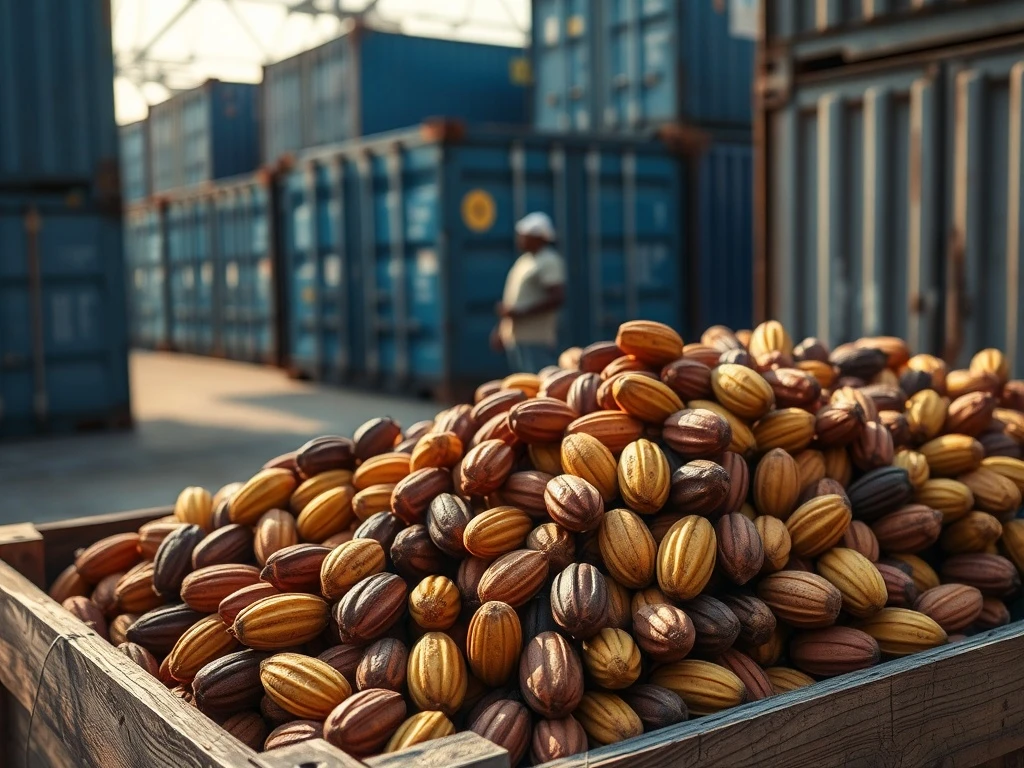
March 10, 2026 — Abidjan, Ivory Coast — Cocoa prices extended their dramatic 1.5-week rally on Tuesday, surging over 5% following reports that local grinders purchased more than 400,000 metric tons of Ivory Coast export contracts in just ten days. The May ICE NY cocoa contract (CCK26) closed up 158 points at 4.80%, while May London cocoa gained 121 points. This sharp increase marks the continuation of a significant rebound from recent lows, driven by emerging demand signals and persistent supply chain concerns. The rally comes despite broader market expectations of surplus production, creating what analysts describe as a complex and volatile trading environment.
Cocoa Prices Rally on Unexpected Export Demand
Tuesday’s price surge followed a Reuters report detailing substantial export contract purchases since mid-crop buying resumed. Local grinders in the Ivory Coast, the world’s largest cocoa producer, acquired over 400,000 metric tons of contracts in the ten days leading to March 10. This activity suggests new demand is emerging following recent price cuts implemented by both Ivory Coast and Ghana. “The scale of these purchases caught many market participants off guard,” noted commodity analyst James Richardson from StoneX. “After months of demand destruction due to high chocolate prices, this represents the first concrete signal of industrial buyers returning to the market.” The purchases specifically targeted the mid-year crop harvest that begins this month.
Market observers point to the timing of these purchases as particularly significant. They occurred alongside official price reductions for cocoa farmers in both major producing nations. Last week, Ivory Coast announced a 57% cut in farmer payments for the mid-crop harvest, while Ghana implemented a nearly 30% reduction for the 2025/26 season. These cuts brought official farm-gate prices closer to world market levels, potentially making exports more attractive to international buyers who had been reluctant to purchase at previously inflated prices.
Shipping Disruptions Compound Supply Concerns
The price rally gained additional momentum from ongoing shipping disruptions affecting global trade routes. The closure of the Strait of Hormuz has significantly increased shipping costs, insurance premiums, and fuel prices throughout March 2026. These increased logistics costs directly raise import expenses for cocoa-consuming nations in Europe and North America. “Every container of cocoa beans now costs substantially more to ship,” explained maritime logistics expert Dr. Sarah Chen of the Global Shipping Institute. “Insurance rates have tripled on routes affected by the Strait closure, and longer alternative routes consume more fuel and time.” These factors threaten to curb export volumes and limit near-term supplies despite adequate physical stocks.
- Transportation Cost Inflation: Shipping rates on affected routes have increased 40-60% since the Strait closure, adding approximately $150-200 per metric ton to delivery costs.
- Supply Chain Delays: Alternative shipping routes add 7-10 days to transit times between West Africa and European ports, creating timing mismatches for grinders.
- Inventory Accumulation: ICE cocoa inventories reached a 6.75-month high of 2,220,846 bags on Monday, indicating available supplies but highlighting distribution challenges.
Expert Analysis: Diverging Market Fundamentals
The International Cocoa Organization (ICCO) recently revised its global surplus estimate upward to 75,000 metric tons for the 2024/25 season, marking the first surplus in four years. ICCO forecasts global production will increase 8.4% year-over-year to 4.7 million metric tons. However, these longer-term projections conflict with immediate supply concerns. “We’re seeing a classic case of macro versus micro fundamentals,” stated Dr. Michael Rodriguez, agricultural economist at Rabobank. “The annual surplus projections are accurate at the global level, but regional disruptions, shipping issues, and timing mismatches create short-term scarcity that drives price volatility.” Rabobank itself recently reduced its 2025/26 global surplus estimate from 328,000 to 250,000 metric tons, reflecting more cautious assessment of West African production.
Demand Destruction Versus Price Elasticity
Consumer resistance to high chocolate prices has significantly impacted cocoa demand throughout 2025 and early 2026. Barry Callebaut AG, the world’s largest bulk chocolate manufacturer, reported a 22% decline in cocoa division sales volume for the quarter ending November 30. “Negative market demand and a prioritization of volume toward higher-return segments within cocoa” drove the decrease, according to company statements. Regional grinding reports further illustrate demand weakness. European Q4 cocoa grindings fell 8.3% year-over-year to 304,470 metric tons—the lowest Q4 volume in 12 years and significantly below expectations of a 2.9% decline.
| Region | Q4 2025 Grindings | Year-over-Year Change | Trend |
|---|---|---|---|
| Europe | 304,470 MT | -8.3% | 12-year low |
| Asia | 197,022 MT | -4.8% | Continued decline |
| North America | 103,117 MT | +0.3% | Marginal growth |
This demand destruction creates a paradoxical market situation. While high prices have reduced consumption, the recent price corrections appear sufficiently attractive to trigger renewed industrial buying. The 400,000-ton purchase suggests a price point has been reached where manufacturers believe they can pass costs to consumers or absorb them through operational efficiencies.
Production Outlook: Diverging Regional Forecasts
The fundamental supply picture remains mixed across major producing regions. Ivory Coast projects its 2025/26 production will decline 10.8% year-over-year to 1.65 million metric tons, down from 1.85 million in the previous season. This reduction reflects both cyclical factors and farmer responses to price cuts. Conversely, Nigeria—the world’s fifth-largest producer—reported December 2025 exports increased 17% year-over-year to 54,799 metric tons. However, the Nigerian Cocoa Association projects 2025/26 production will fall 11% to 305,000 metric tons due to various agricultural challenges.
Farmer Economics and Market Participation
The relationship between official farm-gate prices and world market prices continues to influence farmer behavior and market dynamics. For months, international buyers avoided Ivory Coast and Ghana cocoa because official prices remained substantially above world market levels. This disconnect created a standoff that depressed trading volumes even as physical supplies accumulated. The recent price cuts have narrowed this gap, though not eliminated it entirely. “Farmers are understandably frustrated,” observed Kofi Mensah, director of the West African Cocoa Farmers Cooperative. “Many will reduce maintenance of older trees or shift some land to alternative crops if prices don’t improve. The mid-crop harvest will provide the first test of farmer response to the new price structure.”
Market Implications and Forward Outlook
The convergence of increased export purchases, shipping disruptions, and revised production forecasts creates a complex outlook for cocoa markets through mid-2026. Several key developments will determine price direction in coming months. The mid-crop harvest beginning in March will provide the first indication of farmer response to price cuts. Shipping route availability and cost developments will influence import economics for consuming regions. Perhaps most critically, consumer chocolate purchasing during the upcoming Easter season will test whether demand has stabilized at current price levels.
Market structure also warrants attention. The recent rally has occurred alongside rising exchange inventories, suggesting available supplies but highlighting logistical and timing challenges. This creates potential for continued volatility as market participants navigate conflicting signals. “We’re in a transition period between surplus projections and immediate availability concerns,” summarized commodity strategist Elena Petrova. “The market is searching for equilibrium between producer needs, manufacturer requirements, and consumer tolerance.”
Conclusion
Cocoa prices have surged over 5% as Ivory Coast export purchases exceeded 400,000 metric tons, extending a 1.5-week rally that defies simple surplus narratives. This development signals potential demand recovery following months of consumer resistance to high chocolate prices. However, the rally occurs within a complex framework of shipping disruptions, regional production variations, and ongoing adjustments to farmer pricing structures. Market participants should monitor mid-crop harvest volumes, shipping route developments, and consumer purchasing patterns around upcoming seasonal events. While longer-term projections suggest adequate global supplies, immediate availability concerns and logistics challenges may sustain volatility through the second quarter of 2026. The cocoa market demonstrates how regional disruptions and timing mismatches can create significant price movements even within broader surplus conditions.
Frequently Asked Questions
Q1: Why did cocoa prices surge over 5% on March 10, 2026?
Cocoa prices surged following reports that local grinders purchased over 400,000 metric tons of Ivory Coast export contracts in ten days, signaling renewed demand after recent price cuts. Shipping disruptions and supply concerns added upward pressure.
Q2: How do shipping disruptions affect cocoa prices?
The Strait of Hormuz closure has increased shipping costs 40-60%, added 7-10 days to transit times, and tripled insurance rates on affected routes. These increased costs raise import expenses and threaten to limit near-term supplies.
Q3: What is the outlook for cocoa production in 2025/26?
Production forecasts diverge by region. Ivory Coast projects a 10.8% decline to 1.65 million metric tons, while Nigeria expects an 11% decrease to 305,000 tons. Global surplus estimates range from 75,000 to 287,000 metric tons depending on the forecasting institution.
Q4: How have chocolate manufacturers responded to high cocoa prices?
Manufacturers have faced significant demand destruction. Barry Callebaut reported a 22% sales volume decline, while European grindings fell to a 12-year low. Recent price cuts may be reaching levels where industrial buyers return to the market.
Q5: What should investors watch in coming months?
Key indicators include mid-crop harvest volumes beginning in March, shipping route developments, consumer chocolate purchases during Easter season, and whether farmer price adjustments stimulate or discourage production.
Q6: How do official farm-gate prices affect the cocoa market?
When official prices in Ivory Coast and Ghana exceed world market levels, international buyers avoid purchases, creating trading standoffs. Recent cuts have narrowed this gap but not eliminated the disconnect between producer needs and market realities.



