
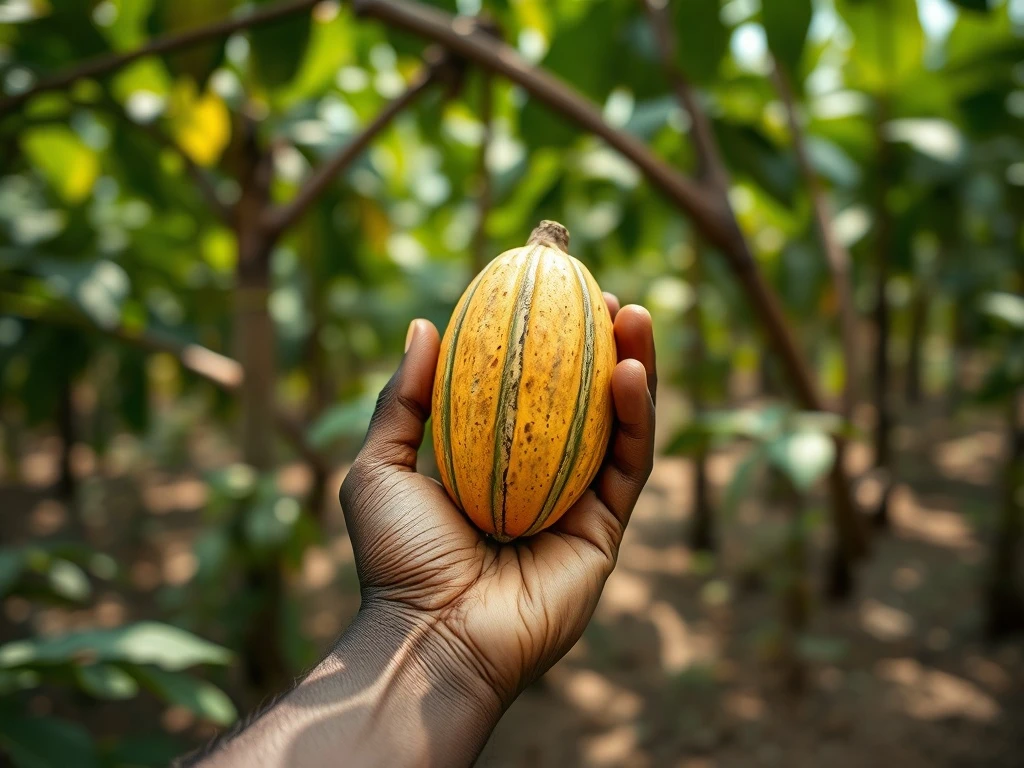
NEW YORK & LONDON — March 9, 2026: Cocoa futures prices rallied sharply to 1.5-week highs in volatile trading Friday, with the May ICE NY cocoa contract (CCK26) closing up a staggering +175 points (+5.73%). The sudden surge, which also saw May London cocoa gain +4.99%, was primarily driven by aggressive short covering. Traders reacted to mounting fears that the ongoing war in Iran could severely disrupt global cocoa supplies by closing the vital Strait of Hormuz. This critical maritime chokepoint handles a significant portion of the world’s seaborne trade, and its closure threatens to spike shipping costs, delay exports, and tighten physical cocoa availability for chocolate makers worldwide. The price move represents a dramatic reversal from earlier in the week, highlighting the market’s acute sensitivity to geopolitical supply shocks.
Cocoa Market Volatility and the Geopolitical Trigger
The immediate catalyst for Friday’s rally was the escalating conflict in the Middle East. Specifically, market participants fear the Strait of Hormuz could be shut, a scenario that would reverberate through global commodity logistics. “The closure directly impacts the cost triangle for importers: freight rates, insurance premiums, and bunker fuel prices all move higher,” explained a senior analyst at a European commodity fund, who spoke on condition of anonymity due to firm policy. Consequently, these increased costs threaten to make cocoa shipments prohibitively expensive and could physically strand supplies in origin countries. This fear triggered a wave of short covering, where traders who had bet on lower prices rushed to buy back contracts to limit losses. The rally was further fueled by an already extreme speculative position. According to the weekly Commitment of Traders (COT) report released Friday, managed money funds increased their net-short position in London cocoa futures and options by 3,370 contracts in the week ended March 3. This brought the total to 29,049 net-short positions, the largest bearish bet in over four years, creating a powder keg for a short-covering rally.
This bullish spike stands in stark contrast to the dominant market trend. Prior to Friday, cocoa prices had been mired in an eight-week downtrend. In fact, on Monday, March 2, May NY cocoa had hit a contract low, while the nearest-futures London contract fell to a three-year low. That sell-off was driven by updated forecasts from the International Cocoa Organization (ICCO), which raised its estimate for the global 2024/25 season surplus to 75,000 metric tons (MT). This revision, up from a November forecast of a 49,000 MT surplus, signaled the first production surplus in four years and weighed heavily on sentiment. The ICCO also projected global 2024/25 production would climb 8.4% year-over-year to 4.7 million MT, painting a picture of robust supply.
Structural Bearish Pressures and Demand Destruction
Beneath the geopolitical spark lies a market grappling with significant structural headwinds. The primary bearish narrative has been one of ample supply meeting weakening demand. For instance, on January 29, analyst firm StoneX forecast a global cocoa surplus of 287,000 MT for the 2025/26 season, followed by another 267,000 MT surplus in 2026/27. Furthermore, the ICCO reported on January 23 that global cocoa stocks rose 4.2% year-over-year to 1.1 million MT, adding to the inventory overhang. Perhaps the most telling pressure has come from the demand side. Consumers have pushed back against persistently high chocolate prices, leading to measurable demand destruction. Barry Callebaut AG, the world’s largest bulk chocolate maker, reported a stark -22% decline in sales volume in its cocoa division for the quarter ending November 30. The company cited “negative market demand” as a key factor. This weakness is confirmed by regional cocoa grinding data, a direct proxy for consumption:
- Europe: Q4 2025 grindings fell -8.3% y/y to 304,470 MT, the lowest Q4 volume in 12 years.
- Asia: Q4 2025 grindings fell -4.8% y/y to 197,022 MT.
- North America: Q4 2025 grindings rose a mere +0.3% y/y to 103,117 MT, indicating stagnation.
West African Production Dynamics and Price Support
While the broader outlook has been bearish, specific developments in West Africa—source of over 60% of the world’s cocoa—provide some countervailing support. The most significant recent action has been the slashing of official farm-gate prices by the top two producers. In February, Ghana cut the price it pays farmers by nearly 30% for the 2025/26 season. On Wednesday, March 4, the Ivory Coast followed with an even more drastic cut of 57%, effective for the mid-crop harvest beginning this month. These cuts, while painful for farmers, were necessary as the official prices had been set well above depressed world market levels, causing international buyers to balk. The lack of buying interest was visibly boosting exchange inventories; ICE cocoa stocks rose to a 6.5-month high of 2,204,098 bags as of Friday. However, the price cuts aim to realign supply with market demand. There are also signs of tighter immediate supply. Cumulative arrivals at Ivorian ports for the current marketing year (Oct 1, 2025 – Mar 1, 2026) totaled 1.34 MMT, down -3.6% from the same period last year. This slowdown in deliveries to port provides a fundamental floor under prices.
Diverging Forecasts: Bullish and Bearish Factors in Balance
The current cocoa landscape presents a complex mix of opposing signals, making price direction highly contingent on which factors gain dominance. The table below summarizes the key bullish and bearish pressures as of early March 2026:
| Bullish Factors | Bearish Factors | Wild Card / Geopolitical |
|---|---|---|
| Ivory Coast 2025/26 production forecast down -10.8% y/y | ICCO forecasts a 75,000 MT surplus for 2024/25 | Iran war & potential Strait of Hormuz closure |
| Slowing port arrivals in Ivory Coast (-3.6% y/y) | StoneX forecasts large surpluses for 2025/26 & 2026/27 | Spiking global shipping and insurance costs |
| Rabobank cut its 2025/26 surplus forecast to 250,000 MT | Weak grinding data across Europe & Asia | Extreme fund short position (29,049 net-short) |
| Ghana & Ivory Coast farm-gate price cuts may stimulate sales | High exchange inventories (6.5-month high) | Short-covering rally potential |
Market Outlook: Navigating Uncertainty
The immediate future for cocoa prices hinges on the trajectory of the Iran conflict and its tangible impact on shipping lanes. If the Strait of Hormuz remains functionally closed or perilous to transit, the supply disruption fears that sparked Friday’s rally will intensify, likely supporting prices further. Market technicians will watch to see if this move represents a mere correction in a bear market or the beginning of a sustained reversal. The massive fund short position remains a latent source of volatility; any further bullish news could trigger another explosive covering rally. Conversely, a rapid de-escalation in the Middle East would quickly remove the geopolitical premium, refocusing attention on the substantial fundamental surpluses and weak demand. Traders will also closely monitor the progress of the West African mid-crop harvest. Reports from groups like Tropical General Investments indicate favorable growing conditions and healthy pod counts in Ivory Coast and Ghana. A strong mid-crop, which accounts for about 25% of annual Ivorian output, could swiftly replenish pipeline supplies and cap price gains.
Industry and Trader Reactions to the Spike
Reactions from across the industry have been mixed. For chocolate manufacturers, the sudden spike is a painful reminder of the volatility that plagued markets in the early 2020s. Many had been hoping extended periods of lower input costs would allow them to rebuild margins and potentially pass some savings to consumers to stimulate demand. This rally complicates that calculus. Physical traders at origin report a cautious wait-and-see approach, as the new, lower farm-gate prices in West Africa have yet to fully translate into a flurry of new export contracts. “The price cut was needed to move beans,” a shipper in Abidjan told Barchart, “but now buyers are also worried about getting them out of the region if shipping costs double.” This logistical uncertainty is creating a new layer of complexity in physical trade.
Conclusion
The dramatic 5.7% surge in cocoa prices on March 9, 2026, underscores the commodity’s vulnerability to geopolitical shocks, even amidst a bearish fundamental backdrop of forecast surpluses and weak demand. The primary driver was short covering fueled by fears that the Iran war could disrupt cocoa supplies via the Strait of Hormuz. While the long-term picture still includes projections for ample global production, the immediate market is now forced to price in tangible supply chain risks and exorbitant shipping costs. Investors and industry participants should watch for developments in the Middle East, weekly shipping rate indices, and the pace of West Africa’s mid-crop harvest. The convergence of an extreme speculative short position with a genuine supply scare has created a highly volatile environment where prices could swing sharply based on headlines, making risk management paramount for all market participants.
Frequently Asked Questions
Q1: Why did cocoa prices surge so sharply on March 9, 2026?
The primary cause was a short-covering rally triggered by fears that the war in Iran could lead to the closure of the Strait of Hormuz. This critical shipping lane handles a major portion of global seaborne trade, and its closure would drastically increase the cost and delay the shipment of cocoa beans from West Africa to global markets.
Q2: What is “short covering” and how does it affect prices?
Short covering occurs when traders who have sold cocoa futures contracts (betting prices will fall) are forced to buy them back to close their positions and limit losses. This wave of buying, especially when many traders hold similar short bets, can rapidly drive prices higher, as seen on Friday.
Q3: Weren’t cocoa prices in a downtrend before this?
Yes. Cocoa had been falling for eight weeks, hitting multi-year lows earlier in the week due to forecasts for large global production surpluses and reports of weak demand from chocolate makers. Friday’s rally was a sharp reversal of that trend based on new geopolitical risks.
Q4: How does the situation in Iran affect cocoa farming in West Africa?
It doesn’t affect farming directly. The impact is on logistics and transportation. Cocoa grown in Ivory Coast or Ghana must be shipped to consumers in Europe, Asia, and America. If the main shipping route via the Suez Canal and Strait of Hormuz becomes blocked or too dangerous, ships must take much longer, more expensive routes, raising costs and causing delays.
Q5: What are the key factors to watch for cocoa prices in the coming weeks?
Key factors include: 1) Developments in the Iran conflict and status of the Strait of Hormuz, 2) Changes in global shipping freight rates, 3) The progress and size of the West African mid-crop harvest, and 4) Any new data on cocoa demand (grindings) from major consuming regions.
Q6: How do the recent price cuts for cocoa farmers in Ghana and Ivory Coast affect the market?
The drastic cuts (nearly 30% in Ghana, 57% in Ivory Coast) lower the official farm-gate price to align with lower world market prices. This is meant to make West African cocoa competitive again and stimulate buying from international traders, which could help reduce the buildup of unsold beans at origin.



