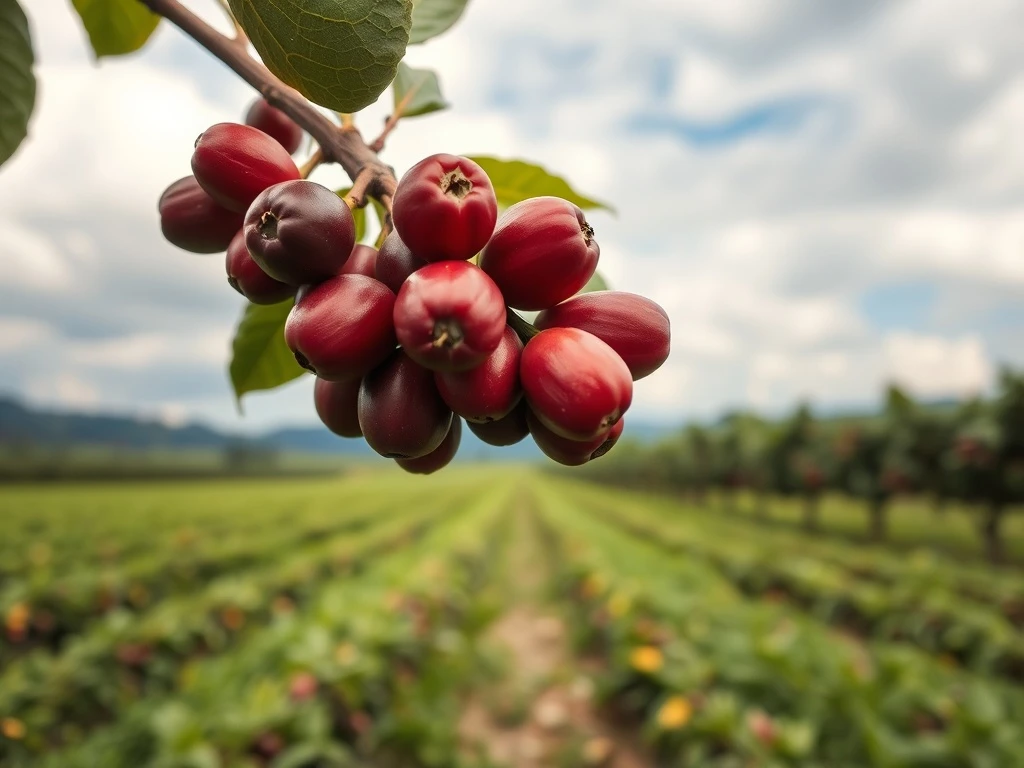
NEW YORK, March 11, 2026 — Global coffee futures tumbled in Wednesday trading, erasing recent geopolitical gains as favorable crop weather in Brazil and swelling exchange inventories shifted market sentiment toward ample supply. The May arabica contract (KCK26) on the ICE Futures U.S. exchange closed down 2.84%, while May robusta (RMK26) fell 3.76%. The sharp reversal highlights how fundamental agricultural factors are reasserting dominance over a market briefly rattled by Middle East shipping disruptions. Analysts point to forecasts for beneficial rains in key Brazilian growing regions and a five-month high in monitored arabica stocks as the primary catalysts for the sell-off.
Coffee Prices Fall on Dual Pressure from Weather and Inventories
The immediate trigger for Wednesday’s decline was a shift in weather patterns across South America. Meteorologists at Somar Meteorologia reported that Brazil’s crucial Minas Gerais region, responsible for the lion’s share of the nation’s arabica output, received only 35% of its historical average rainfall last week. However, updated forecasts now predict incoming showers. “The market is reacting to the expectation of improved soil moisture,” explained a veteran softs trader in São Paulo, who requested anonymity due to company policy. “After a dry spell, any precipitation is viewed as yield-positive, especially with a record crop already forecast.” This weather-driven sentiment directly undercut the war premium baked into prices earlier in the week.
Concurrently, rising stockpiles in ICE-certified warehouses applied tangible downward pressure. ICE-monitored arabica inventories hit a five-month peak of 564,626 bags on Tuesday before a slight drawdown. Robust a inventories also reached a 3.5-month high recently. These visible supplies reassure roasters of available physical beans, diminishing near-term scarcity fears. The inventory build reflects the front-end of what Brazil’s Conab agency predicts will be a record 2026 harvest of 66.2 million bags, a 17.2% year-over-year increase.
Global Supply Swell Offsets Geopolitical Risk Premium
While the closure of the Strait of Hormuz last week disrupted global logistics and raised import costs, the market’s focus has rapidly returned to a looming supply surplus. The rally fueled by those shipping fears has now retraced more than half its gains. The dominant narrative is no longer about delayed shipments but about the sheer volume of coffee expected to hit the market. “The geopolitical risk was real, but temporary,” says commodities analyst Maria Silva of AgriFront Consulting. “The supply data from Brazil and Vietnam is structural and will define the market for the next season.” The impact is quantifiable: higher shipping insurance and freight costs add an estimated 10-15 cents per pound to landed prices, but a potential 8-million-bag global surplus, as projected by Rabobank, equates to a far greater downward price adjustment.
- Record Brazilian Crop: Conab forecasts 2026 production at 66.2 million bags, with arabica output surging 23.2%.
- Vietnamese Export Surge: Vietnam’s Jan-Feb 2026 coffee exports rose 14% year-over-year, flooding the robusta market.
- Global Production Peak: Rabobank projects the 2026/27 global crop at a record 180 million bags.
Expert Analysis on Price Trajectory and Market Balance
Institutional forecasts paint a clear picture of a well-supplied market. Rabobank’s global projection of 180 million bags for the 2026/27 season, issued March 4, set a bearish tone. Conversely, the USDA’s Foreign Agricultural Service (FAS), in its December bi-annual report, offered a more nuanced view, predicting a record world crop but with a notable shift in composition: arabica production down 4.7% and robusta up 10.9%. “The market is grappling with a tale of two beans,” notes Dr. James Chen, head of research at the International Food Policy Institute. “Robusta supply is booming, but quality arabica from Brazil and Colombia could remain tighter. The aggregate number is bearish, but the mix matters for pricing differentials.”
Historical Context: From 15-Month Lows to War Spike and Back
Wednesday’s drop continues a volatile trend that has characterized coffee markets in early 2026. Prices had previously sold off sharply in February, with arabica hitting a 15-month low on February 24. That slump was driven by early optimism about the Brazilian crop. The subsequent spike on Hormuz closure news proved short-lived, demonstrating the market’s current sensitivity to any hint of supply chain disruption against a backdrop of expected plenty. This pattern of sharp rallies followed by swift corrections on fundamental news is typical of a market transitioning from a deficit to a surplus cycle.
| Contract | Price Change (Mar 11) | Key Driver | Recent Price Low (Date) |
|---|---|---|---|
| May Arabica (KCK26) | -2.84% | Brazil Weather, ICE Stocks | 15-month low (Feb 24, 2026) |
| May Robusta (RMK26) | -3.76% | Vietnam Exports, ICE Stocks | 6.75-month low (Feb 23, 2026) |
What’s Next for Coffee Markets: Monitoring Rains and Demand
Market participants will now closely track the intensity and distribution of the forecast Brazilian rains over the next two weeks. Consistent precipitation would solidify yield prospects and likely maintain downward pressure. Conversely, a return of dry conditions could trigger volatility. Secondly, demand signals will become increasingly critical. “The supply story is largely known,” says Silva. “The unknown variable is whether global consumption, particularly in emerging markets, can absorb this new production. We’ll be watching Q2 import data from Europe and the US very closely.” The International Coffee Organization’s next export report will provide a key data point on current trade flows.
Industry Reaction: Roasters, Retailers, and Consumer Impact
For major roasters and retailers, the price decline offers potential relief from elevated input costs. However, the benefit may not immediately trickle down to consumers. “There’s a significant lag between futures prices and supermarket shelves,” explains a procurement officer for a multinational coffee chain. “Contracts are hedged months in advance. If this lower price environment sustains through Q2, we might see promotional pricing or stabilized retail tags by late 2026.” Small-scale specialty roasters, who often buy on the spot market, may see cost benefits sooner, though their focus remains on securing specific high-grade lots, which command significant premiums over the benchmark futures.
Conclusion
The sharp fall in coffee prices on March 11 underscores the market’s return to fundamental drivers after a brief geopolitical scare. The combination of promising Brazilian weather and rising exchange inventories has refocused attention on a projected record global supply for the 2026/27 season. While logistical risks from the Middle East persist, their price influence appears temporary against the structural bearishness of the supply outlook. Traders and industry stakeholders should monitor Brazilian rainfall patterns in the coming weeks and key demand data from major importing regions, as these factors will determine whether the current downtrend stabilizes or accelerates.
Frequently Asked Questions
Q1: Why did coffee prices fall sharply on March 11, 2026?
Coffee prices fell primarily due to forecasts of beneficial rain in Brazil’s coffee-growing regions and a rise in ICE exchange inventories to multi-month highs, signaling ample near-term supply.
Q2: How does weather in Brazil affect global coffee prices?
Brazil is the world’s largest coffee producer. Favorable weather, like the forecasted showers in Minas Gerais, improves crop yield prospects, increasing expected supply and typically pushing futures prices lower.
Q3: What is the difference between arabica and robusta coffee in this report?
Arabica (traded as KCK26) is a higher-quality bean, while robusta (RMK26) is more bitter and caffeine-rich. Both fell, but robusta’s drop was steeper (-3.76%) due to soaring exports from Vietnam, the top robusta producer.
Q4: Will lower coffee futures prices mean cheaper coffee in stores soon?
Not immediately. Major roasters hedge costs months in advance. If lower futures prices are sustained for a quarter, consumers could see stabilized or slightly lower retail prices by late 2026.
Q5: What could reverse the current downtrend in coffee prices?
A significant weather threat to the Brazilian crop (e.g., frost or prolonged drought), a major escalation in global shipping disruptions, or surprisingly strong demand data from importers could shift sentiment and support prices.
Q6: How do ICE inventories influence the coffee market?
Rising ICE-monitored inventories indicate readily available physical coffee for delivery against futures contracts. High stocks reduce fears of a short-term shortage, giving buyers confidence and removing a premium from prices.