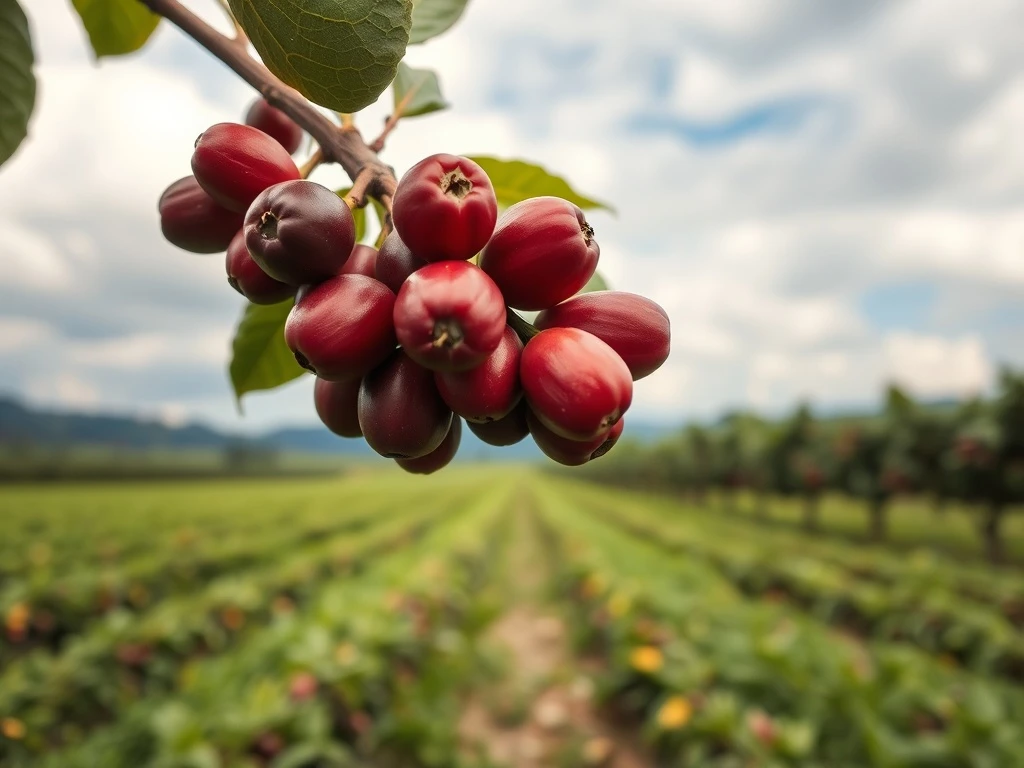
CHICAGO, March 11, 2026 — Global coffee markets experienced significant downward pressure today as favorable weather conditions in Brazil and rising exchange inventories combined to push prices sharply lower. May arabica coffee (KCK26) futures fell 2.94% to settle down 8.70 points, while May ICE robusta coffee (RMK26) dropped 3.71%, losing 137 points in Thursday’s trading session. The simultaneous decline across both major coffee varieties reflects improving supply fundamentals that have reversed last week’s geopolitical-driven rally. Market analysts point to specific weather patterns in Brazil’s key growing regions and inventory builds at ICE warehouses as the primary drivers behind today’s coffee prices fall.
Brazil Weather Conditions Drive Immediate Market Reaction
Showers forecast across Brazil’s primary coffee-growing areas provided the most immediate catalyst for today’s price decline. Meteorologists at Somar Meteorologia reported on Monday that Minas Gerais, Brazil’s largest arabica coffee-producing region, received 14.9 millimeters of rain last week. This precipitation represents approximately 35% of the historical average for this period. While below normal, the moisture arrives at a critical juncture in the crop development cycle. Furthermore, weather models predict additional showers across key coffee areas in the coming days, potentially improving soil moisture conditions ahead of the main harvest period.
These weather developments come against the backdrop of exceptionally strong production forecasts for Brazil’s 2026 crop. On February 5, Conab, Brazil’s official crop forecasting agency, projected that the country’s total coffee production would surge 17.2% year-over-year to a record 66.2 million bags. The agency specifically forecast arabica production climbing 23.2% to 44.1 million bags and robusta production increasing 6.3% to 22.1 million bags. Consequently, today’s weather news reinforced an already bullish supply outlook, prompting traders to adjust positions accordingly.
ICE Inventory Builds Add Sustained Downward Pressure
Beyond weather, rising inventory levels at ICE-monitored warehouses provided fundamental support for the bearish sentiment. ICE arabica coffee inventories, which had plummeted to a 1.75-year low of 396,513 bags on November 18, have staged a remarkable recovery. Data released Tuesday showed these inventories reached a five-month high of 564,626 bags. Similarly, ICE robusta coffee inventories posted a 3.5-month high of 4,721 lots on March 3 before settling at 4,563 lots as of Wednesday’s report. This inventory rebuilding signals improved physical availability and reduces immediate supply concerns that had supported prices through late 2025.
The inventory situation creates a complex dynamic for traders. Initially, low inventories supported prices through scarcity premiums. However, the recent rebuild suggests either increased deliveries from producers or decreased demand from roasters. Either interpretation weighs on futures prices. Analysts at Rabobank highlighted this shift in their March 4 report, noting that global coffee production is projected to reach a record 180 million bags in the 2026/27 season. This represents an increase of approximately 8 million bags from the previous year and provides context for the inventory accumulation now pressuring markets.
Geopolitical Premium Unwinds Rapidly
Today’s decline also represents a partial reversal of last week’s risk premium triggered by Middle East tensions. NY arabica coffee prices had rallied significantly early in the week following the closure of the Strait of Hormuz due to regional conflict. This critical waterway closure disrupted global shipping lanes, increasing freight rates, insurance costs, and fuel expenses for coffee importers and roasters worldwide. However, as immediate crisis fears moderated and alternative shipping routes were organized, the geopolitical premium embedded in coffee prices began to evaporate. Market participants now recognize that today’s coffee prices fall has effectively erased more than half of that conflict-driven rally.
Global Supply Dynamics and Export Trends
The broader global coffee landscape reveals mixed signals that help explain today’s price action. On one hand, Brazil’s export data shows contraction. According to Cecafé, Brazil’s Coffee Exporters Council, the country’s green coffee exports in February fell 27% year-over-year. Brazil’s Trade Ministry separately reported last Thursday that total coffee exports declined 17.4% year-over-year to 142,000 metric tons in February. These figures might typically support prices by suggesting tighter near-term supply.
Conversely, robusta markets face bearish pressure from Vietnam, the world’s largest producer of this variety. Vietnam’s National Statistics Office reported on March 6 that January-February 2026 coffee exports surged 14% year-over-year to 366,000 metric tons. This follows a 17.5% annual increase in 2025 exports to 1.58 million metric tons. Furthermore, Vietnam’s 2025/26 coffee production is projected to climb 6% year-over-year to a four-year high of 1.76 million metric tons (29.4 million bags). This Vietnamese supply surge specifically pressures robusta futures, which showed the steeper decline today.
| Market Indicator | Current Status | Year-Over-Year Change |
|---|---|---|
| Brazil 2026 Production (Conab) | 66.2 million bags | +17.2% |
| Global 2026/27 Production (Rabobank) | 180 million bags | +4.6% |
| Vietnam Jan-Feb 2026 Exports | 366,000 MT | +14% |
| ICE Arabica Inventories (Mar 10) | 564,626 bags | +42.4% from Nov low |
Institutional Forecasts and Market Implications
Major agricultural institutions have published forecasts that largely align with today’s bearish price movement. The USDA’s Foreign Agriculture Service (FAS), in its December 18 bi-annual report, projected world coffee production in 2025/26 would increase 2.0% year-over-year to a record 178.848 million bags. The FAS forecast includes a 4.7% decrease in arabica production to 95.515 million bags but a substantial 10.9% increase in robusta production to 83.333 million bags. For specific countries, FAS predicted Brazil’s 2025/26 production would decline 3.1% to 63 million bags while Vietnam’s output would rise 6.2% to a four-year high of 30.8 million bags.
Perhaps most significantly, FAS forecasts that 2025/26 ending stocks will fall 5.4% to 20.148 million bags from 21.307 million bags in 2024/25. This projected stock drawdown suggests that despite today’s price decline, the market isn’t facing a massive surplus. Instead, traders are balancing near-term inventory builds against longer-term stock reductions, creating the volatility witnessed in recent sessions. The International Coffee Organization (ICO) added another data point on November 7, reporting that global coffee exports for the current marketing year (October-September) fell 0.3% year-over-year to 138.658 million bags.
Technical Market Perspective and Trader Positioning
From a technical analysis standpoint, today’s decline places coffee futures at critical levels. Arabica coffee had fallen to a 15-month low on February 24, while robusta tumbled to a 6.75-month low on February 23. These lows established a floor that was tested during today’s session. The subsequent rebound from session lows suggests some buyers are entering the market at these reduced price levels. Commercial hedgers—including producers and roasters—are likely adjusting their positions based on the new weather and inventory information. Meanwhile, speculative traders who had built long positions during the geopolitical rally last week are now exiting, amplifying the downward momentum.
What Comes Next for Coffee Markets?
The immediate focus shifts to upcoming weather patterns in Brazil and inventory reports from ICE. Continued favorable weather through March and April could further pressure prices as the 2026 harvest approaches. Market participants will closely monitor precipitation levels in Minas Gerais and other key regions. Additionally, the next ICE inventory report will indicate whether the rebuilding trend continues or stabilizes. Any significant deviation from expected patterns could trigger sharp price reversals.
Longer-term, the market must reconcile record production forecasts with actual harvest results. While Conab’s projection of 66.2 million bags from Brazil is historically high, weather during the flowering and fruit development stages remains crucial. Similarly, Vietnam’s robusta production faces its own weather challenges despite bullish projections. Traders will also watch global consumption trends, particularly in emerging markets where coffee demand continues to grow steadily. The fundamental equation of supply versus demand will ultimately determine whether the current coffee prices fall represents a temporary correction or the beginning of a sustained downtrend.
Conclusion
Today’s significant decline in coffee futures prices stems from two primary factors: improved weather conditions in Brazil’s growing regions and rising inventory levels at ICE warehouses. The market is unwinding the geopolitical premium from last week’s Middle East tensions while responding to concrete fundamental data. Brazil’s record production forecast for 2026, combined with strong export growth from Vietnam, creates a bearish supply outlook that overwhelmed supportive factors like Brazil’s recent export declines. Moving forward, traders will monitor weather developments closely, as precipitation patterns during critical growth stages could quickly alter the supply trajectory. While prices may find technical support near recent lows, the overall fundamental picture suggests continued volatility as markets balance near-term inventory builds against longer-term production potential and global demand growth.
Frequently Asked Questions
Q1: Why did coffee prices fall so sharply on March 11, 2026?
Coffee prices declined primarily due to favorable weather forecasts in Brazil’s key growing regions and rising inventory levels at ICE-monitored warehouses. May arabica fell 2.94% and robusta dropped 3.71% as these factors improved the near-term supply outlook.
Q2: How does Brazil’s weather specifically affect coffee prices?
Rainfall in Brazil’s coffee regions, particularly Minas Gerais, improves soil moisture and supports crop development. Forecasted showers reduce concerns about drought stress, leading traders to anticipate larger harvests and lower prices.
Q3: What are ICE coffee inventories and why do they matter?
ICE inventories represent physical coffee stored in exchange-approved warehouses. Rising inventories indicate increased available supply, which typically pressures futures prices. Arabica inventories recently reached a five-month high of 564,626 bags.
Q4: Is this price drop related to last week’s Middle East tensions?
Yes, partially. Prices had rallied last week due to shipping disruptions from the Strait of Hormuz closure. Today’s decline represents traders removing that geopolitical risk premium as immediate crisis fears eased.
Q5: What is the forecast for Brazil’s 2026 coffee production?
Brazil’s Conab agency forecasts 2026 production will increase 17.2% year-over-year to a record 66.2 million bags, with arabica up 23.2% to 44.1 million bags and robusta up 6.3% to 22.1 million bags.
Q6: How might this price movement affect coffee consumers?
While futures prices influence wholesale costs, consumer prices typically respond more slowly. If the downtrend continues, retailers and roasters may eventually pass along some savings, but packaging, transportation, and labor costs also affect final consumer prices.