
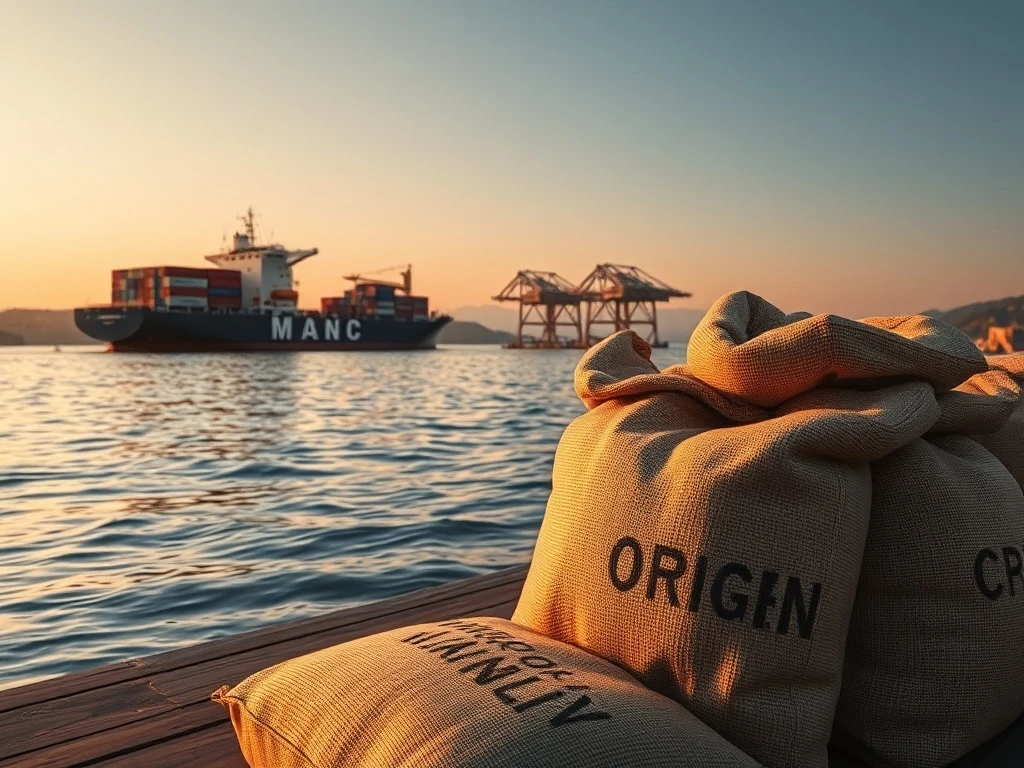
NEW YORK, March 9, 2026 — Global coffee markets face renewed volatility as geopolitical tensions threaten critical shipping lanes, pushing arabica futures to a three-week high. May arabica coffee (KCK26) closed up 3.60 points (+1.23%) on Monday, reaching its highest level since mid-February, while May ICE robusta coffee (RMK26) showed minimal movement, closing down just 0.03%. The divergence between coffee varieties highlights complex supply dynamics affecting the $200 billion global coffee industry. Shipping disruptions through the Strait of Hormuz, combined with weather concerns in Brazil and export data from Vietnam, create a perfect storm for commodity traders and consumers worldwide.
Coffee Prices Find Support From Middle East Shipping Disruptions
The ongoing conflict in Iran has effectively halted commercial shipping through the Strait of Hormuz, a critical chokepoint for global trade. This closure immediately increased shipping rates, insurance premiums, and fuel costs for coffee importers and roasters across Europe and North America. Consequently, transportation expenses for green coffee beans have surged approximately 40% on affected routes since February. The International Coffee Organization confirms these disruptions come during peak shipping season for South American harvests.
Market analysts at Barchart note the timing exacerbates existing supply chain pressures. “We’re seeing a classic case of geopolitical risk translating directly into commodity price support,” explains senior commodity strategist Rich Asplund, whose Monday market analysis first highlighted the connection. The shipping crisis compounds existing concerns about Brazilian production, where Minas Gerais—the country’s largest arabica-growing region—received just 35% of its historical average rainfall last week according to Somar Meteorologia.
Diverging Fundamentals Between Arabica and Robusta Markets
While arabica prices surge on supply concerns, robusta markets face different pressures. Vietnam’s National Statistics Office reported March 6 that January-February 2026 coffee exports rose 14% year-over-year to 366,000 metric tons. This follows Vietnam’s record 2025 exports of 1.58 million metric tons, representing a 17.5% annual increase. The Southeast Asian nation projects 2025/26 production will reach a four-year high of 1.76 million metric tons.
- Arabica Supply Pressure: Brazil’s February exports fell 17.4% year-over-year to 142,000 MT
- Inventory Recovery: ICE-monitored arabica inventories reached 553,379 bags Monday, a five-month high
- Production Forecasts: Brazil’s 2026 coffee production projected to climb 17.2% to record 66.2 million bags
- Global Outlook: Rabobank projects record 180 million bags in 2026/27 season, up 8 million from prior year
Institutional Analysis and Expert Perspectives
The USDA’s Foreign Agriculture Service provides crucial context in its December 18 bi-annual report. FAS projects world coffee production will increase 2.0% year-over-year to a record 178.848 million bags for 2025/26. However, the composition shows significant shifts: arabica production decreases 4.7% to 95.515 million bags while robusta production surges 10.9% to 83.333 million bags. “These divergent trends explain why arabica responds more sharply to shipping disruptions,” notes a FAS commodities specialist who requested anonymity per agency policy. “Arabica’s tighter supply situation makes it more vulnerable to logistical shocks.”
Historical Context and Market Memory of Previous Disruptions
Current events echo the 2021 Suez Canal obstruction and 2020 pandemic-related shipping crises, both of which caused sustained coffee price increases. However, today’s situation differs in its geopolitical origins and duration. The Strait of Hormuz handles approximately 20% of global petroleum shipments and significant agricultural commodity traffic. Previous closures have lasted weeks, but current military conflict suggests potentially longer disruption.
| Factor | Arabica Impact | Robusta Impact |
|---|---|---|
| Shipping Disruptions | Strongly Positive | Moderately Positive |
| Brazilian Weather | Negative (drought) | Mixed |
| Vietnamese Exports | Neutral | Strongly Negative |
| Dollar Strength | Negative | Negative |
| Inventory Levels | Negative (recovering) | Negative (recovering) |
Forward-Looking Analysis: What Coffee Traders Watch Next
Market participants now monitor several key developments. First, resolution timing for the Strait of Hormuz closure will determine whether current price support becomes sustained or temporary. Second, Brazil’s April rainfall patterns in Minas Gerais could either alleviate or exacerbate production concerns. Third, Vietnam’s March export data, due April 6, will confirm whether robusta’s bearish pressure continues. Finally, ICE inventory data released weekly provides real-time supply signals.
Industry Response and Adaptation Strategies
Major coffee roasters and retailers have begun implementing contingency plans. Some European importers are rerouting shipments around Africa’s Cape of Good Hope, adding 10-14 days to transit times and increasing costs by approximately 15%. Meanwhile, specialty coffee buyers are accelerating direct trade relationships to secure supply ahead of potential shortages. “We’re seeing unprecedented interest in forward contracts from roasters who typically bought spot,” reports a green coffee trader at a major European port. This shift toward secured supply suggests industry expectations of continued volatility.
Conclusion
Coffee prices face competing forces as March 2026 begins. Arabica finds strong support from Middle East shipping disruptions and Brazilian weather concerns, pushing futures to three-week highs. Conversely, robusta contends with surging Vietnamese exports and recovering global inventories. The divergence highlights coffee’s complex supply dynamics, where regional factors create distinct market movements. Traders should watch geopolitical developments, Brazilian rainfall, and Vietnamese export data for near-term direction. Ultimately, consumer prices may see delayed effects as current futures movements filter through supply chains over the coming months.
Frequently Asked Questions
Q1: How are coffee prices affected by shipping disruptions?
Shipping threats increase transportation costs, insurance premiums, and delivery times for coffee importers. These added expenses typically translate into higher futures prices as markets anticipate supply chain bottlenecks and increased costs throughout the distribution network.
Q2: Why did arabica and robusta prices move differently?
Arabica responds more to Brazilian supply concerns and shipping disruptions affecting South American exports. Robusta faces pressure from record Vietnamese exports and different inventory dynamics. The two coffee varieties have distinct supply chains and market fundamentals.
Q3: When will consumers see price changes at retail?
Retail coffee prices typically lag futures markets by 3-6 months as existing inventory buffers work through supply chains. However, sustained futures increases above 20% generally translate to noticeable retail price adjustments within one quarter.
Q4: What makes the Strait of Hormuz important for coffee?
While not a primary coffee shipping route, the strait’s closure disrupts global shipping patterns, increases vessel demand on alternative routes, and raises fuel costs industry-wide. These secondary effects impact all agricultural commodities through increased transportation expenses.
Q5: How reliable are current coffee production forecasts?
Major agencies like USDA, Conab, and Rabobank use satellite data, field surveys, and historical patterns for projections. While generally accurate for direction, actual production can vary 5-10% based on weather during critical growing periods, particularly flowering and maturation phases.
Q6: Should coffee drinkers stock up given current market conditions?
While futures show volatility, retail inventory levels remain adequate for near-term consumption. Industry experts recommend normal purchasing patterns unless specific supply warnings emerge from major roasters. Most companies maintain 60-90 days of inventory precisely to buffer against market fluctuations.
This article was produced with AI assistance and reviewed by our editorial team for accuracy and quality.



