
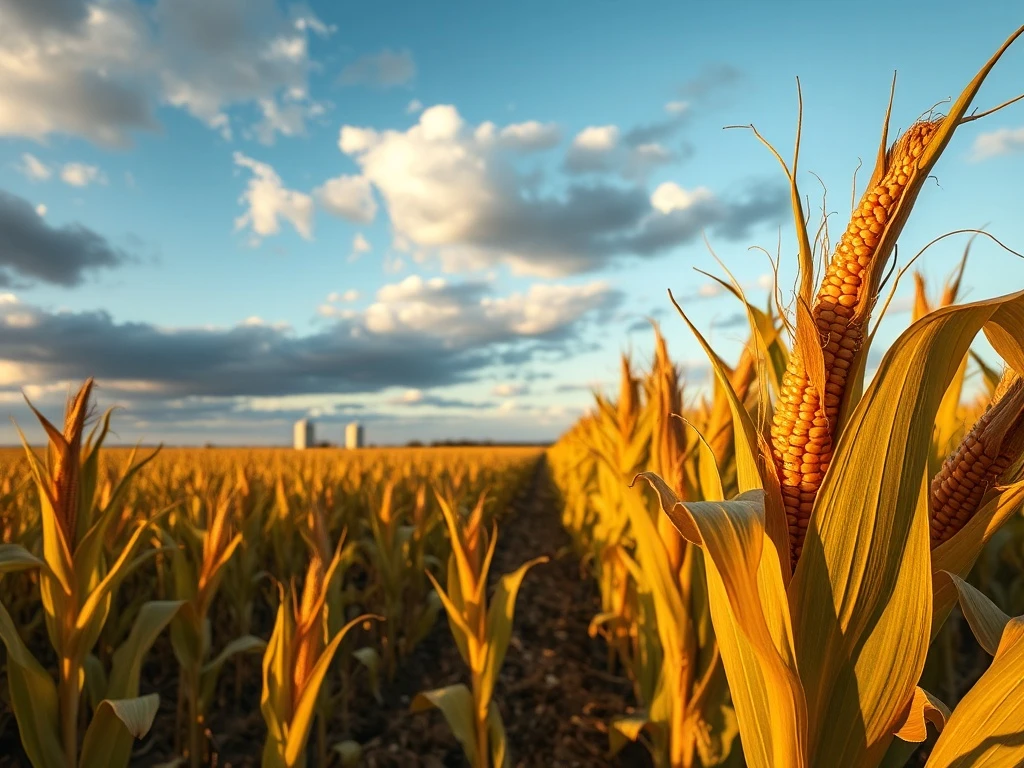
Corn futures gathered unexpected strength in a late-week rally on Friday, July 5, 2024, closing 4 to 7 ¾ cents higher across major contracts. The move came during a thin, post-holiday session on the Chicago Board of Trade (CBOT), defying a surprisingly weak U.S. Department of Agriculture (USDA) Export Sales report released earlier that morning. Traders and analysts pointed to shifting weather forecasts and tightening global supply signals from Brazil as key drivers behind the corn futures rally, injecting volatility into the grain markets as the weekend began.
Analyzing the Friday Corn Futures Rally
The July 2024 corn contract settled at $4.11 1/4, up a notable 7 3/4 cents, leading the gains. The December 2024 contract, which represents the new crop, closed at $4.24, up 4 1/2 cents. This upward momentum materialized despite bearish fundamental data from the USDA. For the week ending June 27, old crop corn bookings totaled just 357,152 metric tons (MT). This figure marked a 34.1% decline from the previous week and represented a 12-week low, falling well below trade estimates that ranged from 500,000 to 900,000 MT. The top buyer was listed as “Unknown Destinations” at 138,400 MT, followed by Colombia at 78,800 MT. Consequently, the market’s decision to rally on such data suggests other factors were in play.
Market participants quickly shifted their focus from exports to weather maps and international data. According to Alan Brugler of Barchart, whose analysis first reported the move, the rally was a “classic case of the market looking forward, not backward.” The 7-day Quantitative Precipitation Forecast (QPF) began showing spottier rain coverage for the U.S. Corn Belt. Forecasts indicated only an inch or less of rain for very southern portions of the Western Corn Belt (WCB) and mere trace amounts for the Eastern Corn Belt (ECB). This introduced uncertainty into yield projections for the developing crop, providing a fundamental floor for prices.
Global Supply Shifts and Their Market Impact
The corn futures rally cannot be viewed in isolation from the global agricultural landscape. Concurrently, data from Brazil’s trade ministry revealed a significant year-over-year contraction in its corn exports. For the month of June, Brazil exported 850,892 MT of corn, a 17.74% drop compared to June of the previous year. This decline in supply from a top global exporter alters the competitive dynamic for U.S. corn in the international market. While U.S. old crop sales were soft, new crop sales reported in the same USDA update were more robust at 311,538 MT, sitting at the higher end of expectations (0-400,000 MT). Mexico was the dominant buyer for the new crop, taking 301,800 MT.
- Weather Uncertainty: Drier forecasts for key U.S. growing regions introduced production risk, supporting futures prices.
- Brazilian Export Decline: A nearly 18% yearly drop in June exports tightens global available supply, potentially benefiting U.S. exports later in the season.
- Market Positioning: The rally occurred in a low-volume “lame duck” session, which can amplify price moves as fewer participants are needed to shift the market.
Expert Perspective on Grain Market Volatility
Dr. Michael Langemeier, Associate Director of the Center for Commercial Agriculture at Purdue University, notes that summer price movements often hinge on perceived weather threats. “The market is highly sensitive to precipitation forecasts during the critical pollination phase,” Langemeier stated in a recent university briefing. “A few dry days on the map can trigger short-covering rallies, especially when the market is already leaning technically. The export number was a negative, but it’s historical data. The market is trading the future risk.” This expert view underscores the forward-looking nature of commodity futures, where anticipated scarcity often outweighs recent sluggish demand. Furthermore, the USDA’s World Agricultural Supply and Demand Estimates (WASDE) report, a key global benchmark, will be the next major catalyst for price direction.
Historical Context and Price Comparison
To understand the significance of this rally, it’s useful to place current price levels in a historical context. The December 2024 corn contract closing at $4.24 remains below the highs seen in recent years but represents a recovery from lows touched earlier in the growing season. Price action is being dictated by a tug-of-war between ample current supplies and risks to future production. The table below compares key contract settlements from the July 5 session with their positions from a month prior, illustrating the recent trend.
| Corn Contract | July 5, 2024 Close | Approx. Price June 5, 2024 | Weekly Change (July 5) |
|---|---|---|---|
| Jul 24 Corn | $4.11 1/4 | $4.45 | +7 3/4 ¢ |
| Dec 24 Corn | $4.24 | $4.60 | +4 1/2 ¢ |
| New Crop Cash | $3.85 5/8 | $4.22 | +4 3/4 ¢ |
What Happens Next for Corn Markets?
The immediate focus for traders will be the evolving weather patterns across the Midwest throughout July. The condition of the corn crop as it enters its most critical yield-determining phase will set the tone. Additionally, the global market will watch for whether the slowdown in Brazilian exports is a temporary logistical issue or a sign of tighter domestic supplies. The next USDA WASDE report, scheduled for release on July 12, will provide updated balance sheet estimates, formally incorporating any changes to yield projections and demand outlook. Market technicians will also monitor whether the Friday rally can sustain momentum, or if it was merely a short-covering bounce in thin trade that will be sold into the following week.
Reactions from the Farming and Trading Community
Initial reactions from the agricultural sector have been mixed. Some grain farmers view the rally as a modestly welcome opportunity for forward pricing, though many are waiting for stronger signals before making significant sales. “It’s a move in the right direction, but we need to see follow-through and better basis levels before getting excited,” commented Iowa farmer Mark Mueller. On the trading desks, the rally was seen by some as technically driven. “The market was oversold and found some buy stops above key moving averages,” noted a futures broker with Chicago-based Price Futures Group, who spoke on background. “The export number kept a lid on it, but the weather and Brazil gave the bulls just enough to work with.”
Conclusion
The Friday corn futures rally demonstrated the complex, multi-factor nature of agricultural commodity trading. Prices advanced despite poor weekly export sales, as the market prioritized forward-looking weather risks and tightening global supply signals from Brazil. The move highlights the constant tension between current supply-and-demand data and anticipatory price discovery for future crop conditions. For market participants, the coming weeks will be critical. Weather during pollination, the July WASDE report, and continued export pacing will determine if this rally marks a sustainable bottom or a temporary rebound. The corn market remains on a weather watch, with every precipitation forecast holding the potential to move billions of dollars in contract value.
Frequently Asked Questions
Q1: Why did corn futures prices rally on Friday despite weak export sales?
The rally was primarily driven by two factors: spottier rainfall forecasts for the U.S. Corn Belt, which threatened yield potential for the growing crop, and data showing a significant year-over-year drop in corn exports from Brazil, a major competitor.
Q2: How much did corn futures actually increase on July 5, 2024?
Corn futures closed 4 to 7 ¾ cents higher across the board. The front-month July 2024 contract saw the largest gain, rising 7 3/4 cents to settle at $4.11 1/4.
Q3: What is the next major report that will influence corn prices?
The next key report is the U.S. Department of Agriculture’s World Agricultural Supply and Demand Estimates (WASDE), scheduled for release on July 12, 2024. It will provide updated global production, consumption, and ending stock forecasts.
Q4: What does “new crop” corn refer to in futures trading?
“New crop” corn refers to the upcoming harvest, typically represented by the December futures contract. It is distinct from “old crop,” which is corn from the previous harvest that is currently in storage or being shipped.
Q5: How does Brazilian corn production affect U.S. corn futures prices?
Brazil is a top global corn exporter. When its exports are strong, it increases global supply and competes with U.S. corn, often pressuring U.S. prices. A decline in Brazilian exports, as seen in the June data, reduces global supply competition and can be supportive for U.S. futures.
Q6: How should a farmer interpret this kind of short-term rally in the market?
Farmers should view short-term, weather-driven rallies as potential pricing opportunities but maintain a balanced marketing plan. Such moves can be volatile and may not reflect long-term price trends. Consulting crop budgets and considering incremental sales on rallies is a common strategy.



