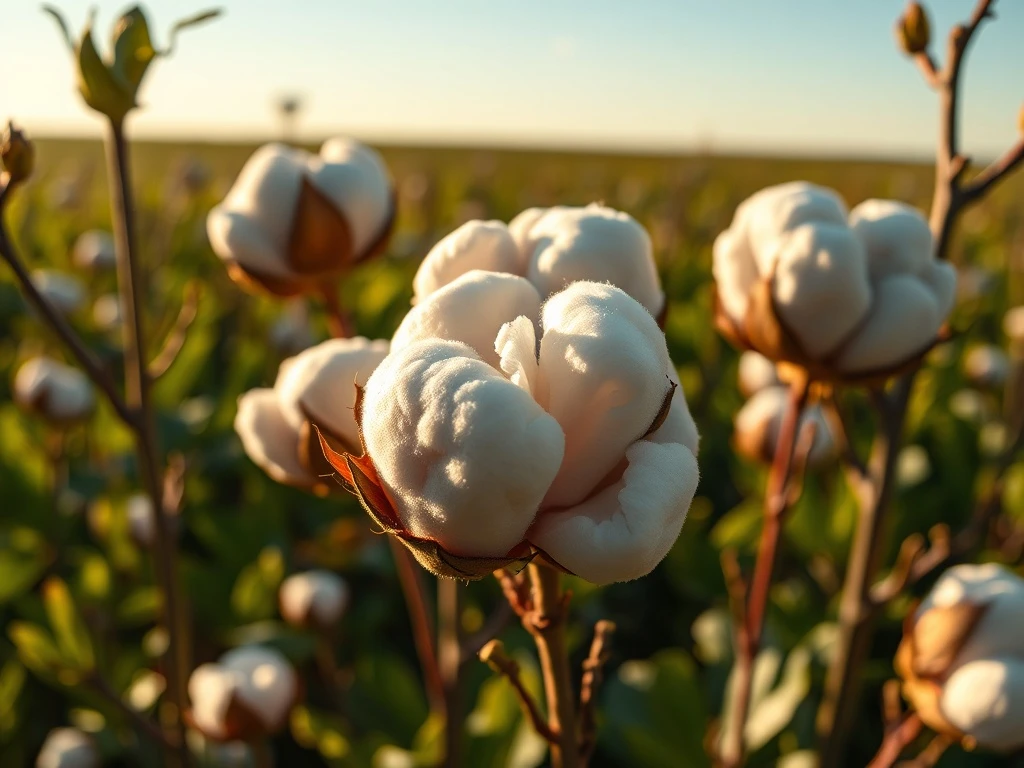
NEW YORK, November 24, 2024 — Cotton futures posted significant gains during Friday’s trading session, defying broader market uncertainty as agricultural commodities demonstrated unexpected strength. The March 2025 cotton contract rose 32 points to settle at 70.75, while May 2025 increased 25 points to 71.9, and July 2025 gained 26 points to reach 73.06. This upward movement occurred despite concerning export data from the U.S. Department of Agriculture showing 2024/25 upland cotton shipments totaling just 1.858 million running bales, representing a 17% decline from the previous year. Market analysts attribute the resilience to shifting global supply dynamics and technical factors rather than fundamental demand improvements.
Cotton Futures Defy Export Data with Friday Rally
The Intercontinental Exchange (ICE) reported consistent activity throughout Friday’s session, with cotton futures climbing 25 to 35 points across all major contracts. This movement occurred against a complex macroeconomic backdrop. The U.S. dollar index surged 505 points to reach its highest level in two years, typically creating headwinds for dollar-denominated commodities. Meanwhile, crude oil futures added $1.16 per barrel, providing some support to agricultural inputs and transportation costs. The Cotlook A Index, a key global benchmark for cotton pricing, increased 100 points on November 21 to settle at 80.70 cents per pound. However, the USDA Adjusted World Price (AWP) moved in the opposite direction, decreasing by 229 points on Thursday afternoon to 55.91 cents per pound, creating a significant spread between domestic and international pricing mechanisms.
Market participants digested the latest USDA Export Sales report with measured concern. Total commitments for the 2024/25 marketing year, including both shipped and unshipped sales, reached 6.364 million running bales. This figure represents a 16% decline compared to the same period last year. More critically, current commitments stand at just 60% of the USDA’s full-year export forecast, trailing the five-year average pace of 68%. Dr. Michael Langston, agricultural economist at the University of Georgia’s Center for Agribusiness and Economic Development, noted, “The export numbers tell a clear story of demand contraction, particularly from key Asian markets. However, technical factors including positioning ahead of month-end and concerns about Brazilian production are providing countervailing support.”
Supply Chain Dynamics and Storage Implications
The cotton market’s Friday gains occurred despite stagnant inventory levels and mixed signals from physical trading platforms. ICE certified cotton stocks remained unchanged at 13,274 bales as of Wednesday’s report, continuing a pattern of limited movement that has persisted for several weeks. The Seam, a leading electronic trading platform for physical cotton, reported 12,433 bales of online sales on November 21 at an average price of 69.57 cents per pound. This volume represents moderate activity but falls below the seasonal average for late November trading. Three key factors are currently influencing storage and logistics decisions across the cotton supply chain:
- Transportation bottlenecks: Persistent issues at Gulf Coast ports have extended shipping timelines by 10-14 days, increasing carrying costs for stored cotton.
- Warehouse capacity: Certified storage facilities in Texas and Mississippi report 78% occupancy rates, creating adequate but tightening capacity ahead of the 2025 harvest.
- Financing costs: Higher interest rates have increased the cost of inventory financing by approximately 2.3% compared to the previous quarter, pressuring merchants to move cotton more quickly.
Expert Analysis: Divergence Between Paper and Physical Markets
Agricultural economists note an increasing divergence between futures pricing and physical market fundamentals. “Friday’s gains in the futures market don’t fully align with what we’re seeing in physical trading,” observed Sarah Chen, Senior Commodity Analyst at the International Cotton Advisory Committee. “The futures market is responding to technical factors and broader commodity momentum, while physical traders remain cautious given the export numbers.” Chen pointed to specific data from the USDA’s weekly report showing that new sales commitments for the week ending November 17 totaled just 48,300 running bales, the second-lowest weekly total of the marketing year. This external reference to USDA data provides crucial context for the market’s complex dynamics.
Historical Context and Seasonal Patterns
Friday’s gains must be evaluated against historical seasonal patterns and comparable market environments. November typically represents a transitional period for cotton markets as Northern Hemisphere harvests conclude and attention shifts to Southern Hemisphere planting. The current price action resembles patterns observed in 2018 when technical factors temporarily outweighed fundamental concerns, though the macroeconomic environment differs significantly. The table below compares key metrics from the current period against five-year averages and the previous marketing year:
| Metric | Current 2024/25 | 5-Year Average | Previous Year 2023/24 |
|---|---|---|---|
| Export Commitments (% of forecast) | 60% | 68% | 71% |
| Weekly Price Volatility | 2.8% | 2.1% | 3.2% |
| Certified Stocks (bales) | 13,274 | 18,450 | 9,830 |
| Forward Contract Coverage | 42% | 51% | 47% |
Forward-Looking Analysis and Market Catalysts
The cotton market faces several immediate catalysts that will determine whether Friday’s gains represent a temporary anomaly or the beginning of a sustained trend. The USDA will release its next World Agricultural Supply and Demand Estimates (WASDE) report on December 10, providing updated production and consumption forecasts for major growing regions. Additionally, the Federal Reserve’s December policy meeting could impact the dollar’s trajectory, with significant implications for export competitiveness. Technical analysts are watching the 72-cent level on the March contract as a key resistance point that, if breached, could trigger additional algorithmic buying. Fundamentally, attention will shift to planting intentions in Brazil and Australia, where weather conditions during their growing seasons could alter global supply projections for the latter half of 2025.
Industry Response and Producer Positioning
U.S. cotton producers have responded cautiously to Friday’s price movement. According to the National Cotton Council’s weekly survey, forward pricing activity increased modestly but remains below levels seen during similar price rallies in previous years. “Producers are using this opportunity to incrementally price portions of expected 2025 production,” explained John Robinson, Extension Economist at Texas A&M University. “But there’s noticeable hesitation given the export situation and global economic concerns.” Textile mills, particularly in Southeast Asia, report maintaining lean inventory strategies despite the price increase, suggesting downstream demand remains constrained by consumer spending patterns and inventory management policies.
Conclusion
Friday’s gains in cotton futures demonstrate the commodity’s complex positioning within global agricultural markets. While export data reveals fundamental weaknesses in international demand, technical factors and supply-side considerations provided sufficient support for a Friday rally. The divergence between futures pricing and physical market fundamentals suggests traders should monitor several key indicators in coming weeks, including USDA report revisions, Southern Hemisphere planting progress, and textile mill inventory behavior. The cotton market’s ability to sustain Friday’s gains will ultimately depend on whether export demand shows signs of recovery or whether supply concerns from competing origins materialize into tangible production reductions. Market participants should prepare for continued volatility as these competing narratives resolve through December’s critical reporting period.
Frequently Asked Questions
Q1: Why did cotton futures rise on Friday despite weak export data?
Cotton futures gained due to technical factors including month-end positioning, concerns about Brazilian production, and broader commodity market momentum that temporarily outweighed fundamental export concerns.
Q2: How significant is the 17% decline in cotton shipments compared to last year?
The decline represents a substantial demand contraction, particularly from Asian markets. Current shipments are just 18% of the USDA’s full-year forecast, well below the normal 22% pace for this point in the marketing year.
Q3: What are the key dates to watch for cotton market developments?
The USDA’s next WASDE report on December 10 will provide updated forecasts. Additionally, Brazilian planting progress through December and the Federal Reserve’s December policy meeting will influence market direction.
Q4: How do certified stock levels affect cotton futures pricing?
Low certified stock levels (currently 13,274 bales) can create delivery concerns that support nearby futures contracts, though current levels remain within normal ranges and aren’t causing significant delivery pressure.
Q5: What is the relationship between cotton prices and the U.S. dollar?
Cotton is dollar-denominated, so a stronger dollar makes U.S. cotton more expensive for foreign buyers, typically pressuring prices. Friday’s gains occurred despite dollar strength, indicating other factors were dominant.
Q6: How should cotton producers respond to Friday’s price movement?
Agricultural economists recommend incremental forward pricing of expected production rather than aggressive sales, given ongoing export demand concerns and global economic uncertainty.