
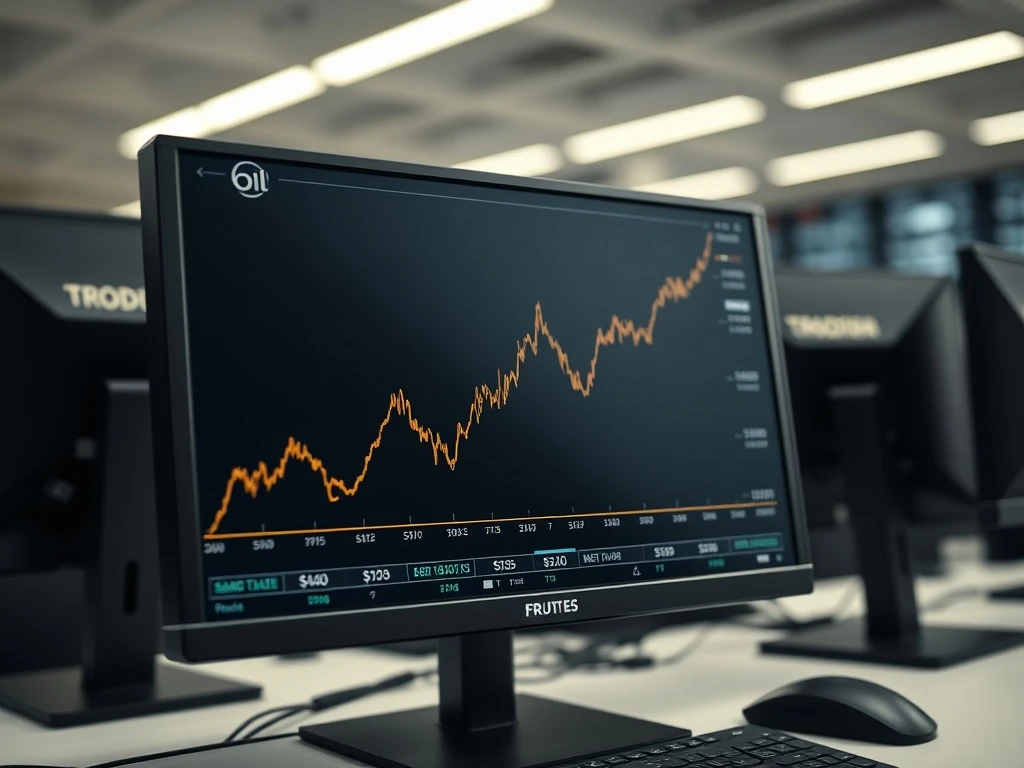
LONDON, March 15, 2026 — Global benchmark Brent crude oil surged by 5.2% in early European trading, breaching the $98 per barrel threshold as military tensions across the Middle East entered a dangerous new phase. The sharp crude oil price spike follows confirmed reports of escalated hostilities in the Strait of Hormuz, a critical chokepoint for nearly 20% of the world’s seaborne oil trade. Trading floors from Singapore to New York reacted immediately to the news, with West Texas Intermediate (WTI) futures climbing 4.8% to $94.75. This sudden volatility underscores the market’s acute sensitivity to geopolitical disruption in the world’s most important oil-producing region.
Charts Reveal a Market on Edge
Price charts from major exchanges tell a stark story of accelerating fear. The intraday candlestick chart for Brent April 2026 futures shows a dramatic green candle, opening at $93.15 and peaking at $98.42 within four hours. Consequently, this represents the largest single-day percentage gain since the outbreak of the Russia-Ukraine conflict in 2022. Trading volume data from the Intercontinental Exchange (ICE) spiked to 250% above the 30-day average by 10:00 AM GMT. Meanwhile, the relative strength index (RSI), a key momentum indicator, rocketed from a neutral 52 into overbought territory above 70, signaling intense buying pressure driven by geopolitical headlines rather than fundamental supply-demand shifts.
This price action did not occur in a vacuum. For context, analysts at S&P Global Commodity Insights had warned just last week that the market’s risk premium for Middle East instability had been undervalued. “The charts from the past 72 hours show a classic ‘gap and go’ pattern,” explained Fatima Al-Jaber, Head of Market Analysis at the consultancy. “We saw a breakaway gap above the 50-day moving average at $92.50, followed by sustained upward momentum on high volume. This is textbook technical behavior for a market absorbing a major, unforeseen geopolitical catalyst.”
Immediate Impacts on Global Energy Markets
The immediate shockwaves from the Middle East tensions extend far beyond the headline crude price. Firstly, gasoline and diesel futures in Europe and Asia have risen in tandem, threatening higher pump prices for consumers worldwide. Secondly, shipping insurance premiums for vessels transiting the Persian Gulf have reportedly doubled overnight, according to Lloyd’s of London. Finally, energy stocks have diverged sharply, with major oil producers like Saudi Aramco and Shell seeing gains while airline and transportation shares tumbled on fears of rising fuel costs.
- Consumer Fuel Prices: The AAA predicts a 10-15 cent per gallon increase at U.S. pumps within the next week if prices hold.
- Inflation Concerns: Central banks, including the Federal Reserve and ECB, now face renewed inflationary pressure from energy, complicating interest rate decisions.
- Strategic Reserves: The International Energy Agency (IEA) is reportedly in consultations with member countries regarding a potential coordinated release of strategic petroleum reserves.
Expert Analysis: A Fragile Balance
“The market is pricing in a significant and sustained disruption risk,” stated Dr. Klaus Schmidt, Senior Fellow for Energy Security at the Atlantic Council. “Our models suggest that a full closure of the Strait of Hormuz, while a low-probability tail risk, would remove over 18 million barrels per day from global supply. Even a modest 10% disruption could add $20 to the baseline price.” Schmidt’s analysis, shared in a council briefing note this morning, emphasizes that global spare production capacity, primarily held by Saudi Arabia and the UAE, sits at just over 3 million barrels per day—a thin buffer against major supply shocks. This expert perspective provides a crucial data point for understanding the market’s extreme reaction.
Historical Context and Price Comparison
Today’s spike invites comparison to previous geopolitical oil shocks. While the magnitude remains below the 1973 Arab Oil Embargo or the 1990 invasion of Kuwait, the speed of the price move rivals that seen during the early days of the 2022 Ukraine war. However, the current market structure differs critically. Global inventories are tighter, and the transition to renewable energy has reduced some nations’ short-term flexibility to switch fuels. The table below compares key metrics across recent major geopolitical oil events.
| Event | Price Increase (30-day) | Supply Disruption (mbpd) | Market Context |
|---|---|---|---|
| 2026 Strait of Hormuz Tensions (Current) | +18% (to date) | 0.5-1.0 (estimated risk) | Tight inventories, low spare capacity |
| 2022 Russia-Ukraine War | +40% | 2.0-3.0 | Post-pandemic demand recovery |
| 2019 Abqaiq-Khurais Attack | +15% | 5.7 (temporary) | Ample global supply |
What Happens Next: Scenarios and Triggers
Forward-looking analysis hinges on diplomatic and military developments over the next 48-72 hours. The U.S. Department of Energy has confirmed it is “monitoring the situation closely” and is in direct contact with Gulf allies. Scheduled OPEC+ meetings, previously expected to discuss gradual production increases, may now be postponed or re-purposed to address market stability. Key triggers to watch include any official statements from the Iranian or Saudi foreign ministries, movements of naval assets tracked by maritime analytics firms like TankerTrackers.com, and the next set of weekly U.S. inventory data from the Energy Information Administration (EIA), which will gauge immediate demand destruction.
Industry and Trader Reactions
On the ground, the reaction is pragmatic but tense. “We’re re-routing none of our vessels yet, but all masters have been put on highest alert,” said a shipping manager for a major European oil company, speaking on condition of anonymity. In the futures pits, the put/call ratio for out-of-the-money Brent options has skewed dramatically, indicating traders are paying hefty premiums for insurance against further price spikes. Retail fuel station owners, meanwhile, report normal buying patterns but express concern about the speed of wholesale price increases being passed down the supply chain.
Conclusion
The crude oil price spike triggered by escalating Middle East tensions serves as a powerful reminder of the commodity’s intrinsic link to global geopolitics. The technical picture painted by the charts confirms a market reassessing fundamental risk. While the immediate supply of physical barrels remains uninterrupted, the premium for potential disruption has been forcibly repriced. Consequently, consumers, policymakers, and investors must brace for continued volatility. The path forward depends overwhelmingly on de-escalation in the Gulf. Until then, the world watches the ticker, knowing that stability in the region remains the bedrock of global energy security.
Frequently Asked Questions
Q1: How high could crude oil prices go if the Middle East conflict worsens?
Analysts at Goldman Sachs note that sustained conflict threatening transit through the Strait of Hormuz could push Brent crude to $120-$140 per barrel, based on current supply tightness and historical risk premium models.
Q2: What does this price spike mean for U.S. gasoline prices?
The U.S. Energy Information Administration (EIA) states that a $10 sustained increase in crude oil prices typically translates to a 25-30 cent per gallon increase at the pump within 2-4 weeks, depending on regional refining margins.
Q3: Are there any immediate scheduled events that could calm the market?
The next OPEC+ Joint Ministerial Monitoring Committee (JMMC) is scheduled for April 3rd. An emergency meeting could be convened sooner if members agree that market stability is threatened.
Q4: How does this affect the global fight against inflation?
Rising energy costs directly feed into core inflation measures. The Federal Reserve has previously estimated that a 20% rise in oil prices could add 0.3-0.4 percentage points to inflation, potentially delaying planned interest rate cuts.
Q5: Has this happened before, and how did it end?
Similar spikes occurred in 2019 after attacks on Saudi facilities and in 2022 after Russia’s invasion of Ukraine. Markets typically stabilized after a few weeks as strategic reserves were released, alternative supply routes were confirmed, or diplomatic solutions emerged.
Q6: How should an average investor view this volatility in energy markets?
Financial advisors caution against reactive trading. Historically, geopolitical-driven spikes are volatile and can reverse quickly. A diversified portfolio and a long-term perspective are generally recommended over betting on short-term oil price movements.



