
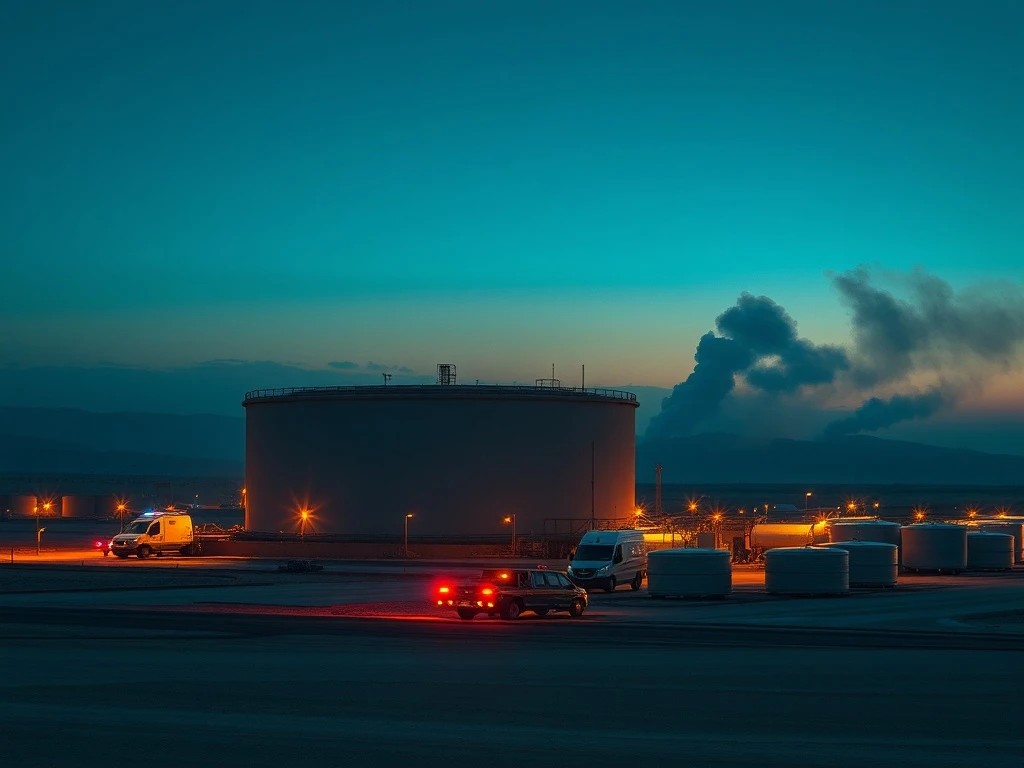
March 9, 2026 — 05:14 pm EDT — Global oil markets experienced their most volatile trading session in three years Monday as crude prices surged dramatically following confirmed Israeli airstrikes on thirty Iranian fuel depots over the weekend. April WTI crude oil (CLJ26) closed up +3.87 (+4.26%) at $94.77 after briefly touching a 3.75-year high of $119.48, while April RBOB gasoline (RBJ26) gained +0.0618 (+2.25%). The immediate price spike represents the sharpest single-day percentage gain since the 2024 OPEC+ production cuts, triggering alarm across energy markets already strained by Middle East tensions. This development follows Saturday’s military action, which Iranian state media confirmed targeted critical energy infrastructure in multiple provinces.
Crude Prices Surge Following Unprecedented Israeli Strike
The weekend attack represents a significant escalation in the ongoing Middle East conflict, directly targeting Iran’s energy export capabilities. According to satellite imagery analyzed by Vortexa, the strikes affected depots containing approximately 8 million barrels of refined products and crude oil awaiting shipment. Consequently, Saudi Arabia became the latest regional producer to curb output as local storage facilities approached maximum capacity. Meanwhile, Goldman Sachs analysts immediately revised their short-term price forecasts upward, estimating the real-time risk premium for crude oil at $18 per barrel. This figure corresponds directly to their assessment of a potential six-week halt to tanker traffic through the Strait of Hormuz.
Market reaction was immediate and severe. Trading floors from London to Singapore reported unprecedented volume spikes during Asian and European sessions. The initial price surge moderated only after G7 finance ministers issued a coordinated statement indicating readiness to release strategic petroleum reserves. “We stand ready to take necessary measures, including to support the global supply of energy such as stockpile release,” their communiqué stated. However, they emphasized no immediate action was required, leaving traders to weigh geopolitical risk against potential government intervention.
Middle East Supply Disruptions and Global Market Impact
The attack’s timing compounds existing supply constraints, creating what energy analysts describe as a perfect storm for oil markets. Iran’s Islamic Revolutionary Guard Corps (IRGC) has warned commercial vessels against transiting the Strait of Hormuz, stating ships “could be at risk from missiles or rogue drones.” This critical chokepoint handles approximately 21% of global petroleum liquids consumption. Its effective closure has forced Gulf producers to stockpile crude in rapidly filling storage tanks, creating physical market tightness that futures markets are now pricing aggressively.
- Immediate Supply Shock: The targeted depots represented key transit points for Iranian exports already constrained by sanctions. Their destruction removes approximately 500,000 barrels per day of potential supply from an already tight market.
- Transportation Disruption: With the Strait of Hormuz compromised, alternative routing around the Arabian Peninsula adds 7-10 days to shipping times and increases freight costs by 40-60%, according to Baltic Exchange data.
- Storage Capacity Crisis: Gulf producers unable to export are approaching maximum onshore storage capacity of 350 million barrels. Vortexa reports floating storage of Russian and Iranian crude already exceeds 290 million barrels, 50% higher than year-ago levels.
Expert Analysis and Institutional Response
Energy security experts point to the political context amplifying market reactions. Over the weekend, Iran’s Assembly of Experts appointed hardliner Mojtaba Khamenei as the country’s new supreme leader. The son of former leader Ayatollah Ali Khamenei maintains close ties to the IRGC. “This leadership transition signals no de-escalation,” noted Dr. Elena Rodriguez, senior fellow at the Center for Strategic Energy Studies. “The new administration appears committed to confronting regional adversaries directly, which markets interpret as increasing the probability of prolonged supply disruption.” Former U.S. President Donald Trump commented publicly, stating he was “not happy” with Iran’s leadership choice, adding further political dimension to the crisis.
International Energy Agency (IEA) analysts, speaking on background, confirmed emergency monitoring of the situation but declined to specify trigger points for coordinated stockpile releases. Their most recent monthly report had already cut the estimated 2026 global crude surplus to 3.7 million barrels per day from 3.815 million. Meanwhile, OPEC+ faces internal contradictions—the group announced a 206,000 barrel per day production increase for April at its March 1 meeting, but Middle East producers are now implementing involuntary cuts due to export constraints.
Historical Context and Comparative Market Reactions
Monday’s price action recalls previous geopolitical supply shocks, though with distinct 2026 characteristics. The brief spike above $119 marked the highest intraday price since November 2022, when prices reached $122.11 following Russia’s invasion of Ukraine. However, today’s market structure shows crucial differences: backwardation (where near-term prices exceed longer-dated ones) is significantly steeper, indicating immediate physical tightness rather than speculative froth. Additionally, the options market shows extreme skew toward calls, with traders paying record premiums for protection against further upside.
| Event | Price Peak | Duration | Supply Impact |
|---|---|---|---|
| 2022 Russia-Ukraine War | $122.11 | 3 months above $100 | -3.0 million bpd |
| 2024 OPEC+ Cuts | $98.42 | 8 weeks above $90 | -2.2 million bpd |
| 2026 Israel-Iran Conflict | $119.48 | Developing | Estimated -1.8 to -2.5 million bpd |
Comparative analysis reveals this event’s unique risk profile. Unlike 2022, strategic petroleum reserves are at seven-year lows following previous releases. Furthermore, U.S. shale production growth has slowed considerably, with active oil rigs at 411—barely above the 4.25-year low of 406 recorded last December. The Energy Information Administration’s (EIA) most recent forecast raised 2026 U.S. production minimally to 13.60 million barrels per day, insufficient to offset Middle East disruptions.
Forward-Looking Analysis and Market Implications
The immediate trajectory depends on three observable factors: military developments, Iranian response timing, and logistical workarounds. Shipping analysts report increased Suez Canal transits as some tankers attempt alternative routes, though capacity constraints limit this option. Meanwhile, European refineries face difficult decisions about running rates as feedstock costs spike while consumer demand shows early signs of erosion at current price levels. Asian importers, particularly China and India, have activated term contract flexibility clauses to secure alternative supplies, primarily from West Africa and the Americas.
Industry and Political Reactions
Major oil companies have implemented force majeure clauses on some Persian Gulf liftings, according to trading sources. Airlines immediately announced fuel surcharge increases of 8-12%, while trucking associations warned of imminent freight rate adjustments. Politically, the European Union called for an emergency UN Security Council session, while U.S. Secretary of State emphasized “all options remain available” to ensure freedom of navigation. Regional allies including the United Arab Emirates and Qatar have not commented publicly, though diplomatic sources indicate intense behind-the-scenes mediation attempts.
Conclusion
The crude prices surge following Israel’s strike on Iranian fuel depots represents more than a temporary market anomaly—it signals structural vulnerability in global energy supply chains. With the Strait of Hormuz effectively closed, storage capacity nearing limits, and geopolitical tensions escalating, markets face sustained upward pressure. While G7 strategic reserve rhetoric provided temporary relief, the underlying physical constraints remain unaddressed. Investors should monitor weekly inventory data, particularly floating storage levels and Middle East export figures, for signs of normalization. Meanwhile, consumers across sectors must prepare for extended energy cost inflation as this supply shock reverberates through the global economy.
Frequently Asked Questions
Q1: Why did crude oil prices surge so dramatically on March 9, 2026?
Prices surged 4.26% after Israel bombed thirty Iranian fuel depots over the weekend, disrupting Middle East supply routes and triggering fears of prolonged Strait of Hormuz closures. The attack removed approximately 500,000 barrels per day from immediate availability.
Q2: How high did oil prices go during Monday’s trading session?
April WTI crude oil briefly reached $119.48 per barrel—a 3.75-year high—before settling at $94.77. This represents the highest intraday price since November 2022.
Q3: What is the Strait of Hormuz and why does its closure matter?
The Strait of Hormuz is a critical maritime chokepoint between Oman and Iran through which 21% of global petroleum liquids flow. Its closure forces tankers to take longer alternative routes, adding costs and delaying deliveries.
Q4: Are governments releasing strategic oil reserves to counter this price surge?
G7 finance ministers stated they “stand ready” to coordinate strategic releases but indicated no immediate action is needed. Strategic reserves are at seven-year lows following previous releases.
Q5: How does this event compare to previous oil price spikes?
Unlike the 2022 Russia-Ukraine shock which lasted months, this event features steeper backwardation indicating immediate physical tightness. Storage constraints are more severe today, limiting buffering capacity.
Q6: What should consumers expect regarding gasoline prices?
Gasoline prices typically follow crude with a 1-2 week lag. With RBOB gasoline futures already up 2.25%, pump prices will likely increase 10-25 cents per gallon nationally within two weeks barring government intervention.



