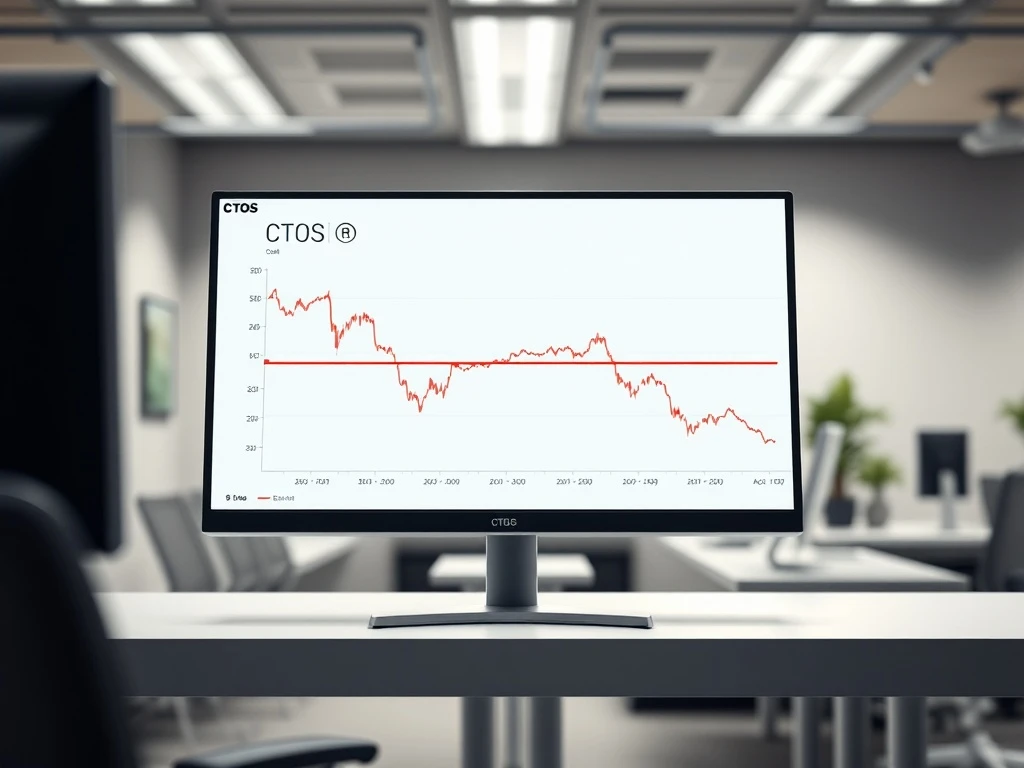
On Wednesday, November 2, 2022, shares of Custom Truck One Source Inc (CTOS) triggered a significant technical alert for market watchers. Trading on the Nasdaq, the stock price crossed below its critical 200-day moving average of $6.79, dipping as low as $6.70 per share during the session. This move represented an approximate 3.5% decline on the day and marked a potential shift in the stock’s intermediate-term trend, placing it under scrutiny from technical analysts and institutional investors who monitor these key levels for directional signals.
CTOS Crosses Below Key Technical Level
The 200-day moving average is widely regarded by traders as a primary barometer for a stock’s long-term trend. A breach below this level often signals weakening momentum and can precede further declines. For Custom Truck One Source, a specialized equipment rental and solutions company, the breach occurred amidst broader market volatility. The stock’s trading volume spiked noticeably during the move, indicating heightened institutional interest. According to data from BNK Invest, which first reported the crossing, CTOS shares were changing hands actively below the $6.79 threshold throughout the afternoon.
This event did not occur in isolation. The stock has been trading within a wide 52-week range, with a low of $4.535 and a high of $11.36. The last trade at $6.70 positioned it closer to the lower half of that range. Historical chart analysis shows the 200-day moving average had acted as a support level multiple times earlier in the year. Its failure to hold now raises questions about the stock’s near-term support structure. Market technicians often view such a crossover as a bearish development, potentially prompting automated selling from algorithmic trading systems programmed to react to these specific technical triggers.
Implications for Investors and the Energy Sector
The technical breakdown for CTOS carries specific implications for its shareholders and reflects broader sentiment within the industrial and energy infrastructure space. As a company serving utility, telecom, and energy sectors, its performance is often seen as a gauge for capital expenditure trends in those industries. A sustained move below this key average could influence investor perception and fund allocation.
- Portfolio Rebalancing: Many quantitative funds and ETFs have rules that automatically reduce or exit positions when a constituent stock breaks major moving averages, which can create additional selling pressure.
- Sentiment Shift: The breach may shift analyst and media narrative from neutral or cautiously optimistic to more critical, focusing on challenges like supply chain costs or interest rate sensitivity for equipment financing.
- Support Test: The next critical level for CTOS becomes its 52-week low near $4.54. Technical analysts will watch to see if the stock finds new support or if the breakdown accelerates a test of that lower boundary.
Expert Analysis on Moving Average Crossovers
Financial experts emphasize context when interpreting these signals. “A moving average crossover is a useful tool, but it’s not a crystal ball,” notes Michael Harris, Director of Research at AlphaTrend Advisors, a firm specializing in technical market analysis. “For a stock like CTOS, you must correlate the technical action with fundamentals. Is the company’s backlog shrinking? Are margins under pressure? The chart tells you ‘what,’ but the financials tell you ‘why.'” Harris points to resources like the Market Technicians Association’s educational materials, which stress using multiple confirming indicators before making trading decisions based solely on a moving average breach.
Furthermore, data from the Financial Industry Regulatory Authority (FINRA) shows that retail investors increasingly use technical screening tools. The prevalence of these tools means that widely watched levels, like the 200-day average, can become self-fulfilling in the short term due to concentrated buy or sell orders clustered around them.
Broader Context: Energy and Industrial Stocks
CTOS was not alone in experiencing technical weakness. The original BNK Invest report indicated that nine other energy-related stocks also crossed below their 200-day moving averages around the same period. This suggests sector-wide pressure rather than a company-specific issue. Comparing CTOS to peers in specialty rental and infrastructure support provides crucial context for its relative performance.
| Metric | Custom Truck One Source (CTOS) | Industry Average (Specialty Rental) | Note |
|---|---|---|---|
| 200-Day MA Status (Nov 2) | Crossed Below ($6.79) | Mixed | Sector showing weakness |
| 52-Week Range | $4.54 – $11.36 | Varies Widely | CTOS trading in lower half |
| YTD Performance (2022) | Negative | Mostly Negative | Aligns with macro trends |
This sector-wide trend aligns with macroeconomic headwinds in late 2022, including rising interest rates, which increase financing costs for the heavy equipment CTOS deals in, and concerns about a potential economic slowdown reducing demand from its core industrial customers. The performance of related ETFs and indices, such as the Industrial Select Sector SPDR Fund (XLI), often provides a leading indicator for stocks like CTOS.
What Happens Next for CTOS?
The immediate focus for traders will be whether CTOS can reclaim the 200-day moving average or if the breakdown confirms. A close above $6.79 for several consecutive sessions would negate the bearish signal, while continued failure could see the stock seek lower support levels. The company’s upcoming quarterly earnings report, scheduled for release in the following weeks, will be a fundamental catalyst that either confirms or contradicts the technical picture. Management commentary on order backlog, utilization rates, and profit margins will be scrutinized more heavily in light of this technical deterioration.
Market Reaction and Analyst Adjustments
Following the technical breach, analyst sentiment showed subtle shifts. While no major firm issued an immediate downgrade, several placed their ratings and price targets “under review.” This is a common practice when a stock violates a key technical level that was part of the original investment thesis. Investor message boards and financial social media channels saw increased discussion about the stock’s momentum, with many retail traders referencing the moving average cross. This highlights how technical events can amplify attention and volatility, especially for mid-cap stocks like CTOS with a mix of institutional and retail ownership.
Conclusion
The breach of the 200-day moving average by CTOS stock is a significant technical event that warrants attention from current and prospective investors. It signals a potential shift in intermediate-term momentum and reflects broader pressures within the industrial and energy infrastructure sector. While not a standalone sell signal, it serves as a critical alert to reassess the company’s fundamental outlook, including upcoming earnings and management guidance. Investors should monitor whether this breakdown leads to a sustained downtrend or proves to be a false signal reversed by positive company news. The coming weeks will be decisive in determining if this moving average crossover marks a turning point or a temporary deviation in the stock’s trajectory.
Frequently Asked Questions
Q1: What does it mean when a stock crosses below its 200-day moving average?
It is a technical analysis signal suggesting the stock’s long-term upward momentum may be weakening. The 200-day average smooths out price data over roughly 40 trading weeks, and a price drop below it can indicate a shift from a bullish to a bearish or neutral trend, often triggering automated selling from algorithmic systems.
Q2: How significant is the 200-day moving average for CTOS stock specifically?
For CTOS, this average had previously acted as a support level. Breaking below it invalidates that support, potentially opening the door for a test of lower price levels, such as the 52-week low of $4.535. The significance is heightened by the above-average trading volume that accompanied the move.
Q3: Should I sell my CTOS stock because it crossed below the 200-day average?
A moving average crossover is one piece of information, not a definitive action signal. Investors should consider this technical development alongside the company’s fundamentals, their own investment horizon, and risk tolerance. Consulting a financial advisor for personalized advice is recommended before making portfolio decisions.
Q4: Were other stocks affected similarly on November 2, 2022?
Yes. The source report from BNK Invest noted that nine other energy-related stocks also crossed below their 200-day moving averages around the same time, indicating this was part of a broader sector movement rather than an isolated event for CTOS.
Q5: What is the next important level to watch for CTOS after this break?
Technical analysts will now watch for potential support around the stock’s 52-week low of $4.54. Conversely, if the stock attempts a recovery, the former support level around $6.79 (the 200-day MA) may now act as resistance—a price level where selling pressure could re-emerge.
Q6: How do institutional investors typically react to these signals?
Many quantitative investment funds and risk management systems have rules that automatically reduce exposure to a stock when it breaches key long-term moving averages. This programmed selling can create additional downward pressure in the days immediately following the initial crossover.
This article was produced with AI assistance and reviewed by our editorial team for accuracy and quality.