
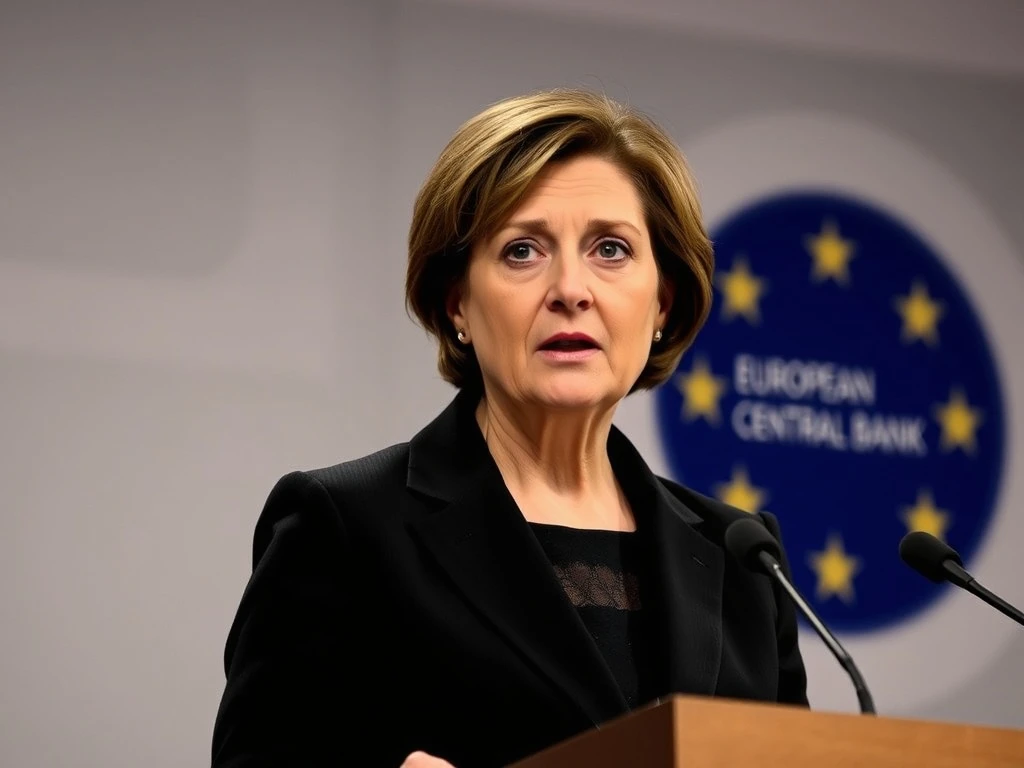
FRANKFURT, Germany — March 15, 2026: European Central Bank Executive Board member Isabel Schnabel delivered a stark warning today, emphasizing the need for continued vigilance against upside inflation risks in the Eurozone. Speaking at the ECB’s annual monetary policy conference, Schnabel highlighted persistent price pressures that could complicate the central bank’s path toward policy normalization. Her remarks come amid renewed market volatility and shifting expectations for interest rate cuts later this year. The ECB’s cautious stance reflects ongoing concerns about service sector inflation, wage growth, and geopolitical uncertainties affecting energy prices.
ECB’s Schnabel Details Persistent Inflation Concerns
Isabel Schnabel’s speech at the ECB Forum on Central Banking outlined multiple factors contributing to sustained price pressures. She pointed specifically to services inflation, which remained stubbornly high at 4.1% in February 2026, well above the ECB’s 2% target. Schnabel noted that while goods inflation has moderated, services continue to show strong momentum due to robust domestic demand and catching-up effects in the post-pandemic economy. The ECB board member referenced recent data showing wage growth averaging 4.5% across the Eurozone, creating potential second-round effects on consumer prices.
Historical context reveals this isn’t the first inflation challenge for the ECB. The central bank faced similar pressures during the 2022-2023 inflation surge, when prices peaked at 10.6% in October 2022. However, Schnabel emphasized that current risks differ fundamentally. “We’re not dealing with the same supply-side shocks,” she stated, referencing the energy crisis triggered by the Ukraine conflict. “Today’s pressures stem from domestic demand strength and labor market tightness, which require different policy considerations.” This distinction matters because demand-driven inflation typically responds more slowly to interest rate adjustments.
Market Impact and Economic Consequences
Schnabel’s warning immediately affected financial markets across Europe. The Euro Stoxx 50 index declined 0.8% following her remarks, while German 10-year bund yields rose 5 basis points to 2.45%. Currency markets saw the euro strengthen 0.3% against the dollar as traders priced in a more hawkish ECB stance. These movements reflect growing uncertainty about the timing and pace of future rate cuts. Market-implied expectations for ECB rate cuts in 2026 shifted from 75 basis points to just 50 basis points following the speech.
- Borrowing Costs: Higher-for-longer rates mean increased mortgage payments for European homeowners and more expensive business loans
- Government Debt: Eurozone nations face rising debt servicing costs, particularly affecting highly indebted members like Italy and Greece
- Corporate Investment: Businesses may delay expansion plans due to uncertain financing conditions and demand outlook
Expert Analysis and Institutional Responses
Economists quickly analyzed Schnabel’s remarks for policy implications. Dr. Klaus Schmidt, chief economist at Deutsche Bundesbank, noted that “Schnabel’s comments align with recent Bundesbank research showing underlying inflation momentum remains too strong.” He referenced a February 2026 Bundesbank study indicating that core inflation excluding energy and food would likely remain above 2.5% through Q3 2026. Meanwhile, the International Monetary Fund’s latest Eurozone assessment, published March 10, 2026, warned that premature policy easing could reignite inflationary pressures.
Other ECB governing council members offered nuanced perspectives. Bank of France Governor François Villeroy de Galhau emphasized the need for “patience rather than paralysis” in a separate interview. He suggested the ECB should maintain current rates but prepare for gradual normalization once data confirms inflation’s sustained return to target. This divergence within the governing council reflects the complex balancing act facing European policymakers as they navigate conflicting economic signals.
Comparative Analysis: Global Central Bank Approaches
The ECB’s cautious stance contrasts with other major central banks’ approaches to similar inflation challenges. While the Federal Reserve has begun cutting rates amid slowing U.S. inflation, the Bank of England maintains restrictive policy due to persistent U.K. price pressures. This divergence creates cross-border monetary policy effects that Schnabel acknowledged could influence Eurozone financial conditions through exchange rate and capital flow channels.
| Central Bank | Current Policy Rate | Inflation Forecast 2026 | Expected Policy Path |
|---|---|---|---|
| European Central Bank | 3.50% | 2.3% (Q4 average) | Hold until Q3, then gradual cuts |
| U.S. Federal Reserve | 4.75% | 2.1% (Q4 average) | Three 25bp cuts expected in 2026 |
| Bank of England | 5.25% | 2.4% (Q4 average) | Hold until inflation data improves |
| Bank of Japan | -0.10% | 1.8% (Q4 average) | Gradual normalization beginning |
Forward-Looking Policy Implications
Schnabel’s speech signals the ECB will likely maintain its data-dependent approach through the coming quarters. The central bank’s next monetary policy meeting on April 10, 2026, will provide updated economic projections that could formalize this cautious stance. Key indicators to watch include March 2026 inflation data (due April 4), Q1 2026 wage growth figures, and purchasing managers’ indices for services activity. Market participants now expect the ECB to delay rate cuts until at least September 2026, compared to previous expectations for a June start.
The ECB faces particular challenges in communicating its policy path. As Schnabel noted, “Clear communication remains essential when risks are balanced but tilted to the upside.” This suggests the central bank may use forward guidance more actively to manage market expectations without committing to specific timing. The ECB’s credibility, tested during the 2022-2023 inflation surge, depends on maintaining this delicate balance between responding to data and providing policy predictability.
Stakeholder Reactions and Economic Sector Impacts
European business leaders expressed concern about prolonged high rates. BusinessEurope, the continent’s main industry lobby, warned that “excessive monetary restriction could undermine the fragile recovery.” Meanwhile, consumer groups highlighted the burden on households, with Eurostat data showing mortgage payments consuming 35% of disposable income for new borrowers. Political reactions varied nationally, with German Finance Minister Christian Lindner supporting ECB caution while Italian Economy Minister Giancarlo Giorgetti called for faster normalization to support growth.
Different economic sectors face uneven impacts. Manufacturing, particularly export-oriented industries, benefits from euro strength but suffers from higher financing costs. Services sectors, especially hospitality and healthcare, face both demand pressures and rising labor costs. Real estate markets show signs of cooling, with European commercial property transactions down 25% year-over-year in Q1 2026. These divergent effects complicate the ECB’s single monetary policy for nineteen diverse economies.
Conclusion
Isabel Schnabel’s warning about upside inflation risks reflects the ECB’s continued caution amid persistent price pressures. The central bank faces complex trade-offs between controlling inflation and supporting economic growth. Key takeaways include the importance of services inflation and wage dynamics, the divergence from other central banks’ approaches, and the likelihood of delayed policy normalization. Investors should monitor upcoming inflation data and ECB communications for signals about the timing of potential rate cuts. The Eurozone’s economic trajectory will depend significantly on how these inflation risks evolve in coming months.
Frequently Asked Questions
Q1: What specific inflation risks did Isabel Schnabel highlight?
Schnabel emphasized persistent services inflation at 4.1%, strong wage growth averaging 4.5%, and domestic demand pressures as key upside risks. She distinguished these from previous supply-side shocks, noting they require different policy responses.
Q2: How did financial markets react to Schnabel’s comments?
European stocks declined 0.8%, German bond yields rose 5 basis points, and the euro strengthened 0.3% against the dollar. Markets reduced expectations for 2026 ECB rate cuts from 75 to 50 basis points.
Q3: When might the ECB begin cutting interest rates?
Based on Schnabel’s cautious tone and current data, most analysts now expect the ECB to delay rate cuts until at least September 2026, with the April policy meeting providing updated projections.
Q4: How does the ECB’s stance compare to other central banks?
The ECB remains more cautious than the Federal Reserve, which has begun cutting rates, but similar to the Bank of England. This divergence reflects different inflation dynamics across economies.
Q5: What economic sectors are most affected by prolonged high rates?
Manufacturing faces higher financing costs while benefiting from euro strength. Services sectors contend with wage pressures. Real estate markets show cooling signs with commercial transactions down 25% year-over-year.
Q6: How might this affect European households and businesses?
Households face continued high mortgage costs, consuming 35% of disposable income for new borrowers. Businesses may delay investment due to uncertain financing conditions, potentially slowing economic growth.



