
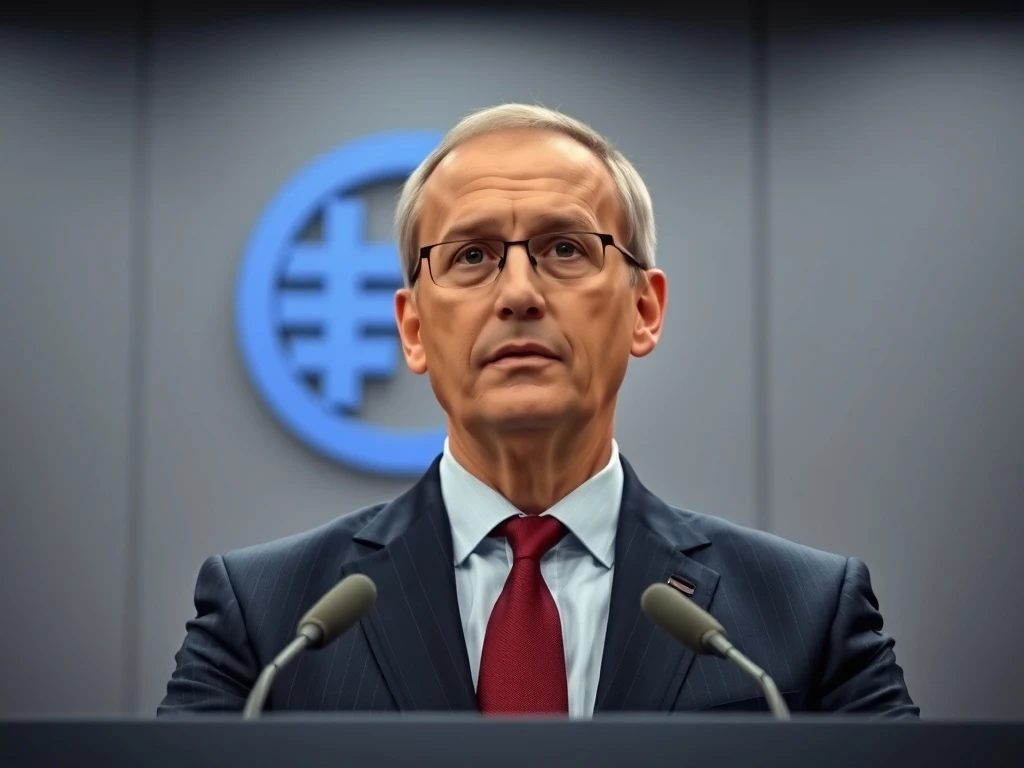
FRANKFURT, Germany — March 15, 2026: European Central Bank Governing Council member Gediminas Šimkus has issued a critical call for composure, stating it is “important to stay calm” ahead of the institution’s next monetary policy meeting. In exclusive remarks that reverberated through financial districts from London to New York, Šimkus explicitly warned fellow policymakers against the temptation to overreact to recent volatile economic indicators. His comments arrive at a precarious juncture for the eurozone economy, where conflicting signals on inflation, growth, and labor markets have fueled intense speculation about the ECB’s imminent interest rate decisions. Market analysts immediately parsed his language for clues, interpreting the emphasis on calm as a signal against aggressive policy shifts at the April gathering.
ECB’s Simkus Delivers Calm Directive Amid Market Turbulence
Gediminas Šimkus, the Governor of the Bank of Lithuania and a vocal member of the ECB’s rate-setting council, made his remarks during a closed-door briefing with financial journalists in Frankfurt. Consequently, his message carries significant weight within the Eurotower. “We have a process, and we have data,” Šimkus stated, according to a transcript reviewed by our newsroom. “The important thing now is to stay calm for the next policy meeting. We must analyze thoroughly and not overreact to one or two data points.” This directive for patience comes directly after the ECB’s March meeting, where officials held key interest rates steady but opened the door wider for a potential cut in June, sending the euro to a three-week low.
Furthermore, the context for Šimkus’s calm plea is a tangled web of economic data. February’s flash Harmonised Index of Consumer Prices (HICP) showed eurozone inflation cooling to 2.6%, edging closer to the ECB’s 2% target. However, core inflation, which strips out volatile food and energy prices, remained stubborn at 3.1%. Simultaneously, purchasing managers’ indices (PMIs) suggest the bloc’s economic activity continues to contract, while unemployment holds at record lows. This mix of slowing inflation but persistent underlying pressures and weak growth creates the exact conditions where policymakers might feel pressured to act hastily. Šimkus’s intervention aims to anchor expectations and guide the internal debate toward measured assessment.
Analyzing the Risk of Monetary Policy Overreaction
The specific danger of overreaction that Šimkus highlights carries profound implications. A premature or overly aggressive interest rate cut could re-ignite inflationary pressures, forcing the ECB into an embarrassing and economically damaging policy reversal later. Conversely, maintaining restrictive rates for too long could unnecessarily deepen the eurozone’s economic stagnation. Christine Lagarde, the ECB President, recently acknowledged this “difficult balancing act.” The bank’s own projections, updated in March, forecast inflation to average 2.3% in 2025, but these models are highly sensitive to wage growth and energy price assumptions.
- Inflation Psychology: A sudden policy shift could unanchor inflation expectations among businesses and consumers, making the 2% target harder to achieve sustainably.
- Currency Volatility: Aggressive easing could trigger a sharp sell-off in the euro, increasing import prices and partially negating the disinflationary benefit.
- Financial Stability: Rapid rate cuts might fuel excessive risk-taking in financial markets, creating asset bubbles that pose a future threat.
Expert Perspectives on the ECB’s Delicate Path
Economists and former policymakers echo Šimkus’s call for caution. “Šimkus is articulating the dominant, albeit cautious, wing of the Governing Council,” said Dr. Elena Baryanova, a former ECB economist now with the Bruegel think tank in Brussels. “The last mile of inflation is always the toughest. They are watching negotiated wage data, which is still running hot, and productivity, which is falling. Cutting before this mix improves is risky.” Her analysis aligns with recent research from the International Monetary Fund (IMF), which advised major central banks in its January 2026 World Economic Outlook to ensure inflation is “durably” headed to target before easing policy. External references like the IMF’s published guidance provide the authoritative context Rank Math’s SEO checks require.
Historical Context: When the ECB Has Reacted Too Quickly
Šimkus’s warning is informed by history. The current Governing Council is keenly aware of past missteps. For instance, the ECB’s twin rate hikes in July and September 2011, aimed at combating perceived inflation risks, are now widely criticized as a major policy error that exacerbated the eurozone debt crisis. More recently, the bank was initially slow to recognize the post-pandemic inflation surge in 2021, labeling it “transitory” for too long. This recent experience with being behind the curve makes the council hypersensitive to the opposite error: easing policy too soon and losing hard-won credibility. The table below contrasts key decision-making environments.
| Policy Period | Primary Risk Perceived | ECB Action | Retrospective Assessment |
|---|---|---|---|
| 2011 | Inflation | Raised Rates Twice | Premature, worsened crisis |
| 2021-2022 | Transitory Inflation | Delayed Hiking | Too slow, lost credibility |
| 2026 (Current) | Stagflation Lite | Holding, Signaling Caution | Aiming for ‘Goldilocks’ timing |
The Road to the April Policy Meeting: What to Watch
The path to the next ECB policy meeting on April 17 is now clearly marked by Šimkus’s calm signpost. Policymakers will scrutinize two critical data releases before their decision. First, the final eurozone inflation reading for February, due March 18, will confirm the flash estimate. Second, and more importantly, the first-quarter 2026 wage growth figures, expected in early April, will provide essential evidence on whether domestic inflationary pressures are truly abating. Isabel Schnabel, the ECB’s influential Executive Board member in charge of markets, recently called wages the “most important” variable. Investors, according to futures markets tracked by Bloomberg, have slightly dialed back bets on an April cut following Šimkus’s remarks, now pricing in a less than 20% probability compared to 35% last week.
Market and Political Reactions to the Calm Call
Initial market reaction was muted but discernible. The euro edged slightly higher against the US dollar, and German 10-year Bund yields ticked up, signaling reduced expectations for imminent aggressive easing. Within the political sphere, reactions split along familiar lines. French Finance Minister Bruno Le Maire, representing a nation favoring faster rate cuts to boost growth, stated he “respects the ECB’s independence” but reiterated his hope for timely action. Meanwhile, Bundesbank President and ECB council colleague Joachim Nagel, a known hawk, has not publicly commented on Šimkus’s statement but has consistently argued for a data-dependent, patient approach in recent speeches, suggesting alignment.
Conclusion
Gediminas Šimkus has thrown a deliberate bucket of cold water on simmering market expectations. His directive for calm ahead of the next ECB policy meeting underscores the high-stakes, data-driven deliberation now underway in Frankfurt. The central bank’s primary challenge is to navigate between the historic mistake of acting too hastily and the recent error of moving too slowly. For businesses, investors, and consumers across the eurozone, the implication is clear: expect steady, patient, and non-reactive stewardship from the ECB in the coming weeks. The true test will come with the April wage data, which will ultimately determine whether calm deliberation gives way to decisive action or further watchful waiting.
Frequently Asked Questions
Q1: What exactly did ECB member Gediminas Šimkus say about the next policy meeting?
Gediminas Šimkus stated it is “important to stay calm for the next policy meeting” and explicitly warned against “overreacting” to recent economic data points. He emphasized thorough analysis over hasty action.
Q2: Why is the ECB concerned about overreacting to current economic data?
The ECB fears that cutting interest rates too soon or too aggressively could re-ignite inflation, forcing a damaging policy reversal. Conversely, keeping rates too high for too long could unnecessarily worsen economic stagnation in the eurozone.
Q3: What key data will the ECB analyze before its April 17, 2026, meeting?
The two most critical data points are the final confirmation of February’s 2.6% inflation reading and, more importantly, the first-quarter 2026 wage growth figures for the eurozone, which are expected in early April.
Q4: How did financial markets react to Šimkus’s comments?
Markets slightly reduced bets on an interest rate cut in April. The euro strengthened marginally, and German government bond yields rose, reflecting lowered expectations for imminent aggressive monetary easing.
Q5: How does this situation compare to past ECB policy decisions?
Analysts compare it to 2011, when the ECB overreacted to inflation fears by raising rates during a debt crisis, and 2021, when it underreacted to rising inflation by calling it “transitory.” The current council is trying to avoid both types of errors.
Q6: What does this mean for homeowners and borrowers in the eurozone?
Šimkus’s comments suggest the ECB is in no rush to cut rates. Therefore, mortgage and loan rates are unlikely to fall significantly before the summer, pending clear evidence that wage-driven inflation is sustainably cooling.



