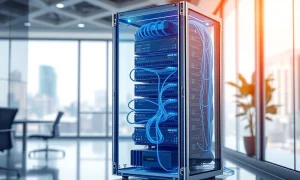
TORONTO, February 4, 2026 — The artificial intelligence infrastructure race is undergoing a fundamental geographical shift. As hyperscalers plan to spend up to $600 billion on AI data centers this year, a growing consensus argues the path to profitability and widespread adoption doesn’t lead to bigger centralized campuses, but to the network’s edge. New test results from Canadian startup PolarGrid, shared exclusively with the Investing News Network, demonstrate a prototype edge network that slashes AI inference latency by over 70% compared to traditional cloud routes. This breakthrough targets the critical bottleneck for real-time voice, video, and interactive AI applications, signaling a pivotal turn in the industry’s focus from sheer compute power to tangible user experience.
The Latency Bottleneck: Why Centralized AI Falls Short for Real-Time Use
The initial phase of the AI boom demanded unprecedented investment in centralized training clusters. However, analysts like Nicholas Mersch of Purpose Investments note the focus is now turning “from who can build fastest to who can drive the highest revenue and margin per dollar of AI infrastructure.” Power constraints, with some data centers consuming over a gigawatt, and shortages of high-bandwidth memory are pressing physical limits. More critically for end-users, centralized architecture introduces unavoidable network delay. A user request from Toronto to a server in Virginia must travel hundreds of miles and back, adding 100 to 300 milliseconds of lag—three to ten times more than traditional web traffic.
This delay breaks the experience for applications demanding human-like interaction. “Inference latency is the bottleneck for real-time AI at scale,” PolarGrid CEO Rade Kovacevic told INN. While on-chip processing times for leading voice agents have dropped to mere hundreds of milliseconds, the network journey often doubles or triples the total response time. For a voice assistant in a job interview or a customer service bot, a pause exceeding a second feels unnatural, erodes trust, and causes users to abandon the interaction. Kovacevic compares today’s AI moment to the early dial-up internet: initially magical, but quickly intolerable once users expect instant responsiveness.
PolarGrid’s Edge Prototype: The “Neighborhood Vending Machine” for AI
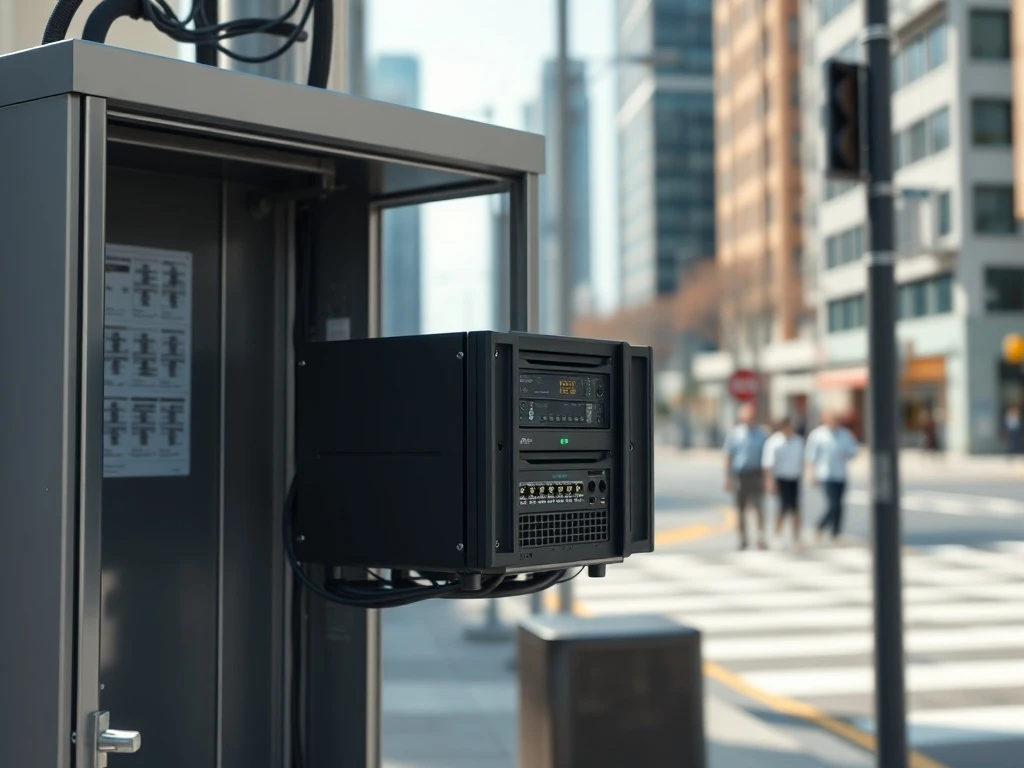
PolarGrid’s solution attacks this network delay not with newer chips, but with smarter geography. The company has built a prototype network that distributes GPU inference capacity across major North American population centers, placing processing power closer to end-users. Kovacevic describes it as swapping a distant warehouse for a neighborhood vending machine—shortening the physical trip so results arrive fast enough to feel instant. In controlled tests, this architecture reduced network latency by more than 70% versus standard hyperscaler routes, bringing total AI response times toward 300 milliseconds.
- Architectural Shift: The model keeps large, centralized clusters for training massive AI models but moves the latency-sensitive inference workload to the edge.
- Strategic Fit: This aligns with the broader verticalization trend in AI, where winners control more of the technology stack and extract more utility from each capital dollar.
- Dual Benefit: Edge networks can potentially ease power grid strain near massive data centers while giving enterprises and governments more control over where sensitive data is processed—a key concern for “sovereign AI” initiatives like those signaled by the Canadian government.
Expert Analysis: The ROI Imperative in AI Infrastructure
Mersch’s analysis underscores the financial driver behind this shift. After years of massive capital expenditure (capex), investors and hyperscalers themselves are demanding proof of return. “The focus is on capturing revenue per dollar of infrastructure,” he stated. An edge approach that improves user experience without requiring new, multi-billion-dollar data center builds represents a compelling path to that ROI. Early PolarGrid pilots target latency-sensitive verticals like voice-based recruitment platforms and interactive entertainment, where improved responsiveness directly translates to higher user engagement, completion rates, and revenue.
Broader Implications: Reshaping the AI Competitive Landscape
The move toward edge AI infrastructure signals a maturation of the market. It’s no longer solely about who has the most chips, but who can deliver the most usable and reliable AI service. This has implications for technology giants (AAPL, TSLA, AMZN, META, GOOG, NVDA, AMD), who are all investing heavily in AI integration, and for the semiconductor and hardware ecosystem supporting this distributed model.
| Infrastructure Model | Primary Strength | Key Limitation | Ideal Use Case |
|---|---|---|---|
| Centralized Hyperscale | Massive scale for model training | High latency for end-users | Batch processing, model development |
| Edge Network | Low-latency inference | Limited local compute power | Real-time interaction, voice/video AI |
| Hybrid Approach | Balances training & inference needs | Increased management complexity | Enterprise AI with mixed workloads |
What’s Next for Edge AI and Market Adoption
The coming 12-18 months will be a critical validation period. Success for PolarGrid and similar edge-focused players will depend on securing commercial partnerships, scaling their node networks reliably, and demonstrating clear cost-to-performance advantages. For hyperscalers, the challenge is adapting their colossal centralized investments to incorporate edge strategies, likely through acquisition, partnership, or internal development. Policymakers will grapple with regulations for distributed AI infrastructure, covering data sovereignty, security, and energy use.
Industry and Investor Response
Reaction from the broader tech and investment community is cautiously optimistic. While edge computing is not a new concept, its application to high-stakes AI inference is a significant evolution. Investors eyeing efficient plays in a year of “capex digestion” are watching whether edge optimization can turn AI from a costly novelty into an indispensable, everyday tool that generates predictable revenue. The performance of related stocks in the coming quarters may reflect growing market belief in this distributed model.
Conclusion
The 2026 AI infrastructure narrative is fundamentally changing. The race is pivoting from raw construction to intelligent architecture, where minimizing milliseconds of delay becomes a decisive competitive advantage. PolarGrid’s prototype, cutting AI inference latency by over 70%, provides a concrete example of this shift’s potential. As real-time AI applications move from demo to daily use in customer service, healthcare, automotive, and entertainment, the infrastructure that makes them feel instant and natural will command premium value. The companies and investors who recognize that the future of AI isn’t just in the cloud, but in the last mile of the network, are positioning for the next phase of the transformation.
Frequently Asked Questions
Q1: What is edge AI infrastructure and how does it differ from traditional cloud AI?
Edge AI infrastructure places smaller-scale data processing nodes geographically closer to end-users, rather than routing all requests to massive, centralized data centers. This drastically reduces the distance data must travel, cutting latency for real-time applications.
Q2: Why is latency reduction so critical for AI in 2026?
As AI moves into interactive voice and video applications, user tolerance for delay collapses. A pause of more than a second in a conversation feels unnatural and breaks trust, causing abandonment. Low latency is essential for adoption.
Q3: What did PolarGrid’s prototype test actually achieve?
In tests shared with INN, PolarGrid’s distributed edge network prototype reduced network-induced latency for AI inference by more than 70% compared to standard centralized cloud routes, aiming for total response times around 300 milliseconds.
Q4: Does edge computing replace the need for large data centers?
No. Large, centralized data centers remain essential for the computationally intensive work of training massive AI models. Edge infrastructure is optimized for the final, latency-sensitive “inference” step where the trained model delivers answers to users.
Q5: How does this trend affect major tech companies and investors?
It shifts the competitive advantage from simply spending the most on chips to architecting the most responsive and efficient networks. Investors are looking for companies that can generate the highest revenue per dollar of AI infrastructure spent, making efficiency-focused edge plays potentially attractive.
Q6: What are the biggest challenges facing widespread edge AI adoption?
Key challenges include the cost and logistics of deploying and maintaining thousands of distributed nodes, ensuring security and data governance across a fragmented network, and integrating edge management seamlessly with existing cloud platforms.