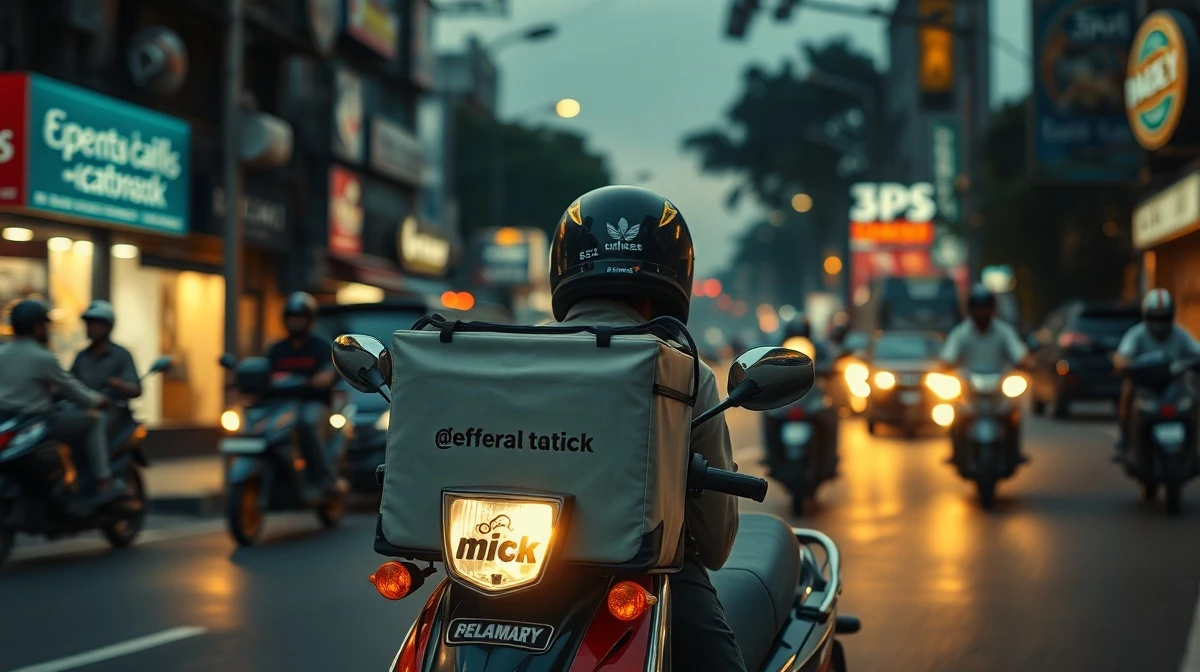
April 12, 2026 — The aggressive expansion of Flipkart and Amazon into India’s fast-delivery market is squeezing local startups, forcing strategic reassessments and raising questions about profitability in a crowded field.
Data from multiple brokerages shows the two e-commerce giants are rapidly scaling their networks of dark stores—small warehouses used for instant delivery. This push is reshaping a sector once dominated by startups like Blinkit, Swiggy’s Instamart, and Zepto.
Also read: NASA Artemis II Crew Returns to Earth in Pacific Splashdown
The Scale of the New Competition
Flipkart, owned by Walmart, has crossed a significant milestone. According to a TechCrunch report, the company now operates more than 800 dark stores for its quick commerce service, Flipkart Minutes. Analysts at UBS project the company aims to double that count by the end of 2026.
Amazon, which entered the market in late 2024, is also building out its footprint. UBS data indicates the company has rolled out 450–500 dark stores, with 330–370 currently operational.
Also read: Cybersecurity Veteran Mikko Hyppönen Now Hacks Drones
This growth comes amid a broader sector explosion. A Bernstein report noted earlier this week that more than 6,000 dark stores are now in operation across India’s major players. The result is significant overlap in top cities and fiercer competition for customers.
Diverging Strategies for Growth
Flipkart’s approach differs from the incumbents. While market leader Blinkit, owned by Eternal, focuses on deepening its presence in its top 10 cities, Flipkart is betting on expansion beyond major metropolitan areas.
“Flipkart has this Walmart DNA,” said Satish Meena, founder of consumer insights firm Datum Intelligence. “Walmart’s DNA is always about expanding the total addressable opportunity to dominate by expanding the market.”
A source familiar with Flipkart’s operations told TechCrunch that 25–30% of its quick commerce orders now come from small towns. Orders per dark store have grown about 25% month-on-month.
But expanding profitably outside big cities is a challenge. Aditya Soman, a senior research analyst at CLSA, said quick commerce is currently viable in about 125 cities. Dark stores typically take six to 12 months to reach maturity and profitability, with many newer stores in smaller towns still in a ramp-up phase.
Profitability Remains Concentrated
The financial strain of competition is becoming visible. Bernstein analysis suggests that while over 6,000 dark stores exist, profitability is concentrated. The top eight cities in India account for over 3,800 dark stores operated by the five largest players. Of those, about 3,600 have the potential to be profitable.
“Metro markets obviously are better in return ratios, better in profitability because of higher throughput,” said Karan Taurani, executive vice president at Elara Capital. “This business is all about higher throughput, and for now, that is coming largely from metro markets.”
This pressure is reflected in the stock market. Shares of Eternal, which owns Blinkit, are down about 15% so far this year. Swiggy’s stock has fallen over 29%. Zepto is preparing to go public later this year amid these turbulent conditions.
Aggressive Tactics and Mounting Pressure
Flipkart is not just expanding its store count. The company is also competing on price. An analysis by Jefferies last month found Flipkart was offering some of the highest discounts in the segment—around 23–24% across a sample basket.
The strain on incumbents is clear. Brokerage firm JM Financial recently warned that Swiggy’s quick commerce business is caught in a “growth-versus-profitability deadlock” and risks destroying shareholder value. The firm suggested a takeover by a larger, better-capitalized player might be the best outcome for investors.
The sector also saw a high-profile departure this week, with a co-founder exiting Swiggy as the company reassesses its strategy.
What Comes Next
Industry watchers note that the entry of deep-pocketed giants has fundamentally changed the game. “Quick commerce is no longer in a startup phase—it has become a big players’ game,” said Ankur Bisen, a senior partner at retail consultancy Technopak Advisors.
He added that the sector’s economics and limited differentiation could eventually drive consolidation. Companies are competing for the same customers in a discount-heavy market.
For now, the expansion continues. But the rapid scaling by Flipkart and Amazon suggests a shakeout is underway. The startups that defined India’s quick commerce boom now face their toughest test yet from the very giants they once disrupted.
Amazon, Flipkart, and Swiggy did not respond to requests for comment. Eternal declined to comment, while Zepto said it could not comment due to a silent period following its IPO filing.

This article was produced with AI assistance and reviewed by our editorial team for accuracy and quality.