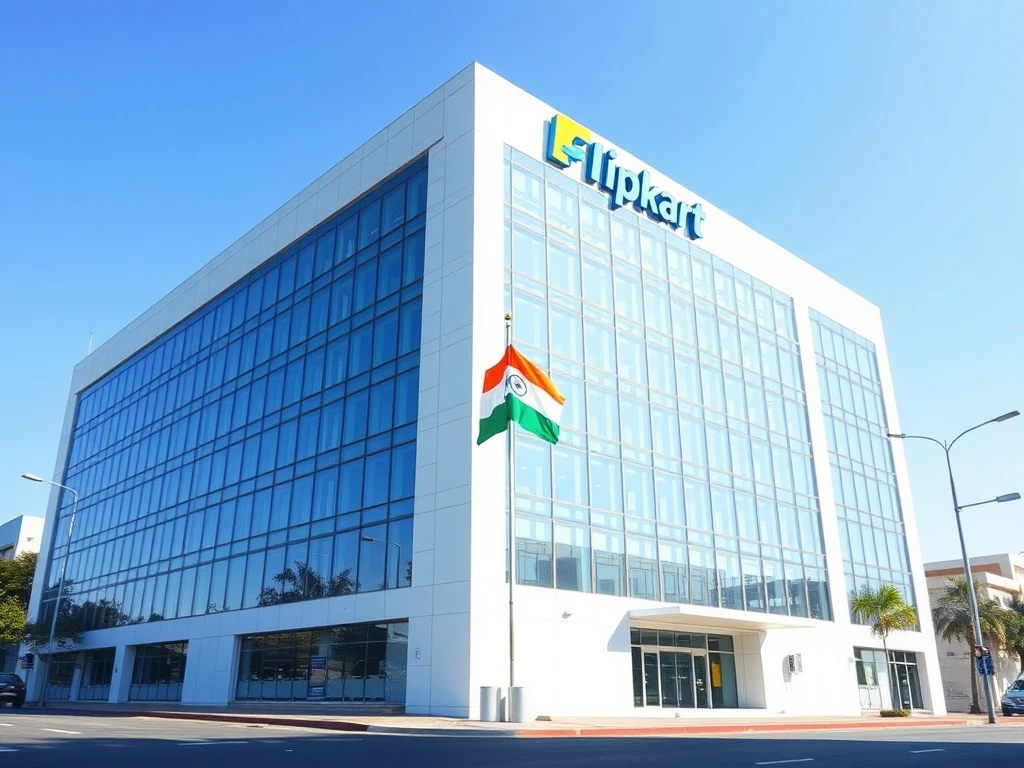
BENGALURU, INDIA — June 9, 2026: Indian e-commerce giant Flipkart has officially completed moving its corporate headquarters back to India from Singapore, marking a strategic shift as the Walmart-owned company prepares for a potential initial public offering targeting March 2027. The relocation concludes more than a decade after Flipkart established its overseas holding structure, signaling a renewed commitment to India’s rapidly expanding digital economy. This decisive move comes amid a broader trend of Indian startups returning home ahead of domestic listings, with Flipkart’s IPO plans representing what could become one of India’s largest public market debuts.
Flipkart Completes Strategic Redomiciliation to India
Flipkart confirmed the headquarters relocation through an official company statement obtained by TechCrunch. “Flipkart has received Government of India approval for its internal restructuring, pursuant to which Flipkart Internet Private Limited is now the holding entity of the Flipkart group,” a company spokesperson stated. “This completes the redomiciliation of the Flipkart group to India, a significant milestone that reflects our deep and long-term commitment to India.” The restructuring received in-principle approval from a Singapore court in September 2025, while hearings related to the shift proceeded before India’s National Company Law Appellate Tribunal.
People familiar with the company’s plans told TechCrunch that Flipkart first announced intentions to move its headquarters back to India in April 2025. The company now targets a stock market debut in India during the financial year ending March 2027. This timeline aligns with India’s growing encouragement for technology companies to list domestically, offering greater regulatory clarity and simpler tax structures for returning corporations. Founded in 2007 in Bengaluru, Flipkart was among several Indian startups that established overseas holding structures to attract foreign investment and navigate India’s regulatory environment at the time.
IPO Preparation Amid India’s E-commerce Expansion
Flipkart’s IPO preparation coincides with explosive growth in India’s digital marketplace. The country’s internet user base has already crossed one billion people, creating unprecedented opportunities for e-commerce platforms. According to sources speaking to TechCrunch, Flipkart’s gross merchandise value reached approximately $30 billion in 2025, representing substantial growth from roughly $23 billion in 2021. The platform now serves more than 500 million customers and supports 1.6 million sellers across India, while its logistics arm Ekart delivers to more than 22,000 pin codes nationwide.
- Market Leadership Position: Flipkart maintains dominant market share in several categories including smartphones, fashion, and electronics, competing directly with Amazon India and Reliance’s JioMart.
- Financial Performance: The company’s improved financial metrics, including reduced losses and increased revenue diversification through services like Flipkart Wholesale and Cleartrip, strengthen its IPO prospects.
- Strategic Timing: The 2027 target places Flipkart’s listing after anticipated regulatory clarity on e-commerce policies and during a period of expected economic growth acceleration.
Expert Analysis on Corporate Relocation Trend
Financial analysts and corporate governance experts view Flipkart’s move as part of a significant pattern. “We’re witnessing a fundamental shift in how Indian startups structure their corporate entities,” explains Mumbai-based corporate lawyer Priya Sharma, who has advised multiple technology companies on relocation matters. “The regulatory environment has evolved substantially since 2010 when overseas holding companies were essential for foreign investment. Today, India offers competitive advantages for domestic listings, including favorable tax treatment and alignment with government initiatives like ‘Make in India.'” Sharma notes that recent changes in securities regulations have specifically streamlined processes for technology company listings.
Investment banking sources, speaking anonymously due to confidentiality agreements, indicate that Flipkart’s IPO could value the company between $60-70 billion, depending on market conditions. This valuation would make it one of India’s largest public offerings, potentially surpassing recent listings like Life Insurance Corporation of India. The relocation simplifies the listing process by eliminating cross-border regulatory complexities and aligning the company’s legal structure with its primary market.
Broader Trend of Indian Startups Returning Home
Flipkart’s headquarters move mirrors actions by other prominent Indian startups in recent years. Quick-commerce platform Zepto filed confidentially for an IPO in December 2025 after relocating its holding structure to India. Investment platform Groww completed its public listing last year following a similar corporate restructuring. This pattern reflects changing calculations about where Indian technology companies can access optimal valuation, regulatory stability, and investor interest.
| Company | Relocation Year | IPO Status | Primary Reason |
|---|---|---|---|
| Flipkart | 2025-2026 | Targeting FY2027 | Domestic listing preparation |
| Zepto | 2024 | Confidentially filed Dec 2025 | Regulatory alignment |
| Groww | 2023 | Listed 2024 | Tax optimization |
| Several fintech firms | 2022-2025 | Various stages | RBI compliance requirements |
Industry observers attribute this trend to multiple converging factors. India’s startup ecosystem has matured significantly, with domestic capital becoming more readily available through vehicles like the National Investment and Infrastructure Fund. Simultaneously, global market volatility has made overseas listings less predictable, while Indian stock exchanges have actively courted technology companies with specialized listing segments and promotional campaigns. The government’s production-linked incentive schemes for electronics manufacturing have also created synergies for e-commerce companies operating domestically.
What Happens Next for Flipkart’s IPO Journey
With the headquarters relocation complete, Flipkart’s executive team now focuses on final IPO preparations. The company will likely file draft red herring prospectus documents with the Securities and Exchange Board of India in the coming months. Key preparation areas include finalizing financial audits for the newly structured Indian entity, conducting roadshows with institutional investors, and determining optimal pricing based on comparable company valuations. Walmart, which acquired a majority stake in Flipkart for $16 billion in 2018, will decide what percentage of its holding to offer in the public listing.
Stakeholder Reactions and Market Implications
Early reactions from industry stakeholders have been largely positive. “Flipkart’s decision to return its headquarters to India represents a vote of confidence in our capital markets and regulatory framework,” commented a senior official from the Ministry of Electronics and Information Technology, speaking on background. Small and medium-sized sellers on Flipkart’s platform have expressed optimism that the domestic listing will increase the company’s accountability to Indian stakeholders. However, some analysts caution that the IPO’s success will depend heavily on global economic conditions and competing investment opportunities in 2027.
Competitors are watching closely. Amazon India has maintained its international corporate structure but may face increased pressure to demonstrate similar commitment to the Indian market. Reliance Industries, through JioMart, continues to leverage its entirely domestic corporate structure as a competitive advantage in messaging to consumers and regulators. The coming months will reveal how Flipkart’s relocation influences its operational strategies, particularly regarding data localization, seller relationships, and compliance with evolving e-commerce regulations.
Conclusion
Flipkart’s completed headquarters move from Singapore to India marks a pivotal moment in the company’s evolution and India’s e-commerce landscape. The strategic redomiciliation positions Flipkart for its anticipated 2027 IPO while aligning the company with national economic priorities. As Indian startups increasingly bring their corporate structures home, Flipkart’s experience will provide valuable insights for other companies considering similar moves. The coming year will prove critical as Flipkart navigates final IPO preparations, with its success or failure likely influencing corporate strategy decisions across India’s technology sector for years to come.
Frequently Asked Questions
Q1: Why did Flipkart move its headquarters back to India?
Flipkart relocated its corporate headquarters to India primarily to prepare for a domestic initial public offering targeting March 2027. The move simplifies regulatory compliance, aligns with government initiatives encouraging local listings, and reflects the company’s strategic focus on the Indian market after more than a decade with an overseas holding structure.
Q2: When will Flipkart’s IPO happen?
The company targets a stock market debut in India during the financial year ending March 2027. Specific timing will depend on market conditions, regulatory approvals, and preparation milestones, with draft prospectus filings expected in the coming months.
Q3: How does this affect Flipkart’s customers and sellers?
For customers, the headquarters relocation likely means continued service without immediate changes. For sellers, the domestic corporate structure may simplify compliance and dispute resolution processes while potentially increasing Flipkart’s responsiveness to local market needs ahead of its IPO.
Q4: What is Flipkart’s current market position in India?
Flipkart maintains leadership in several e-commerce categories with over 500 million customers, 1.6 million sellers, and gross merchandise value reaching approximately $30 billion in 2025. The platform competes directly with Amazon India and Reliance’s JioMart across multiple product segments.
Q5: Are other Indian companies making similar moves?
Yes, multiple Indian startups including Zepto and Groww have relocated their overseas holding structures back to India in recent years. This trend reflects changing regulatory environments, tax considerations, and the growing appeal of domestic capital markets for technology companies.
Q6: What challenges might Flipkart face with its IPO plans?
Potential challenges include global economic volatility affecting investor appetite, regulatory changes in India’s e-commerce sector, competitive pressures from well-funded rivals, and the need to demonstrate consistent profitability ahead of the public listing.