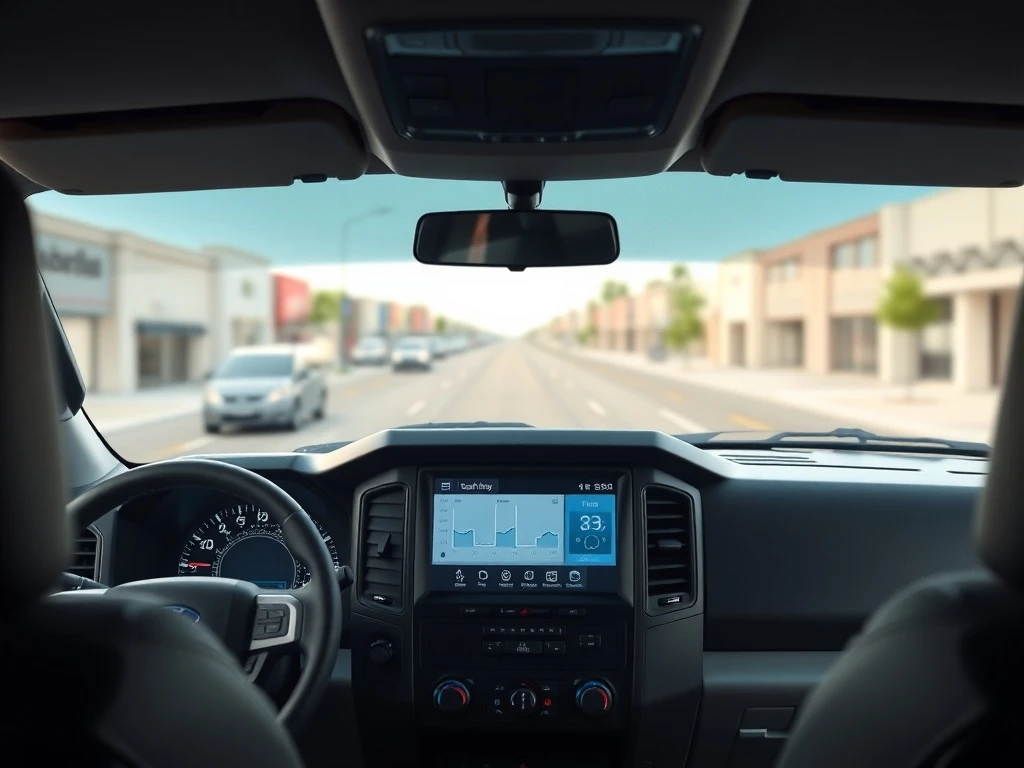
INDIANAPOLIS, June 9, 2026 — Ford Motor Company has launched a proprietary artificial intelligence system that monitors seatbelt usage across commercial fleets alongside dozens of other operational metrics. The Ford Pro AI assistant debuted this week at Work Truck Week in Indianapolis and immediately became available to all U.S.-based Ford Pro telematics subscribers at no additional cost. This strategic move represents Ford’s accelerating pivot toward software and data services as revenue drivers, with the Ford Pro division generating $66.3 billion in 2025 revenue alone. The system analyzes millions of data points from connected vehicles to provide fleet managers with unprecedented visibility into safety compliance, operational efficiency, and maintenance needs.
Ford Pro AI: Beyond Basic Telematics
Ford executives emphasized to TechCrunch that this new system represents a fundamental shift from traditional diagnostic tools. “This is not a mere chatbot,” a Ford spokesperson stated during the Indianapolis announcement. Instead, the proprietary AI platform provides detailed, actionable insights about specific vehicle behaviors and safety metrics. The system monitors seatbelt use patterns across entire fleets, tracking compliance rates by vehicle, driver, and time of day. It also analyzes fuel consumption with granular precision, identifying inefficient driving habits that increase operational costs. Vehicle health monitoring goes beyond basic error codes, predicting maintenance needs before failures occur.
The platform’s architecture leverages Google Cloud infrastructure alongside multiple specialized AI agents. Ford’s unique advantage, according to company engineers, comes from training these systems on internal fleet data specific to each commercial customer. This approach significantly reduces the potential for AI hallucinations and errors that plague more generalized systems. The company reports having more than 840,000 global Ford Pro telematics subscribers, though it declined to provide specific U.S. numbers. This existing customer base provides a ready market for the enhanced AI capabilities.
Commercial Impact and Financial Implications
The financial stakes for Ford are substantial. The Ford Pro business division—which sells Super Duty trucks alongside vehicles to commercial, government, and rental customers—reported a net income of $6.8 billion in 2025. Paid software subscriptions within this division grew by 30% during the same year, indicating strong market demand for digital services. The new AI assistant represents Ford’s latest attempt to increase the value proposition for these paying customers while creating additional revenue streams. Fleet managers gain access to detailed reports on idle times, speeding incidents, and aggressive acceleration events across their operations.
- Safety Compliance Monitoring: Real-time seatbelt use tracking with historical compliance analytics by driver and vehicle.
- Operational Efficiency: Fuel consumption analysis identifies inefficient routes and driving behaviors that increase costs.
- Predictive Maintenance: Vehicle health monitoring predicts component failures before they cause downtime.
- Managerial Oversight: Comprehensive reporting on driver behaviors including speeding, harsh braking, and excessive idling.
Industry Expert Perspective on Fleet Technology
Transportation analyst Michael Harley, Editorial Director at Kelley Blue Book, notes this development aligns with broader industry trends. “Commercial fleets represent the most profitable segment for telematics and connected services,” Harley explained in a recent industry analysis. “Unlike consumer vehicles where features often become cost centers, commercial operators directly quantify return on investment through reduced fuel costs, lower insurance premiums, and decreased maintenance expenses.” Harley points to similar initiatives from competitors including General Motors’ OnStar Business Solutions and Stellantis’s Ram Telematics. The market for commercial vehicle software and services is projected to reach $50 billion globally by 2028 according to MarketsandMarkets research.
Broader AI Strategy Across Ford’s Product Lines
Ford’s commercial AI announcement follows the company’s January 2026 reveal at CES of a consumer-focused AI assistant for passenger car and truck owners. That system will debut in Ford’s smartphone application later this year before expanding to in-vehicle integration in 2027. This dual-track approach—commercial and consumer—reflects Ford’s comprehensive software strategy. Both systems share foundational Google Cloud architecture but differ significantly in their specific applications and data presentation. The commercial system prioritizes fleet-wide analytics and compliance reporting, while the consumer version focuses on individual vehicle optimization and personalized recommendations.
| Feature | Ford Pro AI (Commercial) | Ford Consumer AI (Upcoming) |
|---|---|---|
| Primary Users | Fleet managers, business owners | Individual vehicle owners |
| Key Metrics | Seatbelt compliance, fleet efficiency, cost analysis | Personal driving habits, individual vehicle health, trip optimization |
| Data Presentation | Aggregate fleet analytics, compliance reports | Personalized recommendations, individual insights |
| Availability | Now available to U.S. subscribers | Planned smartphone app launch late 2026 |
The Workforce Implications of Automotive AI Expansion
Even as Ford rolls out these advanced AI tools, company leadership has issued warnings about potential workforce impacts. CEO Jim Farley predicted last year that artificial intelligence could eventually eliminate half of white-collar jobs in the United States automotive sector. In January 2026 remarks, Farley emphasized the nation’s need for “essential workers” to build and support the infrastructure required for ambitious AI initiatives. This tension between technological advancement and workforce stability represents a significant challenge for traditional manufacturers transitioning to software-centric business models. Ford’s approach appears to prioritize immediate commercial applications where ROI is most easily demonstrated, potentially creating a buffer against more disruptive workforce transformations.
Competitive Landscape and Industry Response
Ford’s announcement comes amid intensifying competition in the commercial telematics space. Companies like Samsara, Geotab, and Verizon Connect have established strong positions in fleet management software. Traditional automakers increasingly view these third-party providers as both partners and competitors. Ford’s advantage lies in its direct integration with vehicle systems and manufacturer warranty data. However, independent telematics companies counter with platform-agnostic solutions that work across mixed fleets. The coming years will likely see increased partnerships, acquisitions, and platform integrations as the $66.3 billion Ford Pro division seeks to defend and expand its market position against both automotive and technology competitors.
Conclusion
Ford’s new AI assistant represents a significant advancement in commercial fleet management technology, with seatbelt monitoring serving as just one component of a comprehensive data analytics platform. The immediate availability to U.S. subscribers signals Ford’s confidence in the system’s readiness and value proposition. As the automotive industry continues its software transformation, tools like Ford Pro AI will increasingly determine competitive advantage in commercial segments. Fleet operators should evaluate these capabilities against both operational needs and regulatory compliance requirements, particularly as safety monitoring becomes more sophisticated. The success of this initiative will likely influence Ford’s broader AI strategy across both commercial and consumer vehicle lines throughout the remainder of the decade.
Frequently Asked Questions
Q1: How does Ford’s AI assistant actually monitor seatbelt use?
The system uses existing vehicle sensor data from seatbelt buckle switches and weight sensors in seats. The AI analyzes this data alongside other vehicle information to identify usage patterns, compliance rates, and potential safety issues across entire fleets.
Q2: What commercial benefits do fleet operators gain from this system?
Operators receive detailed analytics that can reduce fuel costs by 5-15%, lower insurance premiums through documented safety compliance, decrease maintenance expenses through predictive alerts, and improve overall fleet utilization through behavioral monitoring.
Q3: When will the consumer version of Ford’s AI assistant be available?
Ford plans to launch the consumer AI assistant in its smartphone application in late 2026, with in-vehicle integration following in 2027 models. The commercial version discussed here is already available to U.S. Ford Pro telematics subscribers.
Q4: How does Ford’s system compare to third-party fleet management solutions?
Ford’s advantage comes from direct integration with vehicle systems and manufacturer data, while third-party solutions often offer cross-platform compatibility. The choice depends on whether a fleet operates exclusively with Ford vehicles or uses multiple brands.
Q5: What data privacy protections exist for drivers monitored by this system?
Ford states that data is aggregated and anonymized for reporting purposes, with individual driver identification only available to authorized fleet managers. The company complies with existing telematics privacy standards, though specific policies vary by commercial customer agreements.
Q6: Could this technology eventually lead to automated safety enforcement?
While currently focused on reporting and analytics, the system’s infrastructure could support automated alerts or interventions. However, Ford emphasizes that human managers remain responsible for enforcement decisions, with the AI serving as an informational tool rather than an enforcement mechanism.