DETROIT, March 15, 2026 — Ford Motor Company has issued a major safety recall affecting more than 83,000 vehicles in North America. The urgent Ford vehicle recall addresses two separate, critical defects involving malfunctioning headlights and faulty engine valves. The National Highway Traffic Safety Administration (NHTSA) posted the official recall documents (Recall 26V-XXX) this morning, triggering immediate notifications to registered owners. This action follows a preliminary investigation opened by the NHTSA’s Office of Defects Investigation in late 2025 after receiving field reports of component failures. Owners of certain 2024-2025 model year Ford F-150 pickup trucks and Ford Bronco SUVs must contact their dealers for repairs.
Scope and Details of the Ford Safety Recall
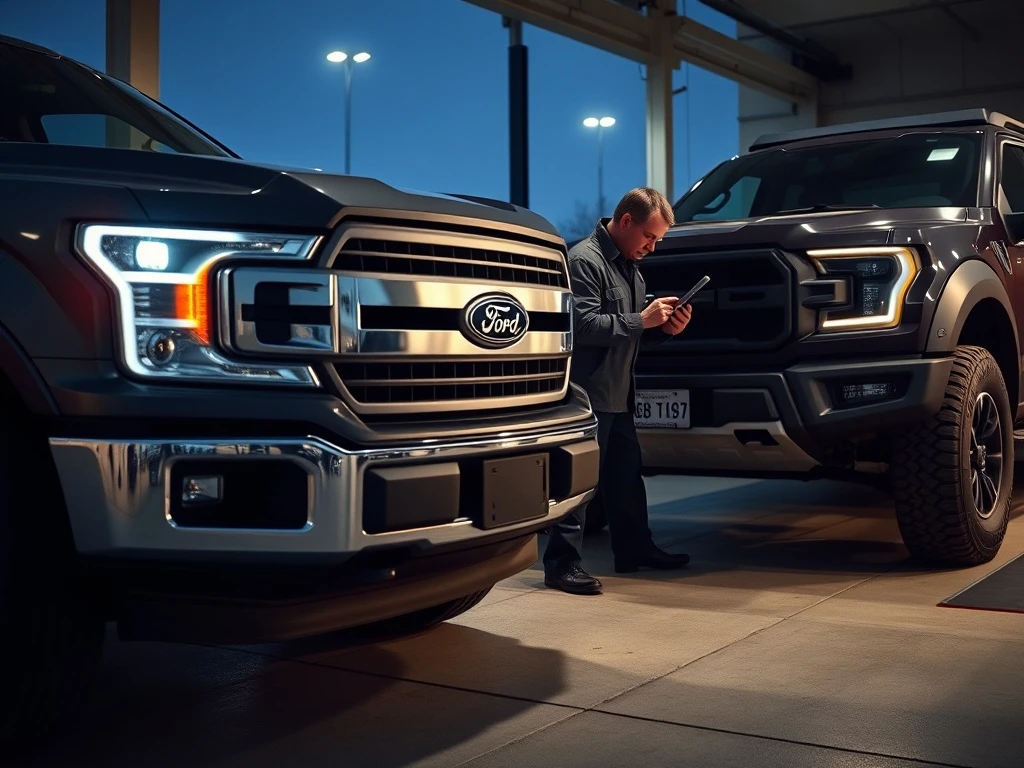
The recall encompasses two distinct problems across different vehicle lines. Consequently, the total figure of 83,000 vehicles represents the combined scope. The first defect involves approximately 52,000 2024 Ford F-150 trucks equipped with specific LED projector headlamp assemblies. According to the NHTSA Part 573 Safety Recall Report, a voltage regulator within the headlight control module can fail. This failure causes the low-beam headlights to dim unexpectedly or shut off completely while driving. Ford’s internal review traced the issue to a supplier component that does not meet durability specifications for thermal cycling.
Simultaneously, a second defect impacts roughly 31,000 2025 Ford Bronco SUVs with the 2.7L EcoBoost V6 engine. The recall notice identifies a manufacturing flaw in the intake valve stem. Under high-temperature, high-load conditions, the valve stem may fracture. A fractured valve can cause immediate engine power loss, create a risk of engine compartment fire, and potentially lead to a sudden stall while driving. Ford’s powertrain engineering team identified the problem during accelerated durability testing last quarter. The company has since halted installation of the suspect valve components from its supplier.
Safety Risks and Immediate Impacts for Owners
The safety implications of both defects are severe and immediate. Dim or inoperative headlights drastically reduce nighttime visibility, increasing crash risk for the driver and other road users. The NHTSA categorizes this as a clear violation of Federal Motor Vehicle Safety Standard (FMVSS) No. 108. Meanwhile, a catastrophic engine valve failure presents multiple hazards. Sudden engine stall disables power steering and braking assist, creating a loss of vehicle control. Furthermore, metal fragments from a broken valve can puncture the engine block or ignite leaked oil.
- Driving Hazard: Owners of affected F-150 trucks should avoid driving at night, dawn, or dusk until repairs are complete. Daytime running lights are not a sufficient substitute.
- Engine Damage: Bronco owners may notice abnormal engine noise, reduced power, or the illumination of the check engine light before complete failure. Continuing to drive could cause total engine destruction.
- Financial Burden: Without the recall repair, an out-of-warranty engine replacement for a Bronco can exceed $12,000. Ford will cover all repair costs under this recall.
Official Statements and Expert Analysis
In a statement released today, a Ford spokesperson said, “We are committed to the safety of our customers and are moving quickly to address these issues. All repairs will be performed at no cost, and we have parts availability to begin service immediately.” The company directs owners to its recall website or the NHTSA recall lookup tool using their Vehicle Identification Number (VIN).
Automotive safety expert Dr. Lisa Chen, director of the Center for Vehicle Safety at the University of Michigan Transportation Research Institute (UMTRI), provided context. “This recall highlights two critical, yet very different, failure modes in modern vehicles,” Chen explained. “The headlight issue is an electronic control problem becoming more common with advanced lighting systems. The valve defect is a classic metallurgical and manufacturing quality control challenge. Both require robust supplier oversight, which is a persistent pressure point in the industry’s just-in-time supply chain.” Her analysis references UMTRI’s 2025 report on electronic system failures in vehicles.
Broader Context of Automotive Recalls in 2026
This Ford action occurs within a year of heightened regulatory scrutiny and recall activity across the auto industry. The NHTSA has emphasized faster defect identification and more transparent reporting following recent high-profile cases. Compared to other major recalls in the past 18 months, Ford’s 83,000-vehicle scope is significant but not unprecedented. The issues differ from the widespread semiconductor-related recalls of 2024 but underscore ongoing quality challenges as vehicles become more complex.
| Recall (2025-2026) | Primary Issue | Vehicles Affected |
|---|---|---|
| Ford Headlight/Valve Recall | Headlight Control Module, Engine Intake Valve | ~83,000 |
| General Motors Battery Fire Recall | High-Voltage Battery Pack Sealing | ~120,000 |
| Stellantis Software Update Recall | Instrument Cluster Software Glitch | ~250,000 |
| Takata Airbag Final Phase (Multiple OEMs) | Airbag Inflator Rupture | ~2 Million |
Next Steps: Repair Timeline and Owner Instructions
Ford has already begun shipping replacement parts to its dealer network. The repair procedures are distinct for each problem. For the F-150 headlight issue, dealers will replace the faulty headlamp control module with an updated part. The service takes approximately 90 minutes. For the Bronco engine valve defect, the repair is more extensive. Technicians must partially disassemble the engine to replace all intake valves in both cylinder heads. This repair requires 8-10 hours of labor, and dealers will provide loaner vehicles.
Owners will receive official notification letters by mail starting the week of March 22, 2026. However, they do not need to wait for the letter to schedule service. They can proactively check their VIN’s recall status on the NHTSA website or contact any Ford dealership. The repairs are free of charge. Ford will also reimburse owners who paid for prior repairs related to these specific conditions before the recall announcement, provided they submit receipts.
Dealer and Customer Response
Early reports from large dealership groups indicate they are preparing for a surge in service appointments. “We’ve been allocated the necessary parts and are scheduling appointments in blocks to manage workflow,” said Michael Torres, service director at a multi-brand dealership in Texas. Customer reactions on social media and owner forums have mixed concern with frustration. Some Bronco owners on dedicated forums report having already experienced engine troubles, while F-150 owners express anxiety over nighttime driving safety.
Conclusion
The recall of over 83,000 Ford vehicles for headlight issues and engine valve problems represents a significant safety intervention. It addresses two serious defects that could lead to crashes, injuries, or costly damage. Owners of 2024 F-150 and 2025 Bronco models must act promptly to verify their vehicle’s status and schedule the no-cost repair. This event reinforces the importance of manufacturer vigilance and robust quality control, especially within extended supply chains. As the repair campaign unfolds, the effectiveness of Ford’s response and communication will be closely watched by regulators, safety advocates, and the automotive community. The ultimate measure of success will be the swift and complete remediation of these safety risks for every affected owner.
Frequently Asked Questions
Q1: Which specific Ford models and years are included in this recall?
The recall includes approximately 52,000 2024 Ford F-150 trucks built between January and June 2024, and approximately 31,000 2025 Ford Bronco SUVs with the 2.7L EcoBoost engine, built between August and December 2025.
Q2: What are the immediate safety risks if I drive an affected vehicle?
For the F-150, the headlights may dim or turn off while driving, severely reducing visibility at night. For the Bronco, the engine intake valve may fracture, causing sudden power loss, potential stalling, and a risk of engine fire. Avoid nighttime driving in the F-150 and be alert to engine noises in the Bronco.
Q3: What is the repair process and how long will it take?
F-150 repairs involve replacing a headlamp control module (~90 minutes). Bronco repairs require replacing all intake valves, a process taking 8-10 hours; dealers should provide a loaner vehicle for this service.
Q4: How can I check if my Ford vehicle is part of this recall?
Use your 17-character Vehicle Identification Number (VIN) on the NHTSA recalls website (nhtsa.gov/recalls) or Ford’s official recall lookup page. Your VIN is located on your registration, insurance card, or on the driver’s side dashboard visible through the windshield.
Q5: Has Ford had similar recalls for headlights or engine valves in the past?
Ford recalled certain 2020-2021 F-Super Duty trucks for headlight beam alignment issues in 2022. Engine valve recalls are less common but have occurred industry-wide, including a notable recall by another manufacturer for faulty valve springs in 2023.
Q6: Will this recall affect the resale value of my F-150 or Bronco?
Once the recall repair is completed and documented in vehicle history reports (like Carfax), the impact on value should be minimal. An open, unrepaired recall, however, can significantly reduce a vehicle’s market value and make it difficult to sell or finance.
This article was produced with AI assistance and reviewed by our editorial team for accuracy and quality.