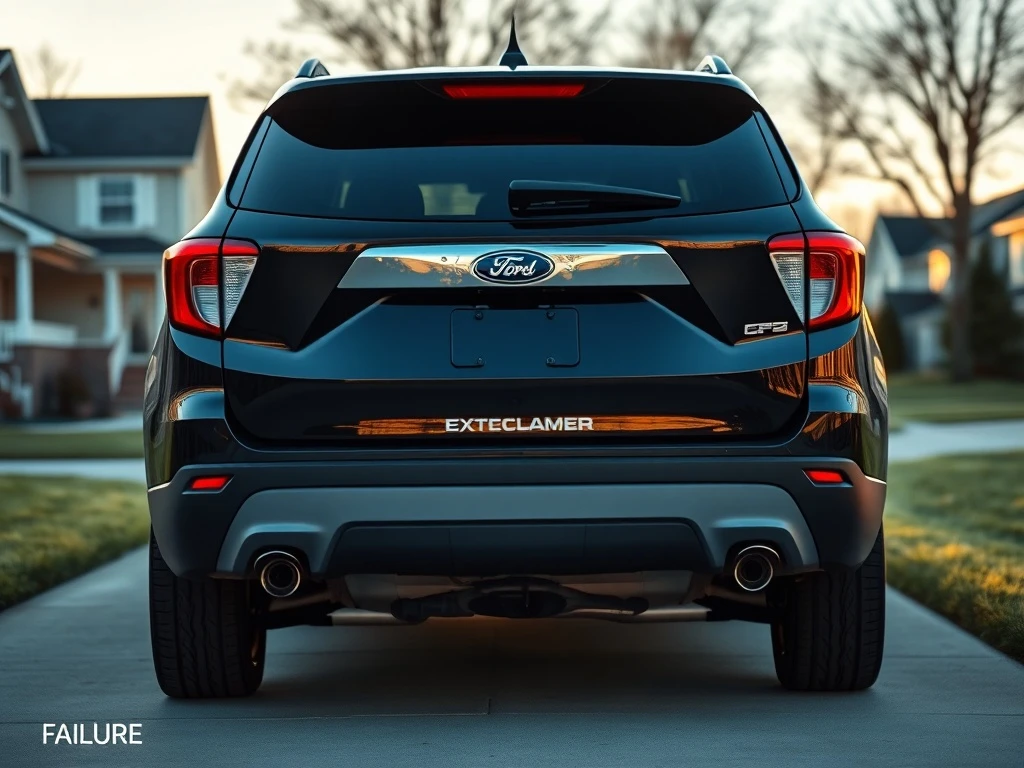
DEARBORN, Mich. — February 18, 2026: Ford Motor Company has issued a critical safety recall for approximately 1.74 million vehicles in North America due to a defect causing sudden rearview camera blackouts. The National Highway Traffic Safety Administration (NHTSA) posted the official recall documents (Recall 26V-XXX) this morning, warning drivers of a significant collision risk. This massive Ford recall impacts popular models from the 2020-2024 model years, including the Ford Explorer, Escape, and Bronco Sport. A faulty image processing module can cause the backup camera display to intermittently or permanently go dark, eliminating a crucial rear visibility aid mandated by federal law.
Scope of the Ford Rearview Camera Recall
The recall spans 1,742,189 vehicles in the United States and federalized territories, with an additional 98,000 vehicles affected in Canada. Ford identified the root cause as a voltage fluctuation within the telematics control unit, which houses the software for the rearview camera feed. Consequently, the camera image can freeze, distort, or turn completely black without warning. “This is not a simple inconvenience; it’s a direct safety hazard,” stated Jessica Caldwell, Director of Insights at automotive data firm Edmunds, in an interview. “Backup cameras became mandatory to prevent backover tragedies, particularly involving children. A failure negates that primary safety function.” Ford’s internal investigation, prompted by over 12,000 warranty claims and 350 field reports, began in Q3 2025 and accelerated after NHTSA opened a preliminary evaluation in November.
Owners began reporting issues as early as 2023, with complaints on the NHTSA website describing the screen “going black as soon as the vehicle is put in reverse.” The problem appears exacerbated in extreme temperatures. Ford’s chronology shows engineers traced the fault to a specific supplier’s circuit board, which cannot handle sustained electrical loads from the vehicle’s communication network.
Safety Risks and Immediate Impacts
The failure creates a blind zone directly behind the vehicle, dramatically increasing the risk of backing into pedestrians, cyclists, or objects. NHTSA’s 2024 data indicates backup cameras prevent an estimated 15,000 injuries annually. A blackout eliminates this protection. “For larger SUVs like the Explorer, the driver’s direct rear visibility is extremely limited,” explained Michael Brooks, Executive Director of the Center for Auto Safety. “You are essentially operating a two-ton vehicle blind in a common maneuver.” The recall notice confirms 58 alleged minor collisions potentially linked to the defect, though no fatalities are currently attributed.
- Collision Hazard: Drivers lose a federally required visibility aid, creating a high-risk blind spot.
- Owner Inconvenience: Dealers cannot perform repairs immediately; a software fix is still under development.
- Resale Value Impact: Open safety recalls can depress vehicle values and complicate sales until fixed.
Official Response from Ford and Regulators
In an official statement, Ford’s Chief Safety Officer, Jennifer Brace, said, “We are committed to the safety of our customers and are working urgently to develop a robust software update to resolve this issue.” The company will notify owners by first-class mail beginning March 30, 2026. Importantly, a permanent repair is not yet available. Ford engineers are finalizing a software overlay that will recalibrate the telematics module’s power management. Until then, owners are advised to exercise extreme caution when reversing, physically check surroundings, and consider using a spotter. NHTSA’s recall acknowledgment stresses that the defect poses an unreasonable safety risk, compelling Ford’s action under the Motor Vehicle Safety Act.
Historical Context of Automotive Camera Recalls
This recall is among the largest specifically targeting camera systems. It echoes a 2023 General Motors recall for similar issues but on a much larger scale. The rapid integration of complex electronic control units has introduced new failure modes. The table below compares recent major camera-related recalls.
| Automaker | Year | Vehicles Recalled | Primary Cause |
|---|---|---|---|
| Ford | 2026 | ~1.74 Million | Telematics Module Voltage Fluctuation |
| General Motors | 2023 | ~640,000 | Faulty Wiring Harness Connector |
| Toyota | 2022 | ~310,000 | Camera Control Software Bug |
| Honda | 2021 | ~1.4 Million | Display Unit Overheating |
Next Steps for Affected Ford Owners
Ford will roll out the corrective software update in phases, prioritizing regions with higher complaint volumes. Dealers will apply the update free of charge. Owners can check if their vehicle is included immediately by visiting the NHTSA recalls website (www.nhtsa.gov/recalls) and entering their 17-character Vehicle Identification Number (VIN). Ford’s own recall site will also provide VIN lookup. In the interim, the lack of an immediate fix presents a logistical challenge. Legal experts note that owners may have grounds for state “lemon law” claims if the defect substantially impairs the vehicle’s use, value, or safety, though federal recall law typically preempts such actions once a remedy is announced.
Consumer and Industry Reactions
Automotive safety advocates have praised NHTSA for its swift preliminary investigation but question the delay between initial owner reports and the recall. “This shows the need for more robust real-time data analysis from connected vehicles,” Brooks added. On social media and owner forums, reactions range from frustration over the wait for a fix to concern about liability in potential accidents. The recall also spotlights the increasing complexity of vehicle electronics, where a single software module can disable a critical safety system.
Conclusion
The recall of 1.74 million Ford vehicles for rearview camera blackouts represents one of the most significant electronic safety defects in recent years. It underscores the critical role of backup cameras and the potential vulnerabilities in modern vehicle architectures. Affected owners must proactively check their VIN, heed safety warnings while reversing, and await official notification for the software update. This event will likely intensify regulatory scrutiny on the reliability of mandatory safety electronics and may influence future NHTSA rulemaking on system redundancy. The automotive industry’s shift toward digital cockpits and advanced driver-assistance systems makes resolving such foundational electronic flaws an urgent priority.
Frequently Asked Questions
Q1: Which Ford models are included in the rearview camera recall?
The recall includes the 2020-2023 Ford Explorer, 2021-2024 Ford Escape, and 2021-2024 Ford Bronco Sport. Certain 2022-2023 Ford Maverick trucks are also affected. Owners must check their VIN for confirmation.
Q2: What should I do if my Ford’s backup screen goes black?
Exercise extreme caution. Do not rely on the camera. Physically turn and look out rear windows, use mirrors, and have someone act as a spotter if possible. Contact a Ford dealer to report the issue and schedule a recall repair once the software update is available.
Q3: When will the repair be available, and what is the fix?
Ford will begin notifying owners in late March 2026. The remedy is a free software update reprogramming the telematics control unit. Dealers will perform the update, which takes approximately 30 minutes.
Q4: Is it safe to drive my vehicle with this recall?
The vehicle is safe to drive forward, but backing up poses a heightened risk. You must manually check behind the vehicle every time you reverse until the repair is completed.
Q5: How does this recall compare to other automotive camera issues?
This is one of the largest recalls ever for a camera system failure, surpassing most others by volume. The root cause—a software/power management issue in a central module—is distinct from earlier recalls for physical wiring or connector problems.
Q6: Will this recall affect my car insurance or its resale value?
An open recall can complicate a private sale, as buyers may be hesitant. Most states require disclosure. It should not directly affect insurance premiums, but failure to address the recall could impact liability in the event of a backing collision.