
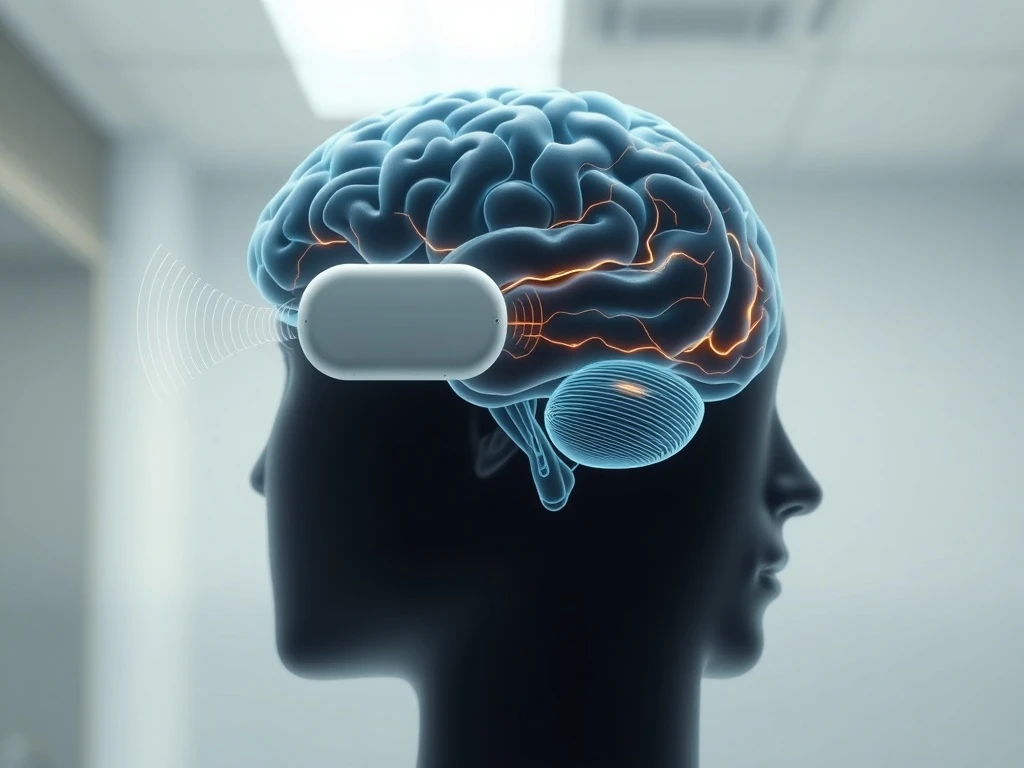
SHANGHAI, CHINA — June 9, 2026: The global race for brain–computer interface (BCI) dominance has intensified with a landmark Chinese funding round. Gestala, a three-month-old startup developing non-invasive ultrasound-based BCIs, has secured $21.6 million (CN¥150 million) in early-stage capital. Founder and CEO Phoenix Peng confirmed the oversubscribed Series A to TechCrunch, revealing investor commitments exceeded $58 million. This investment, co-led by Guosheng Capital and Dalton Venture, represents the largest early-stage funding event in China’s burgeoning BCI sector. The deal values Gestala between $100 million and $200 million and signals a strategic pivot toward ultrasound technology as a safer, scalable alternative to surgical implants.
Gestala’s Ultrasound Ambition and Record Funding
Serial entrepreneur Phoenix Peng is building a dual-track BCI empire. Alongside NeuroXess, which focuses on implantable systems, Gestala pursues a non-invasive path using phased-array ultrasound. Peng told TechCrunch the fresh capital will fuel rapid research and development, team expansion from 15 to 35 employees by year-end, and the construction of a dedicated manufacturing facility in China. Consequently, the startup aims to complete its first-generation prototype before December 2026. “Ultrasound could represent the next generation of brain–computer interface technology,” Peng asserted, highlighting its potential for broader, whole-brain access and new neural interaction methods. The funding round included participation from Tsing Song Capital, Gobi Ventures, Fourier Intelligence, Liepin, and Seas Capital, demonstrating strong institutional confidence.
This surge arrives amid a global investment trend targeting ultrasound BCI technology. While several startups, including OpenAI-backed Merge Labs, operate in the U.S., Gestala claims the title of China’s first dedicated ultrasound BCI company. The company’s premise addresses a critical adoption barrier: the surgical risks of implanted electrode systems like those from Neuralink. Peng explained that ultrasound technology can monitor larger brain areas, including deep neural circuits, and precisely stimulate or suppress neural activity without a single incision.
Strategic Impact on the Global BCI Landscape
Gestala’s funding and aggressive roadmap directly challenge U.S. leaders and reshape competitive dynamics. The startup leverages distinct Chinese advantages to accelerate development. Firstly, it taps into China’s integrated manufacturing ecosystem for faster prototyping and production scaling. Secondly, partnerships with major Chinese hospitals aim to slash clinical trial costs to roughly 20–33% of comparable U.S. or European studies. This cost and speed advantage could compress development timelines significantly.
- Technology Diversification: Gestala validates ultrasound as a viable, non-invasive BCI pathway, diversifying the technological battlefield beyond invasive electrodes.
- Market Acceleration: Reduced trial costs and rapid manufacturing could bring functional BCI therapies to market faster, particularly for chronic conditions.
- Investment Redirection: The record funding may redirect venture capital in Asia toward deep-tech biotech ventures, moving beyond consumer apps and e-commerce.
Expert Analysis on the Ultrasound BCI Shift
Dr. Anya Sharma, a neurotechnology research director at the Stanford Neuroinnovation Lab, provided context to TechCrunch. “The appeal of non-invasive interfaces is undeniable for widespread clinical adoption,” she stated. “Ultrasound offers a unique combination of depth penetration and spatial resolution. However, the key challenge remains decoding neural signals with high fidelity through the skull.” Sharma noted that successful companies will need to demonstrate robust clinical data. Gestala is already building its “Ultrasound Brain Bank,” a large clinical dataset designed to train AI models for decoding brain signals and supporting neurological diagnostics—a move experts see as critical for long-term success.
Broader Context: Geopolitics and Medical Applications
The funding occurs against a backdrop of rising U.S.-China tech tensions. Despite this, Peng expressed hope for collaborative deep-tech research. “Both countries bring different strengths,” he said. “China offers large-scale clinical research capacity and efficient supply chains, while the U.S. has world-class scientific talent.” He suggested joint efforts could build large clinical datasets to benefit global neuroscience. Medically, Gestala’s lead program targets chronic pain management, a condition affecting vast populations in both nations. The startup also researches applications for depression, PTSD, autism, OCD, stroke rehabilitation, and longer-term targets like Alzheimer’s and Parkinson’s diseases.
| Company | Technology | Approach | Key Advantage |
|---|---|---|---|
| Gestala (China) | Phased-array Ultrasound | Non-invasive | Whole-brain access, no surgery, lower-cost trials |
| Neuralink (U.S.) | Implantable Electrodes | Invasive/Surgical | High signal fidelity, direct neural recording |
| Merge Labs (U.S.) | Ultrasound/Focused | Non-invasive | Backed by OpenAI, U.S. research base |
| NeuroXess (China) | Implantable Systems | Invasive/Surgical | Part of Peng’s ecosystem, surgical BCI experience |
What Happens Next: Prototypes, Trials, and Scaling
The immediate roadmap is execution-focused. Gestala must deliver its first-generation prototype by year-end to maintain investor momentum and validate its technical claims. Following prototype validation, the company will initiate clinical trials for its lead chronic pain program. Success in these early trials is crucial for securing subsequent funding rounds and potential partnerships with global pharmaceutical or medical device firms. Simultaneously, scaling the team from 15 to 35 requires integrating specialized talent in ultrasound engineering, neuroscience, and AI—a significant operational challenge for a young startup.
Industry and Investor Reactions
Initial reactions from the venture capital community are notably optimistic. A partner at Guosheng Capital, speaking on background, cited “the unique combination of a capital-efficient development model and a massive addressable market in neurology” as the core investment thesis. Meanwhile, competitors are watching closely. The funding round proves that significant capital is available for non-invasive BCI alternatives, potentially encouraging more entrants into the ultrasound segment. For patients, the development signals hope for accessible, non-surgical treatments for debilitating neurological conditions within a potentially shorter timeframe.
Conclusion
Gestala’s $21.6 million funding is more than a financial milestone; it’s a strategic inflection point for the global brain–computer interface industry. The investment validates ultrasound as a serious contender in the BCI arena and showcases China’s growing capability to innovate and scale in deep-tech biotech. By leveraging clinical and manufacturing advantages, Gestala aims to outpace international competitors on cost and speed. The coming twelve months, culminating in a functional prototype, will test this ambitious thesis. Ultimately, this development accelerates the entire field toward a critical goal: delivering safe, effective brain–computer interfaces from the lab to the clinic, potentially improving millions of lives.
Frequently Asked Questions
Q1: What is Gestala and what makes its technology different?
Gestala is a Chinese startup developing non-invasive brain–computer interfaces using phased-array ultrasound. Unlike surgical implants from companies like Neuralink, its technology aims to monitor and stimulate brain activity through the skull, eliminating surgery risks and allowing access to broader brain regions.
Q2: Why is Gestala’s $21.6M funding round significant?
This investment is the largest early-stage funding round ever in China’s BCI industry. It signals strong investor belief in ultrasound BCI technology and Gestala’s specific approach, valuing the three-month-old company between $100 million and $200 million.
Q3: What are the main medical applications Gestala is targeting?
The lead program is chronic pain management. The company is also researching applications for mental health conditions (depression, PTSD, autism, OCD), stroke rehabilitation, and longer-term targets like Alzheimer’s and Parkinson’s diseases.
Q4: How does Gestala plan to compete with established U.S. BCI companies?
Gestala is leveraging China’s integrated manufacturing for faster production and partnering with major Chinese hospitals to run clinical trials at 20–33% of typical U.S./European costs. This strategy emphasizes speed and scale to bring products to market.
Q5: What is an “Ultrasound Brain Bank” and why is it important?
This is a large clinical dataset Gestala is building to train AI models. These models will help decode brain signals from ultrasound data, which is crucial for developing accurate neurological diagnostics and effective treatments.
Q6: When can we expect to see a working product from Gestala?
The company aims to complete its first-generation prototype by the end of 2026. Following successful prototyping and regulatory approvals, clinical trials for specific applications would begin, meaning a market-ready product is likely several years away.



