
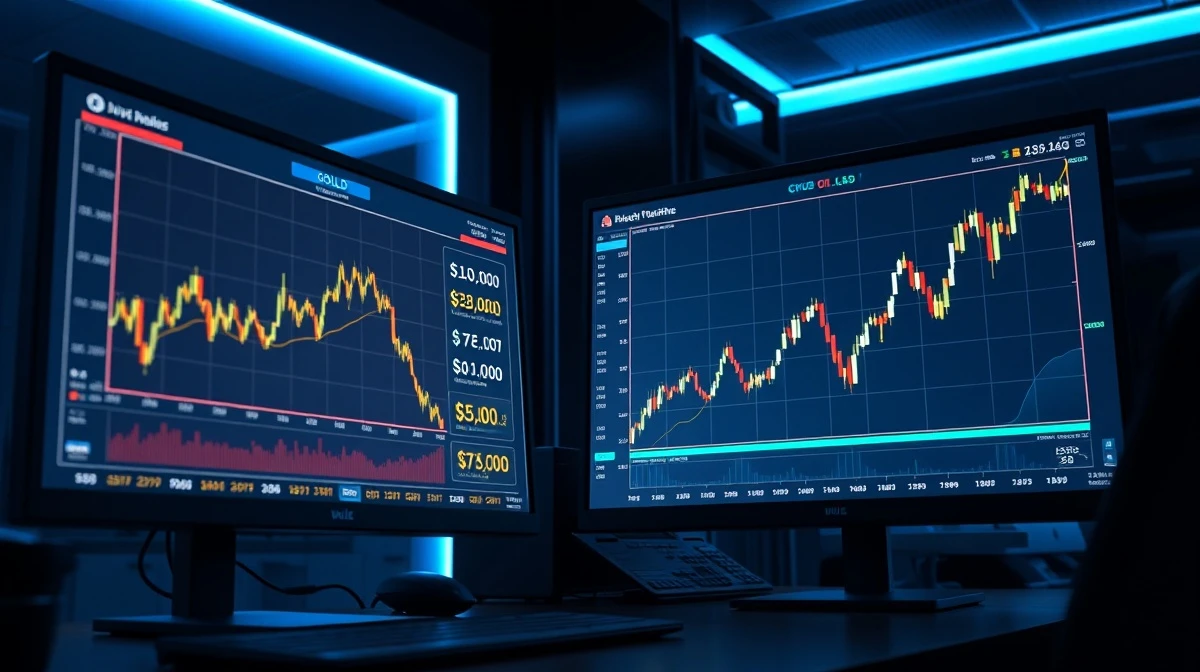
Gold prices are consolidating near the psychologically significant $5,000 per ounce level, market data shows. A concurrent surge in crude oil futures is applying pressure, capping further upside for the precious metal as investors weigh competing inflationary and growth signals.
Market Dynamics at a Key Level
The spot price of gold has struggled to break decisively above the $5,000 mark in recent sessions. This level represents a major technical and psychological barrier for traders. According to market data from major commodity exchanges, trading volumes have increased around this price point, indicating heightened investor interest.
Analysts note that gold’s traditional role as an inflation hedge is being tested. Rising energy costs typically spur demand for gold as a store of value. The current market action suggests other forces are at play, limiting the metal’s advance despite supportive macro conditions.
Oil’s Sharp Ascent Creates Headwinds
The primary countervailing force is a powerful rally in global crude oil benchmarks. Brent and West Texas Intermediate futures have posted significant weekly gains. This surge is attributed to a combination of geopolitical supply concerns and stronger-than-expected demand indicators from major economies.
Higher oil prices directly increase the cost of mining, refining, and transporting physical gold. They also raise expectations for more aggressive central bank interest rate policies to combat inflation. Rising rates increase the opportunity cost of holding non-yielding assets like gold, making bonds and other interest-bearing instruments more attractive by comparison.
This creates a complex scenario where one inflationary asset (oil) is dampening the appeal of another (gold) through the interest rate channel.
Technical and Fundamental Perspectives
Chart analysis reveals gold has established strong support just below the $4,950 level. Several failed attempts to sustain a break above $5,050 suggest substantial selling pressure exists at higher prices. The relative strength of the U.S. dollar, which often moves inversely to gold, has also been a factor in containing the rally.
Fundamentally, physical demand for gold from central banks and exchange-traded funds remains robust, according to recent World Gold Council reports. This underlying demand provides a floor for prices but has not yet been sufficient to overpower the headwinds created by the energy market rally.
Market participants are closely monitoring commitments of traders reports from the Commodity Futures Trading Commission. These filings show positioning by large institutional investors.
Broader Commodity Market Context
The gold-oil relationship is a key ratio watched by commodity strategists. Historically, an ounce of gold has purchased multiple barrels of oil. The current squeeze, with both assets rising but oil rising faster, is compressing this ratio.
This dynamic affects broader market sentiment. Rising energy costs can dampen economic growth expectations, which may eventually renew safe-haven flows into gold. For now, the immediate inflationary impact and its implications for monetary policy are dominating trader calculus.
Other precious metals like silver and platinum are trading in sympathy with gold, though with greater volatility. Industrial metals, more tied to growth expectations, are showing mixed performance amid the uncertain macroeconomic picture painted by diverging commodity signals.
For real-time commodity price data, investors often reference sources like Bloomberg’s commodities page.
What’s Next for Gold and Oil
The near-term path for gold appears contingent on the sustainability of the oil price surge. If energy markets stabilize or retreat, the primary cap on gold’s advance could be removed. Conversely, a continued oil rally would likely maintain pressure on gold through the interest rate channel.
Upcoming inflation data releases and central bank commentary will be critical. Any signal that policymakers view the oil spike as transient may allow gold to decouple and attempt another run at the $5,000 ceiling. Market consensus suggests gold will likely remain range-bound between key support and resistance levels until a clearer macro trend emerges from the clash between rising commodity prices and central bank responses.
This article was produced with AI assistance and reviewed by our editorial team for accuracy and quality.



