
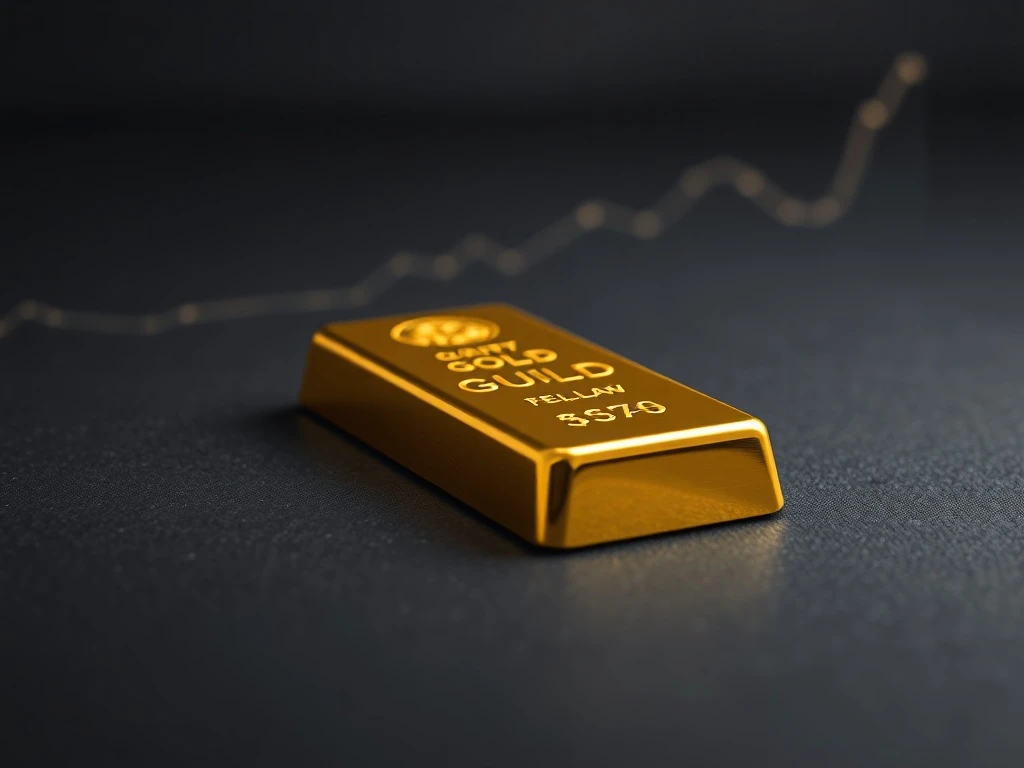
LONDON, April 14, 2026 — The global precious metals market witnessed a landmark moment today as spot gold price breached the $5,200 per ounce barrier for the first time in history. Trading on the COMEX division of the New York Mercantile Exchange saw the June delivery contract settle at $5,207.80, marking a decisive 2.8% intraday gain. This unprecedented rally stems directly from a pronounced softening of the US dollar and a concurrent retreat in benchmark Treasury yields, which have collectively eroded the opportunity cost of holding non-yielding bullion. Consequently, investors are flocking to the traditional safe-haven asset, seeking shelter from currency volatility and recalibrating their portfolios amid shifting macroeconomic signals.
Gold Price Above $5,200: Analyzing the Breakthrough
The London Bullion Market Association’s afternoon gold fix confirmed the $5,200 threshold was surpassed at 3:00 PM GMT. Market data from Bloomberg terminals shows trading volume spiked 40% above the 30-day average during the ascent. “This isn’t just a technical breakout; it’s a fundamental repricing of gold’s role in a multi-polar currency world,” stated Dr. Anya Sharma, Head of Commodities Research at the Global Macro Institute. She pointed to the US Dollar Index (DXY), which fell 0.9% to 98.5, its lowest level since late 2025. Simultaneously, the yield on the benchmark 10-year US Treasury note dipped below 3.5%, creating a perfect supportive storm for gold. This price action continues a rally that began in early March, adding over $450 to the ounce price in just six weeks.
Historical context underscores the scale of this move. The previous all-time high of $4,850, set in December 2025, has been convincingly shattered. Analysts at CitiGroup had projected a move to $5,000 by year-end 2026, a target now achieved months ahead of schedule. The rapid appreciation suggests a market reacting not just to immediate data, but to a deeper structural narrative concerning dollar hegemony and long-term inflation expectations.
Impact on Global Markets and Investor Portfolios
The surge in the gold price sends immediate ripples across global financial markets. Major gold mining ETFs like the VanEck Gold Miners ETF (GDX) jumped 5.2% in pre-market trading. Central bank balance sheets, heavily weighted towards gold reserves, are seeing paper gains accumulate. For instance, the US Federal Reserve’s reported holdings of 8,133.5 tonnes gained approximately $90 billion in notional value today alone.
- Retail Investor Access: Physical gold dealers reported a 300% increase in buy orders for small bars and coins, according to the World Gold Council’s retail flow tracker.
- Derivatives Market Activity: Open interest in gold futures and options on the COMEX rose sharply, indicating both new long positions and hedging activity by commercial users.
- Currency Correlations: Traditional inverse correlations strengthened, with commodity-linked currencies like the Australian dollar and South African rand gaining against the greenback.
Expert Analysis: A Paradigm Shift in Store?
“The support from a weaker dollar and lower yields is textbook, but the magnitude of the move indicates something more,” explained Marcus Chen, Chief Investment Officer at Aureus Capital and a former trader at the Bank of England. “We are observing a coordinated shift by sovereign wealth funds and large pension funds, who are mandated to increase their strategic allocation to tangible assets. This is a structural bid, not just speculative flow.” Chen referenced public filings from Norway’s Government Pension Fund Global, which increased its commodity exposure by 1.5% last quarter, with gold being the primary beneficiary. This institutional pivot provides a durable floor under prices, even if short-term tactical factors like daily forex fluctuations cause volatility.
Broader Context: Gold in the Modern Financial Ecosystem
Today’s price action must be viewed within the post-2025 monetary landscape. Following the coordinated pivot by major central banks away from aggressive rate hikes to a more neutral stance, real interest rates—a key driver for gold—have remained subdued. Furthermore, geopolitical tensions have spurred continued central bank buying, particularly from institutions in Asia and the Middle East diversifying away from US dollar assets. The table below contrasts key supportive factors in the current rally versus the previous 2020-2021 bull run.
| Market Driver | 2020-2021 Bull Run | 2026 Rally (Current) |
|---|---|---|
| Primary Catalyst | Pandemic stimulus, zero rates | Dollar weakness, de-dollarization |
| Central Bank Role | Net buyers | Aggressive strategic accumulators |
| Inflation Environment | Rising fears | Persistent, structurally higher |
| Retail Participation | High via ETFs | High via physical & digital gold |
What Happens Next: Watching the Fed and Physical Flows
The immediate trajectory for gold price hinges on the Federal Reserve’s communication at its next Federal Open Market Committee meeting on May 3rd. Any language perceived as dovish, potentially hinting at earlier-than-expected rate cuts, could further pressure the dollar and propel gold toward the next technical resistance level around $5,350. Conversely, a hawkish surprise could trigger profit-taking. Beyond macro factors, physical market indicators will be critical. Weekly data from the Swiss Federal Customs Administration on gold imports and exports to key hubs like India and China will reveal whether high prices are stifling jewelry demand or if investment demand is overwhelming it.
Industry and Miner Reactions to the Price Spike
Major mining corporations have reacted cautiously. Barrick Gold Corporation issued a statement emphasizing its commitment to “disciplined capital allocation” and debt reduction, rather than announcing immediate expansion of production. This restraint is seen as a positive by analysts, as it avoids flooding the market with new supply. Meanwhile, the World Gold Council has scheduled an emergency webinar for institutional clients titled “Navigating the New Gold Price Paradigm,” signaling the industry’s view that this shift may have lasting implications.
Conclusion
The breach of $5,200 for gold price represents a significant milestone, driven by the powerful dual support of a softer US dollar and declining Treasury yields. This move is underpinned by both tactical trading and deeper structural trends, including institutional portfolio rebalancing and geopolitical diversification. While short-term volatility is inevitable around central bank announcements, the fundamental backdrop for gold remains supportive. Investors and market watchers should now monitor physical demand metrics and central bank commentary for clues to the sustainability of prices above this historic threshold. The era of gold as a sidelined asset appears to be conclusively over.
Frequently Asked Questions
Q1: What exactly caused gold to rise above $5,200?
The primary drivers were a significant drop in the US Dollar Index (DXY) and a fall in 10-year Treasury yields. These factors reduce the opportunity cost of holding gold, which pays no interest, making it more attractive to investors.
Q2: How does a weaker US dollar support the gold price?
Gold is globally priced in US dollars. When the dollar weakens, it takes fewer units of other currencies to buy an ounce of gold, stimulating demand from international buyers and pushing the dollar price higher.
Q3: Will the price stay above $5,200, or is this a bubble?
While pullbacks are normal, analysts note strong structural support from central bank buying and institutional investment. Sustainability depends on the persistence of dollar weakness and real interest rates remaining low or negative.
Q4: As a regular investor, how can I gain exposure to gold?
Options include buying physical bullion (bars/coins), investing in gold-backed ETFs like GLD, purchasing shares of gold mining companies, or using futures and options contracts for more advanced strategies.
Q5: How does this high gold price affect the broader economy?
It increases costs for industries using gold, like electronics and jewelry. It can also signal deeper market concerns about currency stability or inflation, potentially influencing central bank policy decisions.
Q6: What should I watch to predict the next major move in gold?
Key indicators are the US Dollar Index (DXY), real Treasury yields (nominal yield minus inflation), weekly COMEX futures positioning reports, and monthly data on central bank gold reserves from the World Gold Council.



