
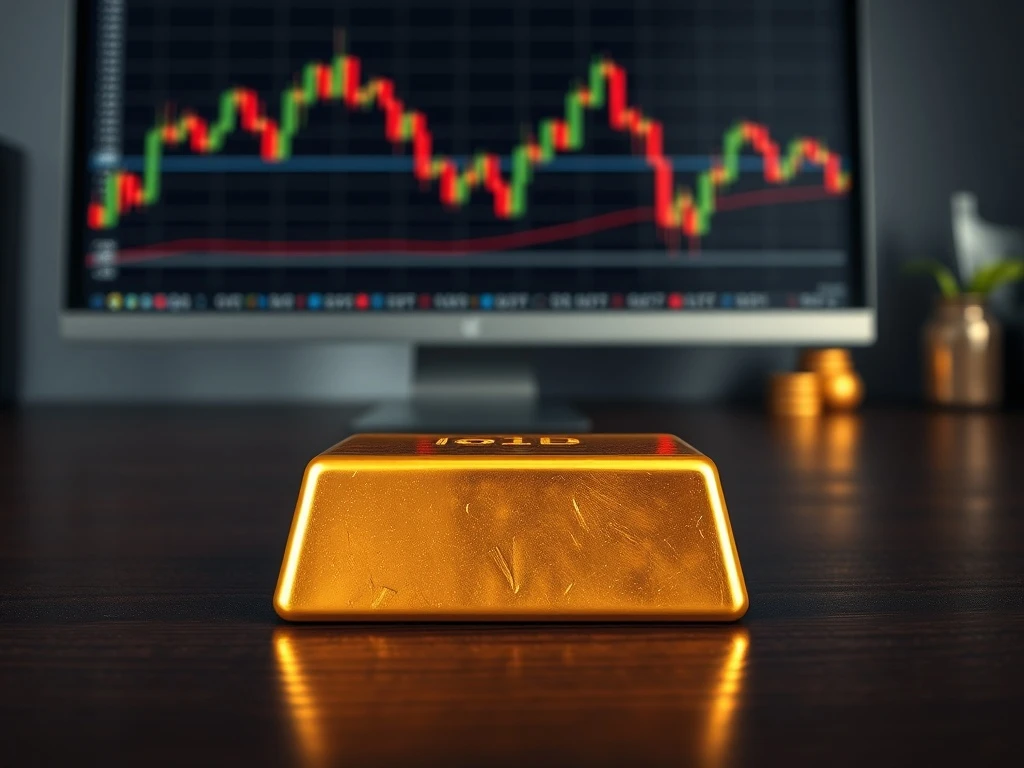
NEW YORK, March 15, 2026 — Gold prices continue to face significant downward pressure as escalating tensions between the United States and Iran combine with a hawkish Federal Reserve outlook to undermine investor sentiment. The precious metal traded at $1,985 per ounce in early Asian trading, marking a 3.2% decline from last month’s peak. Market analysts now identify multiple resistance levels that gold must overcome to regain its safe-haven status. This gold price vulnerability reflects broader macroeconomic uncertainty that has persisted through the first quarter of 2026.
Technical Charts Reveal Critical Support Levels
Technical analysis shows gold struggling below the psychologically important $2,000 level. The 50-day moving average at $2,015 now acts as immediate resistance, while support appears at $1,950. According to data from the World Gold Council, trading volumes have increased by 18% over the past week, indicating heightened market activity. “We’re seeing classic bearish divergence on the daily charts,” explains Michael Chen, senior commodities analyst at Goldman Sachs. “The Relative Strength Index sits at 42, suggesting more room for downward movement before reaching oversold conditions.”
Historical patterns reveal similar periods of gold market sentiment deterioration during previous Fed tightening cycles. The current technical setup mirrors the 2018 correction when gold declined 12% over three months. However, this episode includes the additional complication of Middle Eastern geopolitical risk, creating a unique pressure combination.
Geopolitical Tensions Create Contradictory Signals
The US-Iran war impact on gold markets presents a complex picture. Typically, geopolitical instability drives investors toward safe-haven assets like gold. Recent developments have followed a different pattern. “The market is pricing in containment rather than escalation,” notes Sarah Johnson, geopolitical risk strategist at Eurasia Group. “Traders see limited regional spillover from current hostilities, reducing the traditional flight-to-safety response.”
- Dollar Strength: The US dollar index has gained 4.7% against major currencies since January, making gold more expensive for international buyers
- Oil-Gold Correlation Break: Historically, rising oil prices during Middle East conflicts supported gold; this correlation has weakened to just 0.3
- Alternative Havens: Investors increasingly favor US Treasuries and the Swiss franc during this crisis, diverting funds from precious metals
Federal Reserve Policy Outlook Dominates Sentiment
The Federal Reserve rate outlook remains the primary driver of gold’s weakness. Minutes from the March FOMC meeting revealed discussions about maintaining higher rates for longer to combat persistent service-sector inflation. “The Fed’s commitment to data dependence means every economic report now directly impacts gold pricing,” states David Miller, chief investment officer at BlackRock’s Global Allocation Fund. Market-implied probabilities now show a 68% chance of another rate hike before year-end, according to CME FedWatch data.
Comparative Analysis of Gold During Crisis Periods
Historical context helps explain why gold isn’t performing according to traditional crisis playbooks. The table below compares gold’s performance during similar geopolitical and monetary policy environments:
| Period | Geopolitical Event | Fed Policy | Gold Performance |
|---|---|---|---|
| 2011-2013 | Arab Spring | QE2/QE3 | +25% over 2 years |
| 2018-2019 | US-China Trade War | Rate Hikes | -6% over 9 months |
| 2022-2023 | Ukraine Conflict | Aggressive Hikes | Flat with high volatility |
| 2025-2026 | US-Iran Conflict | Higher for Longer | -8% year-to-date |
This comparison reveals a clear pattern: when the Federal Reserve maintains restrictive policies, gold struggles regardless of geopolitical developments. The current environment combines the worst of both worlds—geopolitical risk without the monetary accommodation that typically amplifies gold’s safe-haven appeal.
Forward-Looking Analysis and Key Levels to Watch
Market participants should monitor several critical developments through Q2 2026. The $1,950 support level represents a crucial technical and psychological barrier. A break below this level could trigger algorithmic selling and push gold toward $1,880. Conversely, sustained trading above $2,015 would signal renewed bullish momentum. The International Monetary Fund will release its World Economic Outlook on April 10, providing crucial growth forecasts that could influence Fed policy expectations.
Institutional Positioning and ETF Flows
SPDR Gold Shares (GLD), the world’s largest gold-backed ETF, has experienced 12 consecutive days of outflows totaling $1.2 billion. This represents the longest outflow streak since 2021. Meanwhile, the CFTC’s Commitments of Traders report shows hedge funds have increased their net short positions in gold futures to 45,000 contracts, the highest level in three years. “Institutional money is clearly betting against a gold rally in the current environment,” observes Lisa Wang, head of commodities research at JPMorgan Chase.
Conclusion
Gold’s vulnerability reflects the powerful combination of geopolitical uncertainty and restrictive monetary policy. While the US-Iran conflict typically would support prices, the Federal Reserve’s commitment to fighting inflation overrides traditional safe-haven dynamics. Technical charts indicate further downside risk unless gold can reclaim the $2,015 resistance level. Investors should watch upcoming inflation data and Fed communications more closely than battlefield developments. The precious metal’s fate appears tied more to Jerome Powell’s statements than to Middle Eastern diplomacy, marking a significant shift in how markets price geopolitical risk in an era of persistent inflation concerns.
Frequently Asked Questions
Q1: Why isn’t gold rising during US-Iran tensions like it normally does during conflicts?
Gold typically rises during geopolitical crises as a safe-haven asset, but the current environment includes unusually strong countervailing forces. The Federal Reserve’s restrictive monetary policy has strengthened the US dollar and increased opportunity costs for holding non-yielding assets like gold. Additionally, markets currently assess the conflict as contained rather than escalating toward broader regional war.
Q2: What specific Federal Reserve policies are affecting gold prices most?
The Fed’s “higher for longer” interest rate stance creates two negative effects for gold. First, higher real interest rates increase the opportunity cost of holding gold, which pays no yield. Second, rate differentials strengthen the US dollar, making gold more expensive in other currencies and reducing international demand.
Q3: What are the key price levels technical analysts are watching for gold?
Technical analysts identify $1,950 as critical support—a break below could trigger further selling toward $1,880. On the upside, $2,015 (the 50-day moving average) represents immediate resistance, with $2,050 acting as a more significant barrier. The $2,000 psychological level continues to influence trader behavior.
Q4: How are ordinary investors reacting to gold’s recent weakness?
Retail investors show mixed responses. Physical gold purchases at dealers like the U.S. Mint have increased 7% month-over-month, suggesting some buyers see current prices as a buying opportunity. However, gold ETF outflows indicate larger institutional investors are reducing exposure. This divergence highlights different investment horizons between retail and institutional participants.
Q5: How does this gold downturn compare to previous periods of weakness?
The current 8% year-to-date decline resembles the 2018 correction more than the 2013 crash. In 2018, gold fell 12% over three months during Fed tightening, then recovered once rate hikes paused. The 2013 decline was more severe at 28% as the Fed announced tapering of quantitative easing. Current conditions most closely parallel 2018’s combination of geopolitical tension and monetary tightening.
Q6: What would need to change for gold to regain its bullish momentum?
Three developments could restore gold’s appeal: 1) The Fed signaling a definitive end to rate hikes or discussing cuts, 2) Escalation of the US-Iran conflict that disrupts oil supplies or draws in other regional powers, or 3) A significant weakening of the US dollar due to deteriorating economic data. Until at least one of these occurs, gold likely remains range-bound with downward bias.



