
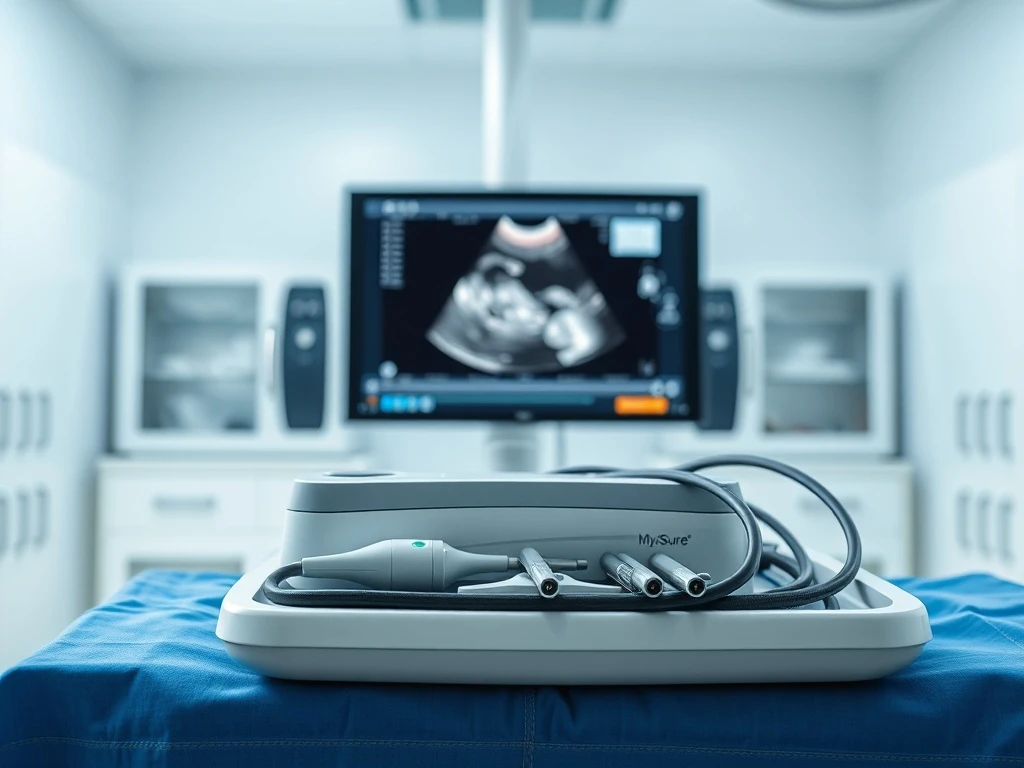
BOSTON, March 10, 2026 — Hologic, Inc. (HOLX) continues to demonstrate remarkable resilience in the fiercely competitive women’s health technology sector. The company’s GYN Surgical business unit reported a 7.5% year-over-year revenue increase in constant currency for the first quarter of fiscal 2026, reaching $180.8 million. This growth occurs as the global market for women’s health devices accelerates toward a projected 10.2% CAGR through 2035. Hologic now commands over 18% of this expanding market, according to Global Market Insights’ latest 2025 report. The company’s strategic focus on minimally invasive solutions for conditions like uterine fibroids and polyps is driving international expansion and challenging established rivals.
Hologic’s Strategic Pillars for GYN Surgical Growth
Hologic’s consistent performance stems from a deliberate three-pronged strategy. First, the company leverages its robust internal research and development pipeline. Second, it executes targeted acquisitions to fill technological gaps. Third, it capitalizes on an extensive global commercial network. The recent integration of the Gynesonics business, acquired in fiscal 2025, exemplifies this approach. The Sonata system from Gynesonics allows surgeons to treat symptomatic uterine fibroids using radiofrequency ablation, complementing Hologic’s existing portfolio. “Our commercial and market access investments outside the United States are paying significant dividends,” a Hologic spokesperson stated in the Q1 earnings release. “Products like MyoSure are gaining international market share faster than domestically, highlighting vast unmet need.”
This international push is critical. Markets in Europe and Asia-Pacific show stronger demand growth for minimally invasive treatments, driven by rising awareness and improving reimbursement landscapes. Consequently, Hologic has redirected substantial resources toward building commercial teams and securing regulatory approvals in these regions. The NovaSure endometrial ablation system, for instance, has delivered consistent double-digit international growth for several consecutive quarters.
Product Portfolio Depth and Technological Synergy
Hologic avoids reliance on a single product. Instead, it has built a synergistic ecosystem of devices addressing different clinical scenarios within gynecologic surgery. The flagship MyoSure tissue removal system addresses polyps and smaller fibroids. For larger, more complex fibroids that MyoSure cannot reach, Hologic offers the Acessa system, acquired in 2021, which utilizes laparoscopic radiofrequency ablation. The Fluent fluid management system provides critical support during hysteroscopic procedures. This portfolio approach allows gynecologists to select the optimal tool for each patient’s specific anatomy, fostering clinician loyalty and driving system-wide sales.
- MyoSure System: Dominates the market for hysteroscopic tissue removal, favored for its speed and efficiency in treating abnormal uterine bleeding.
- Acessa System: Addresses a key competitor gap by treating larger fibroids (typically 3-10 cm) laparoscopically, preserving the uterus.
- Sonata System: The newest addition, offering transcervical, incision-free fibroid treatment under ultrasound guidance, appealing to patients seeking the least invasive option.
Expert Analysis on Market Positioning
Dr. Elena Rodriguez, a medical device analyst at Kinsey Health Insights, notes the strategic wisdom behind Hologic’s moves. “Hologic isn’t trying to be everything to everyone in the OR,” Rodriguez explained in a recent industry webinar. “They have carved out a deep, defensible niche in minimally invasive gynecologic surgery. Their acquisitions of Acessa and Gynesonics were not just about adding revenue; they were about owning the entire patient pathway for symptomatic fibroids, from diagnosis to least-invasive to more invasive surgical options. This creates a powerful clinical and economic value proposition for hospitals.” This focused expertise is a key differentiator against broader competitors.
Competitive Landscape: Medtronic and Johnson & Johnson Respond
Hologic’s success has not gone unnoticed by industry titans. Medtronic (MDT) and Johnson & Johnson (JNJ) both maintain significant surgical divisions with gynecologic applications. Medtronic made headlines in February 2026 with the first U.S. commercial surgical case using its FDA-cleared Hugo robotic-assisted surgery (RAS) system. While initially focused on urology, Medtronic has publicly stated its intention to pursue gynecologic and general surgery indications, including hernia repair, posing a future competitive threat in the high-tech surgical arena.
Meanwhile, Johnson & Johnson’s Surgery portfolio within its MedTech segment encompasses a vast array of open, laparoscopic, and robotic tools. J&J’s strategy emphasizes broad surgical suites rather than disease-state specificity. Last month, the company launched new CEREGLIDE aspiration catheters and the INNERGLIDE delivery aid for stroke treatment, demonstrating its continued investment in specialized surgical devices. The competitive dynamic is clear: Hologic competes on focused clinical mastery in women’s health, while its larger rivals compete on scale, robotics, and cross-specialty platform integration.
| Company | Core GYN Surgical Approach | Key 2026 Development |
|---|---|---|
| Hologic (HOLX) | Integrated, minimally invasive portfolio for specific gynecologic conditions (fibroids, polyps, abnormal bleeding). | Integration of Gynesonics’ Sonata system; strong international growth for MyoSure/NovaSure. |
| Medtronic (MDT) | Robotic-assisted surgery (RAS) platforms and broad surgical energy devices applicable across specialties. | First U.S. commercial cases with Hugo RAS system; expansion into gynecologic procedures planned. |
| Johnson & Johnson (JNJ) | Comprehensive surgical suites, including robotics (Monarch, Ottava), stapling, energy, and suturing. | Launch of new aspiration catheter portfolio for stroke; continued investment in robotic platforms. |
Financial Performance and Market Valuation Context
Hologic’s stock performance reflects its operational execution. Over the past year, HOLX shares have risen 20.7%, dramatically outperforming its industry peer group, which declined 3.8% over the same period. This divergence highlights investor confidence in Hologic’s focused strategy amid broader medtech volatility. The company currently trades at a forward 12-month price-to-sales (P/S) ratio of 3.88X. This valuation sits above its own historical median but remains below the industry average, suggesting the market sees room for continued growth while acknowledging the competitive pressures.
Zacks Investment Research currently assigns HOLX a Rank #4 (Sell), citing potential headwinds in other business segments and valuation concerns. However, the GYN Surgical unit’s consistent growth is frequently highlighted as a core strength in analyst reports. The unit’s ability to grow mid-single digits organically, supplemented by accretive acquisitions, provides a stable earnings foundation. Looking ahead, investor focus will be on the company’s ability to maintain this growth rate, expand margins internationally, and successfully commercialize newer platforms like Sonata.
Stakeholder and Investor Sentiment
Institutional investors have largely responded positively to Hologic’s focused capital allocation. The company’s strategy of using strong cash flow from its Diagnostics segment to fund strategic acquisitions in Surgical and Breast Health is viewed as disciplined. However, some analysts express caution regarding the long-term threat from robotic platforms. “The question isn’t if robotics will enter mainstream gynecologic surgery, but when and at what cost,” notes a portfolio manager specializing in healthcare equities. “Hologic’s depth in specific procedures is a moat, but Medtronic and J&J have immense resources to potentially change the standard of care over the next decade.” This sentiment underscores the dynamic nature of the competitive field.
Conclusion
Hologic’s GYN Surgical strength in a competitive market is no accident. It results from a deliberate strategy of portfolio depth, strategic acquisition, and targeted international expansion. By dominating the niche of minimally invasive solutions for common gynecologic conditions, Hologic has built a profitable, growing business that larger, diversified rivals have yet to challenge directly. The 7.5% constant-currency growth in Q1 2026 and the over 18% global market share are testaments to this strategy’s effectiveness. The key challenges ahead will be commercializing new technologies like Sonata, defending against eventual robotic incursion, and leveraging global demographics favoring women’s health. For now, Hologic’s surgical business remains a core driver of value, demonstrating that in medtech, focused expertise can indeed triumph over sheer scale.
Frequently Asked Questions
Q1: What is Hologic’s main competitive advantage in GYN surgical devices?
Hologic’s primary advantage is its deep, integrated portfolio focused specifically on minimally invasive treatments for gynecologic conditions like fibroids and polyps. Unlike broader competitors, it offers multiple technologies (MyoSure, Acessa, Sonata) that address the same clinical problem with varying levels of invasiveness, allowing physicians to tailor treatment.
Q2: How significant is the international market for Hologic’s surgical products?
Extremely significant. Products like MyoSure are gaining market share faster internationally than in the U.S., indicating strong demand in underpenetrated markets. The company has invested heavily in commercial teams and market access capabilities abroad to capture this growth, which is a key pillar of its strategy.
Q3: What was the impact of the Gynesonics acquisition?
The fiscal 2025 acquisition of Gynesonics brought the Sonata system into Hologic’s portfolio. Sonata uses radiofrequency ablation under ultrasound guidance to treat fibroids without incisions, filling a gap in their offering for patients seeking the least invasive option. It is currently being integrated into their sales channel.
Q4: How does Hologic’s valuation compare to its peers after its stock price increase?
Hologic trades at a forward P/S ratio of 3.88X, which is above its own historical median but below the industry average. This suggests investors are rewarding its growth but are also mindful of the competitive landscape and the performance of its other business segments.
Q5: What is the biggest competitive threat to Hologic’s GYN surgical business?
The long-term threat is the potential widespread adoption of robotic-assisted surgery (RAS) in gynecology by giants like Medtronic and Johnson & Johnson. While Hologic’s devices are procedure-specific, robotics are platform-based. If robotics become the standard for many gynecologic surgeries, it could pressure Hologic’s stand-alone devices.
Q6: What should investors watch for in the coming quarters regarding this business unit?
Key metrics include the quarterly revenue growth rate for the Surgical segment (especially outside the U.S.), updates on the commercial rollout and adoption of the Sonata system, and any commentary on margin trends as the company scales its international operations.



