
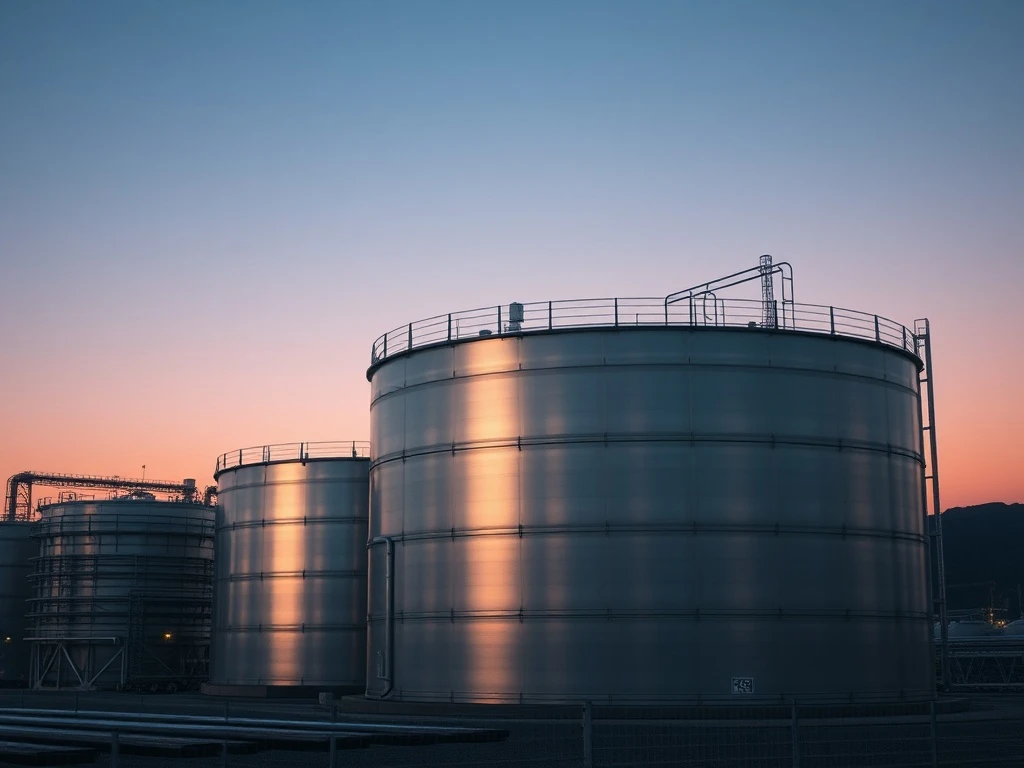
PARIS, FRANCE — April 7, 2026: The International Energy Agency (IEA) has triggered the largest-ever coordinated release of strategic petroleum reserves in history. Member countries agreed today to tap reserves totaling 400 million barrels over the next six months. This unprecedented move aims to counter severe market disruptions and soaring prices threatening global economic stability. The decision follows weeks of intense diplomatic negotiations and comes as benchmark Brent crude prices threaten to breach levels not seen in over a decade. The IEA oil reserve release represents a dramatic escalation in the use of strategic stockpiles as a market tool.
Anatomy of the Historic 400 Million Barrel Decision
The IEA’s Governing Board, comprising 31 member countries, convened an emergency session in Paris. Dr. Fatih Birol, the IEA’s Executive Director, announced the decision publicly. “Today’s decision reflects the severity of the situation and our unified commitment to market stability,” Birol stated. The release mechanism involves a two-phase approach. First, an immediate 180 million barrels will hit the market within 30 days. Subsequently, a sustained release of 220 million barrels will follow over the subsequent five months. This structure aims to provide both an immediate shock-absorbing effect and longer-term supply assurance.
Historical context underscores the scale of this action. The previous largest coordinated release occurred in 2011, totaling 60 million barrels following Libya’s supply disruption. The 2022 joint release by IEA members amounted to roughly 240 million barrels. Consequently, today’s 400 million barrel commitment is not just an incremental step. It is a fundamental recalibration of how strategic reserves are deployed in an era of heightened volatility. The decision required unanimous consent, signaling a rare moment of consensus among major energy consumers including the United States, Japan, Germany, and South Korea.
Immediate and Long-Term Market Impacts
Analysts project the release will add approximately 2.2 million barrels per day to global supply during the initial surge. This volume represents a significant buffer. However, market reactions were complex. Front-month Brent futures initially fell by over 8% in electronic trading. Meanwhile, physical market premiums in key regions like Europe and Asia showed signs of easing. The primary goal is to bridge a projected supply shortfall estimated by IEA analysts at 1.5 to 2 million barrels per day for the remainder of 2026.
- Price Stabilization: The action targets a reduction in extreme price volatility, providing certainty for industries and consumers.
- Supply Security: It directly addresses physical supply tightness in specific regions, preventing potential fuel shortages.
- Geopolitical Signal: The coordinated release serves as a powerful message to other market actors about consumer nations’ resolve.
Goldman Sachs Commodities Research noted in a client briefing that the release could cap near-term price spikes. However, they cautioned that the underlying structural supply-demand imbalance requires more than a stock draw. The IEA’s own monthly report highlights declining global commercial inventories, which have fallen to their lowest level since 2004. Therefore, this strategic stock release acts as a critical stopgap, not a permanent solution.
Expert Analysis and Institutional Response
Energy market specialists offered immediate assessments. “This is a necessary, defensive action,” said Dr. Samantha Gross, Director of the Energy Security and Climate Initiative at the Brookings Institution. “Strategic reserves exist for exactly this kind of crisis. The scale is justified by the magnitude of the disruption.” Gross emphasized that the move buys time for diplomatic efforts and for market adjustments to occur naturally. Conversely, some producers expressed concern. An OPEC+ delegate, speaking on condition of anonymity, suggested the release could “distort market signals” and delay necessary long-term investment in production capacity.
The U.S. Department of Energy confirmed its participation, committing 180 million barrels from the Strategic Petroleum Reserve (SPR) in Louisiana and Texas. This drawdown will reduce the U.S. SPR to levels not seen since the mid-1980s, raising future questions about replenishment policy. The White House issued a statement framing the action as part of a broader strategy to protect American consumers from price gouging and ensure energy security for allies. Japan’s Ministry of Economy, Trade and Industry (METI) also confirmed its contribution, highlighting the action’s role in securing stable energy supplies for its industries.
Broader Context: A Tool Deployed in a Transformed Market
This decision cannot be divorced from the broader transformation of global energy markets. The energy transition, geopolitical realignments, and underinvestment in conventional supply have created a fragile system. The IEA’s action today is a response to a specific trigger event—a major, sustained disruption—but it occurs against this complex backdrop. The table below compares this release to previous major coordinated actions.
| Year | Trigger Event | Volume Released | Key Participants |
|---|---|---|---|
| 1991 | Gulf War | 2.5 million barrels/day (short-term) | IEA members |
| 2005 | Hurricane Katrina | 60 million barrels (total) | IEA members |
| 2011 | Libyan Civil War | 60 million barrels (total) | 28 IEA members |
| 2022 | Russia-Ukraine War | ~240 million barrels (total) | IEA members |
| 2026 | Current Market Crisis | 400 million barrels (total) | All 31 IEA members |
The escalating volumes reflect both growing market imbalances and an increased willingness to use reserves proactively. Furthermore, the mechanism has evolved. The 2026 release includes detailed plans for types of crude (sweet vs. sour) to match specific refinery needs, showcasing more sophisticated market management.
What Happens Next: Replenishment and Policy Shifts
The IEA’s announcement included a forward-looking framework. Member countries are expected to develop plans to replenish their drawn reserves when market conditions allow. This replenishment will likely occur through direct purchases over an extended period, potentially creating a future source of demand that could support prices. The IEA also signaled intensified work on long-term measures. These include accelerating energy efficiency programs, expediting permitting for alternative energy projects, and enhancing dialogue between producers and consumers.
Stakeholder Reactions and Market Sentiment
Reactions from industry and financial markets were mixed. Major oil companies acknowledged the move’s short-term stabilizing effect but reiterated calls for policies supporting long-term supply investment. Shipping and refining sectors welcomed the anticipated easing of feedstock costs. Consumer advocacy groups praised the potential for relief at the pump but urged governments to monitor for price gouging. The broader financial market view, as reflected in energy sector equity performance, suggested cautious optimism that extreme volatility might subside, reducing macroeconomic risks.
Conclusion
The IEA’s historic 400 million barrel oil reserve release marks a watershed moment in global energy policy. It demonstrates the critical role of strategic stockpiles as a last-resort tool for market stability in an interconnected world. While the action will provide essential near-term supply and price relief, it also highlights profound vulnerabilities in the global energy system. The success of this intervention will be measured not just by immediate price movements, but by how effectively the bought time is used. Key areas to watch include the pace of replenishment, the response from other market actors, and whether this event accelerates broader policy shifts toward greater energy resilience and diversification. For now, the world’s major energy consumers have acted with unprecedented unity, deploying their emergency arsenal on a scale never seen before.
Frequently Asked Questions
Q1: What exactly did the IEA announce regarding oil reserves?
The International Energy Agency announced its member countries will collectively release 400 million barrels of oil from their government-controlled strategic petroleum reserves over the next six months. This is the largest coordinated release in the agency’s history.
Q2: How will this 400 million barrel release affect gasoline prices?
The primary goal is to increase global oil supply, which is a key input cost for gasoline. Analysts expect it to put downward pressure on pump prices, but the exact impact will vary by region and depends on other factors like refining capacity and local taxes.
Q3: What is the timeline for this strategic oil release?
The release will occur in two phases. An initial 180 million barrels will enter the market within the next 30 days. A subsequent 220 million barrels will be released steadily over the following five months.
Q4: Why are strategic petroleum reserves needed?
Countries maintain strategic oil reserves as an emergency buffer against severe supply disruptions, such as those caused by wars, natural disasters, or major geopolitical events. They act as an insurance policy for national energy security.
Q5: How does this 2026 release compare to previous ones?
At 400 million barrels, this release is significantly larger than any previous coordinated action. The previous record was approximately 240 million barrels in 2022. The 2026 decision reflects the scale of the current market crisis.
Q6: How does this affect the average consumer or business?
For consumers, it could lead to lower fuel and transportation costs. For businesses, especially in transportation and manufacturing, it reduces uncertainty around a major operational expense. The broader aim is to shield the global economy from an oil price shock.



