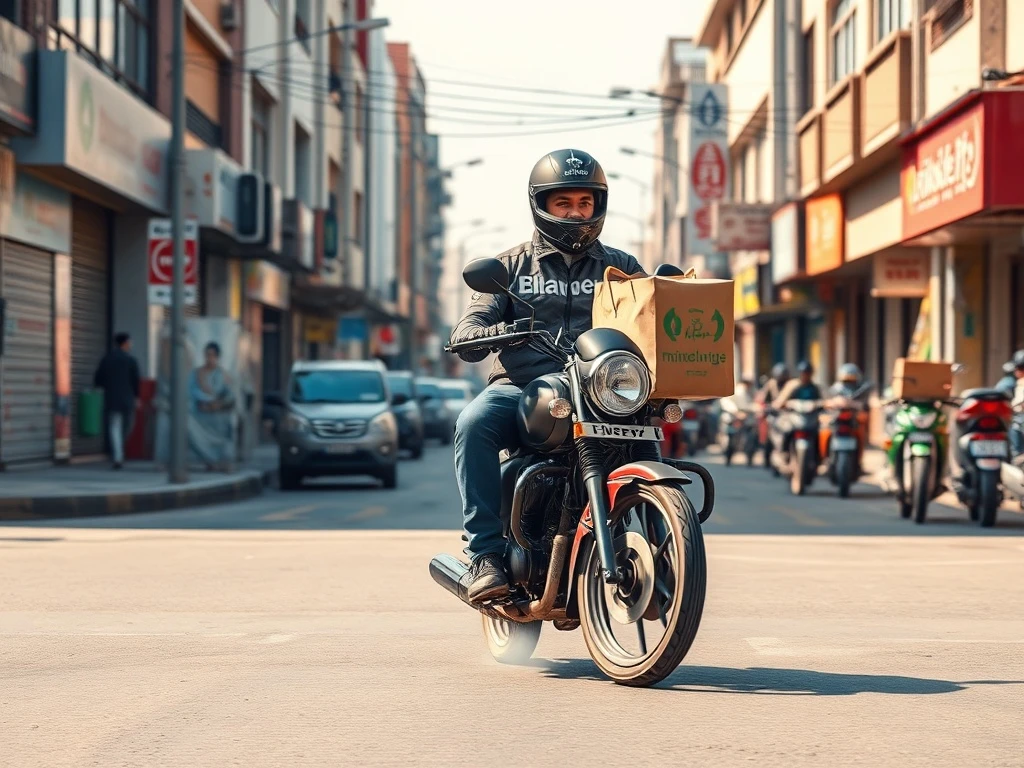
KARACHI, PAKISTAN — June 9, 2026: Global ride-hailing giant inDrive has finalized its acquisition of Pakistani quick-commerce startup Krave Mart, TechCrunch has exclusively learned. This strategic all-stock deal, approved by Pakistan’s Competition Commission, marks a significant escalation in inDrive’s expansion beyond transportation into the competitive grocery delivery sector. The acquisition, agreed upon last year, represents a critical move in the company’s $100 million super-app strategy, directly challenging established players like Foodpanda in South Asia’s burgeoning quick-commerce market.
inDrive Acquires KraveMart to Bolster Grocery Delivery Ambitions
inDrive confirmed the acquisition to TechCrunch but declined to disclose specific financial terms. Two sources familiar with the transaction, who requested anonymity because the details are private, confirmed the all-stock nature of the deal and its recent regulatory approval. This acquisition is not an isolated event but the culmination of a strategic partnership that began in December 2024 with an initial investment from inDrive’s venture arm. Subsequently, the companies launched a collaborative grocery delivery service in Pakistan in January 2026, following inDrive’s initial foray into the sector in Kazakhstan in September 2025.
Andries Smit, Chief Growth Businesses Officer at inDrive, provided an official statement via email. “We are pleased with the approval from the Competition Commission of Pakistan as we continue to work closely with Krave Mart to expand access to fast and reliable grocery delivery services across the country, most recently launching in Lahore under the inDrive.Groceries brand,” Smit stated. He clarified that both the Krave Mart and inDrive brands will continue operating in Karachi during the expansion phase, indicating a phased integration strategy rather than an immediate rebrand.
Strategic Impact on Pakistan’s Competitive Quick-Commerce Landscape
The acquisition immediately reshapes Pakistan’s delivery ecosystem. Krave Mart, founded in 2021, operates a network of dark stores in Karachi, Rawalpindi, and Lahore, promising grocery deliveries within approximately 30 minutes. By absorbing this infrastructure, inDrive gains instant operational scale in three major metropolitan areas. However, industry analysts caution that the path to profitability in quick-commerce is notoriously difficult, requiring significant capital and time. An industry source, who spoke on condition of anonymity due to commercial sensitivities, highlighted the dominance of Foodpanda, which has operated in Pakistan for over a decade with the backing of German giant Delivery Hero.
- Market Entry Acceleration: inDrive bypasses years of groundwork by acquiring an established player with local logistics and supplier networks.
- Super-App Integration: Grocery delivery becomes a core service within the inDrive app, increasing user engagement and transaction frequency.
- Capital Intensity Challenge: The sector demands continuous investment in dark stores, fleet management, and customer acquisition, pressuring margins.
Expert Analysis on the Super-App Strategy
Tech industry analysts view this move through the lens of global super-app trends. “inDrive’s acquisition is a textbook example of a capital-rich platform leveraging its user base to expand into adjacent, high-frequency services,” noted Aisha Riaz, a fintech and mobility analyst based in Singapore. “The logic is clear: a user who opens your app for a ride three times a week might open it ten times a week if they can also order groceries. This dramatically increases customer lifetime value and creates formidable data advantages.” Riaz referenced similar plays by Southeast Asia’s Grab and Gojek, which evolved from ride-hailing to include payments, food, and parcel delivery. The success of this strategy in Pakistan’s specific context, however, hinges on execution against a well-entrenched competitor.
Broader Context: inDrive’s Global Position and Expansion Drive
This acquisition is a key component of a broader, aggressive expansion plan. According to data from analytics firm Sensor Tower, inDrive has been the world’s second-most downloaded ride-hailing app since 2022. It ranks as the fourth-most downloaded travel app globally, behind Google Maps, Uber, and Waze, with over 400 million cumulative downloads. The app is the top-downloaded ride-hailing service in nine countries, including Peru, Panama, Egypt, Morocco, and notably, Pakistan itself. This existing strong market presence provides a ready-made user base for cross-selling grocery services.
| Market | inDrive’s Position | Key Local Competitor (Grocery) |
|---|---|---|
| Pakistan | #1 Downloaded Ride-Hail App | Foodpanda (Delivery Hero) |
| Kazakhstan | Market Leader | Glovo, local players |
| South Asia Region | Expanding via M&A | Various (Swiggy Instamart, Zepto in India) |
The company operates in over 1,000 cities across 48 markets worldwide. This vast geographical footprint offers a template for rolling out the grocery delivery model tested in Pakistan and Kazakhstan to other regions where it holds a leading ride-hailing position. The venture and M&A arm, launched in November 2023 with a $100 million war chest, is explicitly tasked with executing this “super-app strategy,” making the Krave Mart deal a flagship investment.
What Happens Next: Integration and Market Battle
The immediate roadmap involves integrating Krave Mart’s operations and technology into inDrive’s platform while managing a dual-brand strategy in key cities. The launch in Lahore under the “inDrive.Groceries” brand signals the direction of travel toward a unified service identity. Market observers will closely watch customer adoption rates, delivery time reliability, and any promotional pricing wars that may erupt with Foodpanda. Furthermore, regulatory scrutiny may intensify as a global player consolidates market share in a essential service sector like grocery delivery.
Stakeholder Reactions and Industry Sentiment
Initial reactions from within Pakistan’s startup ecosystem are mixed. Some founders see the acquisition as a positive exit that validates the local quick-commerce model and could attract further venture capital. Others express concern about the increasing dominance of well-funded foreign players, which could stifle competition from local startups. Consumers, meanwhile, are likely to benefit in the short term from increased competition, which often leads to discounts and improved service offerings. The long-term sustainability of these benefits, however, depends on whether the market can support multiple profitable players.
Conclusion
The acquisition of Krave Mart by inDrive is a pivotal moment for Pakistan’s digital economy and a bold statement of intent from the ride-hailing firm. It transforms inDrive from a transportation specialist into a multi-service contender in the race to build a dominant super-app. While the strategic rationale is sound—leveraging a large user base to capture more daily spend—the execution risks are substantial. They include navigating a price-sensitive market, competing with a deep-pocketed incumbent, and achieving operational efficiency in a low-margin business. The success of this deal will be measured not just by market share gains in Karachi, Lahore, and Rawalpindi, but by whether it provides a scalable blueprint for inDrive’s grocery delivery ambitions across its other 47 global markets.
Frequently Asked Questions
Q1: What does inDrive’s acquisition of Krave Mart mean for existing customers?
Existing Krave Mart customers in Karachi will see no immediate change, as both brands will operate concurrently. In Lahore, the service is already launching under the new “inDrive.Groceries” brand. Customers can expect the same 30-minute delivery promise, with potential access to a wider range of services through the inDrive app over time.
Q2: How will this acquisition affect competition with Foodpanda in Pakistan?
It significantly intensifies competition. inDrive brings its vast global resources, technology, and existing user base to directly challenge Foodpanda’s decade-long dominance. This will likely lead to aggressive marketing, promotional discounts, and service improvements as both companies vie for market share.
Q3: What is the timeline for full integration of Krave Mart into inDrive?
An official timeline has not been released. The phased approach—keeping Krave Mart alive in Karachi while launching inDrive.Groceries in Lahore—suggests integration will be gradual. Full brand consolidation likely depends on customer acceptance and operational performance over the next 6-12 months.
Q4: Why is inDrive moving into grocery delivery?
inDrive is pursuing a “super-app” strategy, aiming to become a single app for multiple daily needs (rides, groceries, etc.). Grocery delivery is a high-frequency service that increases app engagement and revenue per user, making the core ride-hailing business more defensible and valuable.
Q5: Does this deal indicate a trend of ride-hailing companies expanding into new sectors?
Absolutely. This follows a global pattern seen with Uber (Uber Eats), Grab (GrabFood, GrabPay), and Gojek. Ride-hailing companies use their logistics expertise, large user bases, and data to expand into adjacent on-demand services, transforming into broader lifestyle and commerce platforms.
Q6: How does this affect delivery riders and dark store employees?
In the short term, it likely creates more earning opportunities for riders as service expands. For dark store staff, job security may increase under the backing of a larger, well-funded parent company. However, long-term changes will depend on inDrive’s operational models and efficiency drives post-acquisition.
This article was produced with AI assistance and reviewed by our editorial team for accuracy and quality.