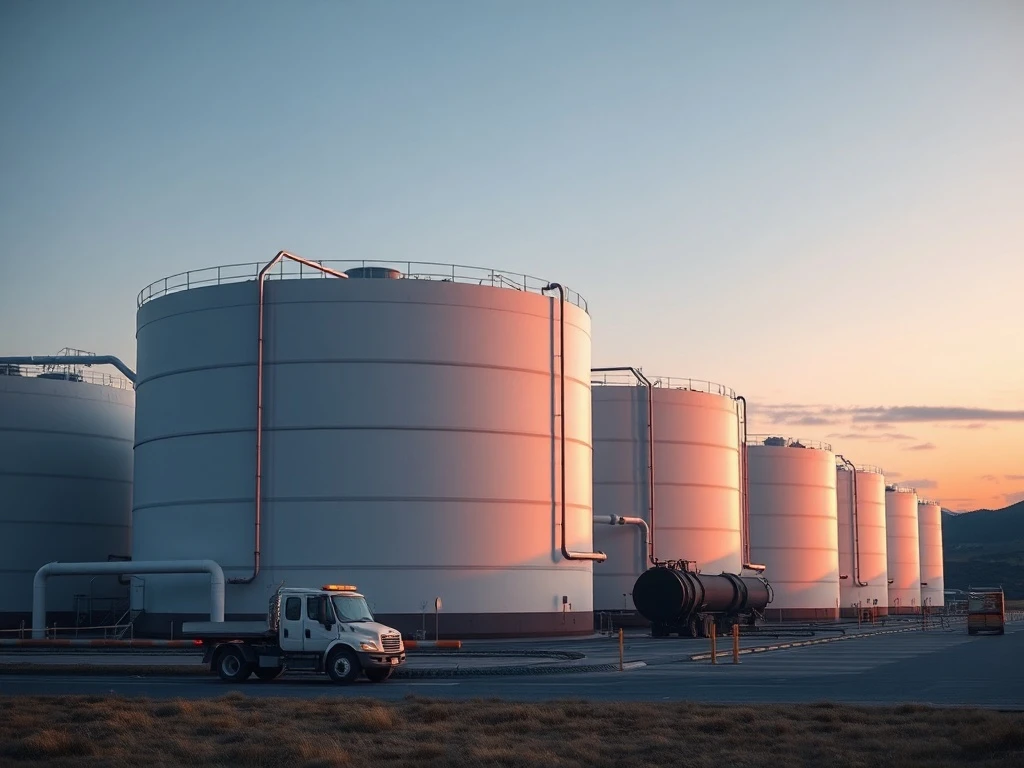
TOKYO/BERLIN — March 15, 2026 — In a coordinated move that sent immediate shockwaves through global energy markets, the governments of Japan and Germany announced the release of millions of barrels from their national strategic petroleum reserves today. This preemptive action comes just 48 hours before a scheduled emergency meeting of the International Energy Agency (IEA) to address mounting supply concerns. Consequently, the benchmark West Texas Intermediate (WTI) crude oil price dropped sharply, falling over 3.5% in early trading to settle below $78 per barrel. Market analysts immediately interpreted the move as a significant intervention aimed at stabilizing prices and signaling resolve to major producers.
Japan and Germany Execute Coordinated Oil Reserves Release
The Japanese Ministry of Economy, Trade and Industry confirmed the release of approximately 7.5 million barrels from its state-held reserves. A ministry spokesperson stated the decision was based on a comprehensive assessment of “extraordinarily tight market conditions and potential supply chain disruptions.” Simultaneously, Germany’s Federal Ministry for Economic Affairs and Climate Action authorized the release of 5 million barrels from its strategic stockpiles, known as the Erdölbevorratungsverband (EBV). German officials cited the need to “ensure domestic energy security and mitigate inflationary pressures” as primary motivations. Both nations emphasized their actions were taken in close consultation with other IEA member states, though they acted ahead of the formal collective decision expected this week.
This marks the first major coordinated release outside of a full IEA mandate since the 2022 crisis. The timing is critical. Global oil inventories have dwindled to multi-year lows following a series of unplanned outages and sustained production discipline from the OPEC+ alliance. Furthermore, shipping disruptions in key maritime chokepoints have exacerbated logistical bottlenecks. The Japanese release will be executed through a combination of direct sales to refiners and accelerated export tenders, while Germany will utilize its pipeline-connected storage network to inject supply directly into the European market.
Immediate Market Impact and WTI Price Reaction
The announcement triggered an immediate and pronounced sell-off in crude futures. The front-month WTI contract on the New York Mercantile Exchange plunged from an opening near $80.90 to an intraday low of $77.85 per barrel. The Brent crude benchmark also fell, though slightly less sharply, reflecting the Atlantic Basin’s different supply dynamics. “The market was caught off guard by the scale and coordination,” said Dr. Anya Sharma, Head of Commodities Research at Global Markets Analytics. “A combined 12.5 million barrels hitting the physical market in the next 30-45 days provides a tangible cushion. It directly addresses the fear premium that had built up over the past month.” Sharma noted that the price drop was amplified by algorithmic trading models reacting to the headline volume.
- Price Volatility Spike: The CBOE Crude Oil Volatility Index (OVX) jumped 15%, indicating heightened trader uncertainty.
- Refinery Margin Compression: Lower crude input costs initially boosted refining margins, but gasoline and diesel futures also fell, compressing those gains.
- Currency Effects: The U.S. dollar strengthened against commodity-linked currencies like the Canadian dollar and Norwegian krone, as oil’s decline reduced their appeal.
Expert Analysis and Institutional Response
Energy security experts offered mixed reactions. Professor Kenji Tanaka of Tokyo University’s Energy Security Institute called the move “a necessary tactical maneuver.” He explained, “Strategic reserves exist precisely for this purpose: to manage acute market dislocations. By acting ahead of the IEA, Tokyo and Berlin have seized the initiative and maximized the psychological impact on traders.” Conversely, analysts from the Oxford Institute for Energy Studies cautioned in a research note that such unilateral actions could undermine the IEA’s collective authority. “While effective in the short term, it risks fragmenting the coordinated response mechanism that has been a cornerstone of consumer-country policy since the 1970s,” the note stated.
The International Energy Agency, headquartered in Paris, issued a brief acknowledgment of the releases. An IEA spokesperson confirmed the agency’s governing board would still convene as planned on March 17 to discuss “a broader, collective response to current market conditions.” Market participants now widely expect the full IEA to recommend a larger, formal release of 60-80 million barrels from all member countries. The U.S. Department of Energy, which manages the world’s largest strategic reserve, has not yet commented on its potential participation.
Historical Context and Strategic Reserve Comparisons
Strategic petroleum reserves (SPRs) were established by major oil-importing nations after the 1973 oil embargo. Their purpose is to provide an emergency buffer against severe supply disruptions. Today’s releases, while significant, represent a small fraction of total national holdings. Japan holds roughly 500 million barrels across public and private reserves, while Germany’s EBV holds about 90 million barrels. The action invites comparison to previous major interventions, each with distinct market outcomes.
| Release Event | Year | Total Volume | Maximum Price Impact |
|---|---|---|---|
| IEA Response to Libyan Civil War | 2011 | 60 million barrels | Brent fell ~6% |
| Coordinated Release after Russia-Ukraine War | 2022 | 180 million barrels | WTI fell ~9% initially |
| Japan & Germany Unilateral Release | 2026 | 12.5 million barrels (so far) | WTI down ~3.5% (as of now) |
The 2022 release, the largest in history, provides a key reference point. While it initially lowered prices, the effect proved temporary as the market quickly refocused on structural supply deficits and rebounding demand. Analysts warn that today’s release may face a similar fate if underlying supply-demand fundamentals remain tight. The key difference now is the state of global inventories, which are significantly lower than in early 2022, potentially making any added supply more potent in the near term.
What Happens Next: The IEA Decision and Market Trajectory
All eyes now turn to the IEA’s emergency session. The board will debate a formal collective action, with the size of any recommended release being the primary variable. “The Japanese and German action has set the floor,” said commodities strategist Marcus Chen from FinanzBank AG. “The IEA will likely feel pressure to authorize a larger volume to demonstrate unity and maximize market impact. A number below 50 million barrels might now be seen as a disappointment.” Traders will also scrutinize the delivery schedule; a release slated for the second quarter would have a more immediate effect than one stretched over six months.
Beyond the IEA, the reaction from OPEC+ will be decisive. The producer group has carefully managed output to support prices. An emergency OPEC+ meeting could be convened to adjust their production quotas in response to the consumer-country releases, setting the stage for a direct policy clash. Furthermore, the U.S. presidential administration faces a delicate decision on tapping its own Strategic Petroleum Reserve, which currently sits at its lowest level since the 1980s following the 2022 drawdowns.
Industry and Consumer Reactions
Initial reaction from the downstream energy sector has been positive. The head of a major European refining association welcomed the move, stating it would “help smooth crude procurement costs in a volatile environment.” However, consumer advocacy groups were more measured. “A few cents off at the pump is welcome, but this is a temporary fix,” said a spokesperson for a German automotive association. “The fundamental solution requires diversified energy sources and reduced dependency.” In Japan, large industrial energy users, particularly in manufacturing, expressed relief, as high energy costs have been squeezing profit margins for months.
Conclusion
The unilateral release of strategic oil reserves by Japan and Germany represents a bold and calculated intervention in global energy markets. It successfully triggered an immediate drop in WTI crude prices, demonstrating the enduring power of strategic stockpiles as a market tool. However, the long-term efficacy hinges on the forthcoming IEA decision and the strategic response from major producers. While the move alleviates near-term supply anxiety, it does not resolve the deeper structural tensions between energy security, inflation management, and the transition to cleaner fuels. Markets will now enter a holding pattern, awaiting the next move from both consumer and producer nations in this high-stakes geopolitical chess game.
Frequently Asked Questions
Q1: Why did Japan and Germany release oil reserves now?
They acted preemptively ahead of an IEA meeting to address tight global supplies, aiming to stabilize prices and secure their domestic markets against potential disruptions and inflation.
Q2: How much did the WTI crude oil price drop after the announcement?
The West Texas Intermediate (WTI) crude benchmark fell over 3.5%, dropping from around $80.90 to below $78 per barrel in immediate reaction to the news.
Q3: What is the IEA expected to decide next?
The International Energy Agency is scheduled to meet on March 17, 2026, and is widely expected to recommend a larger, formal coordinated release from all member countries, potentially totaling 60-80 million barrels.
Q4: How do strategic petroleum reserves work?
Governments maintain large stockpiles of crude oil to use during supply emergencies. They can release oil through sales or loans to refiners, adding physical supply to the market to lower prices.
Q5: Will this lower gasoline prices for consumers?
Typically, yes, with a lag. Lower crude oil costs eventually filter down to refined products like gasoline and diesel, but the full effect depends on refinery margins, taxes, and distribution costs.
Q6: How does this affect long-term energy investment?
Such interventions can create uncertainty for producers, potentially discouraging investment in new production if they believe prices will be capped by government stockpile releases during periods of tightness.